Data Provisioning
What is Data Provisioning?
In today’s data-driven economy, organizations generate and collect vast amounts of information daily. However, raw data sitting in isolated systems provides little value until it becomes accessible and actionable. This is where data provisioning becomes critical to business success.
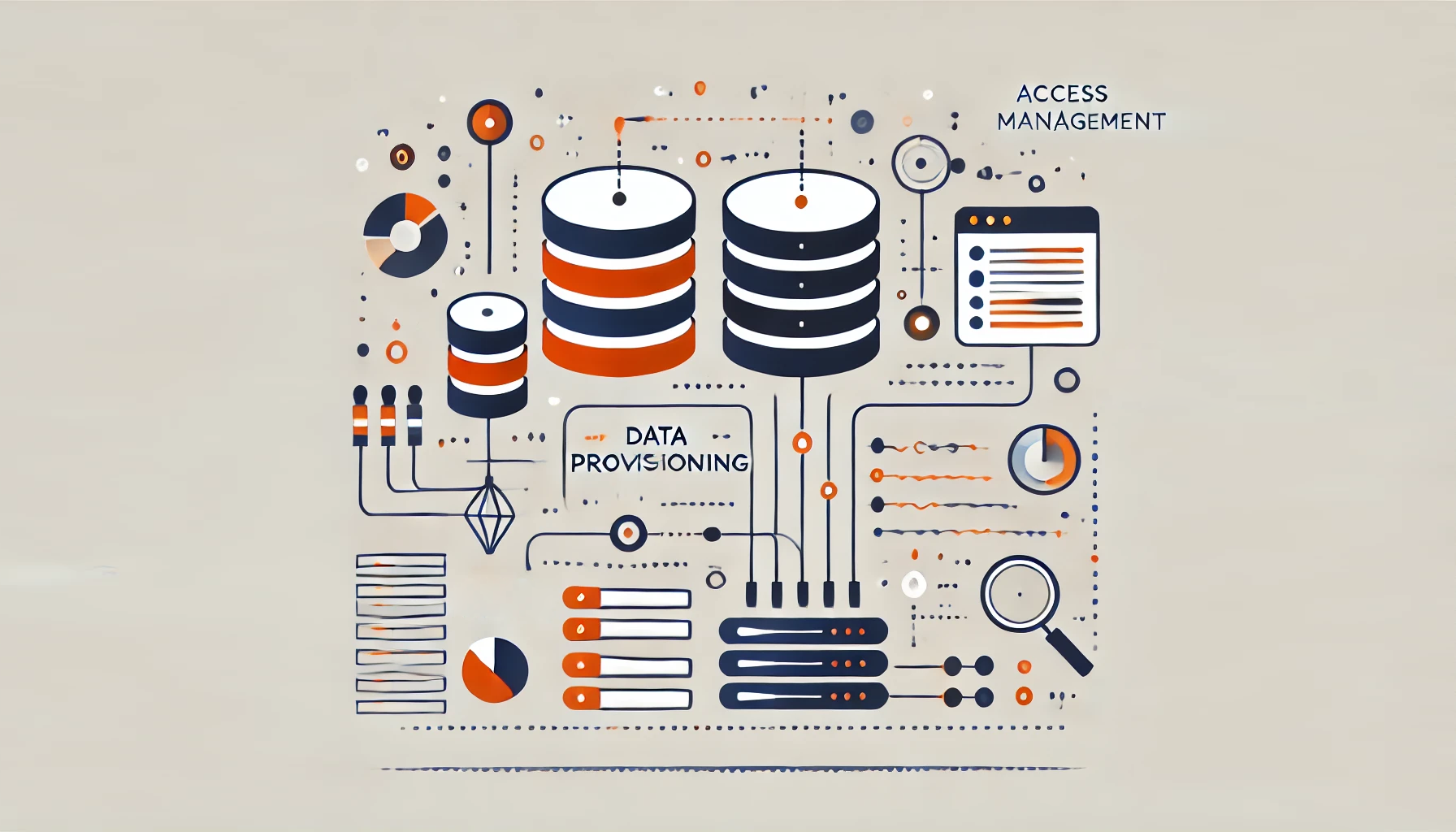
Data provisioning refers to the systematic process of making data accessible to users and applications in a timely and efficient manner. Organizations move data from source systems into target destinations such as data warehouses, data marts, or operational data stores. This process focuses on delivering the right data to the right place at the right time, supporting both batch processing for historical analysis and real-time streaming for immediate insights.
It plays a vital role in data management ecosystems. It empowers users to analyze trends, generate comprehensive reports, and make data-driven decisions with confidence. Without effective data provisioning, organizations struggle to derive actionable insights from their data investments, leaving valuable business intelligence locked away in disconnected systems.
Well-designed automated pipelines help maintain data consistency and quality across diverse systems. As a result, businesses benefit from improved operational efficiency, streamlined business intelligence capabilities, and accelerated decision-making processes that drive competitive advantage.
Key Concepts in Data Provisioning
To understand data provisioning more clearly, consider these essential terms and their relationships:
- Data sources: These foundational systems provide the raw data—transactional databases, web logs, CRM systems, or social media feeds.
- Data targets: These are destination systems where processed data lands—data warehouses, specialized data marts, or operational stores.
- ETL processes: ETL stands for Extract, Transform, Load. It describes the process of retrieving data from sources, reshaping it to meet business requirements, and depositing it into target systems.
- Data quality: High-quality data improves business outcomes. ETL workflows include validation and cleansing steps to identify and fix errors early in the process.
- Data governance: Governance frameworks define rules and standards for data handling. Aligning provisioning workflows with governance policies ensures secure and consistent data practices.
Data Provisioning Tools
Several categories of specialized tools support modern data provisioning processes:
- ETL tools: These platforms automate the extract, transform, and load cycle with sophisticated workflow engines. Popular enterprise options include Informatica PowerCenter, IBM InfoSphere DataStage, and Microsoft SSIS. For instance, Informatica enables you to build complex workflows that extract customer data from Oracle databases, transform it by standardizing phone number formats and calculating customer lifetime value, then load it into a Snowflake data warehouse for analytics.
- Data integration platforms: Integration tools offer comprehensive end-to-end solutions for managing complex cross-system data flows. SAP Data Services and Talend Data Fabric provide robust examples of enterprise-grade integration capabilities, handling everything from real-time streaming to batch processing across hybrid cloud environments.
- Cloud-native provisioning services: Public cloud platforms now offer provisioning as fully managed services, including AWS Glue for serverless ETL, Azure Data Factory for hybrid data integration, and Google Cloud Dataflow for stream and batch processing. These services allow you to focus on data transformation logic rather than infrastructure management and scaling concerns.
Data Provisioning in Software Development
Development teams require access to realistic, high-quality test data to build and validate applications effectively. Whether testing new features or staging applications for production deployment, developers need datasets that accurately represent real-world scenarios.

One increasingly popular solution is synthetic data generation. This method creates realistic datasets using predefined patterns and statistical models—without exposing sensitive production information. Tools like Genrocket and Tonic.ai specialize in generating synthetic data that maintains referential integrity while protecting privacy. For example, a healthcare application might generate synthetic patient records with realistic medical histories, demographics, and treatment patterns for testing purposes.
Another established approach involves subsetting and masking production data. Here, you extract a representative portion of live data and apply specialized masking tools like Delphix or IBM Optim to obscure confidential fields while preserving data relationships. This approach proves especially valuable in regulated industries like healthcare or financial services where compliance requirements are stringent. For instance, a bank might mask actual account numbers and SSNs while preserving transaction patterns for fraud detection testing.
Best Practices for Data Provisioning
To maximize the value from your provisioning initiatives, follow these proven practices:
- Define requirements clearly: Establish precisely what data the system needs, how frequently it should update, where it should originate, and what quality standards must be met.
- Prioritize data quality: Implement comprehensive validation rules at each ETL stage to catch inconsistencies, missing values, and anomalies early in the pipeline.
- Design for performance: Leverage indexing strategies, data partitioning, and parallelization techniques to reduce load times and accelerate query performance.
- Embed governance policies: Ensure that all workflows comply with internal data policies, security standards, and regulatory requirements from the outset.
- Maintain continuously: Establish monitoring for job performance, implement robust failure handling, and keep databases optimized through regular maintenance. Proactive care significantly improves system reliability.
Data Provisioning Challenges
While data provisioning delivers significant value, implementation often presents complex challenges that require strategic planning:
- Inconsistent data quality: Different source systems may use varying formats, naming conventions, or data standards, leading to confusion or broken transformation logic.
- Security risks: Working with personally identifiable information (PII) or sensitive business data requires robust encryption, comprehensive masking, and strict access controls to maintain compliance.
- Complex integration: Joining data from incompatible systems demands significant effort. Mapping and transformation logic must be precise and thoroughly tested.
- Performance bottlenecks: Large datasets can significantly slow down provisioning tasks. Scaling ETL jobs requires thoughtful architecture design and appropriate tooling selection.
- Metadata management: Tracking data lineage, context, and ownership becomes increasingly difficult—especially in decentralized environments with multiple teams and systems.
Investing in appropriate tools and well-defined processes can effectively mitigate these challenges. Data quality tools, lineage solutions, and well-documented transformation logic help build organizational trust in your data assets.
Future Trends
Data provisioning practices are evolving rapidly. Here are key trends to monitor:
- Cloud-native architectures: Cloud-first platforms support scalable, event-driven provisioning pipelines. Serverless computing models reduce operational overhead while providing elastic scaling capabilities.
- DataOps: DataOps brings continuous integration and deployment concepts into data provisioning. Teams can automate, test, and deploy data flows faster and with fewer errors.
- Real-time delivery: Businesses increasingly demand up-to-the-second insights for competitive advantage. Tools like Apache Kafka and Debezium make near real-time provisioning feasible at enterprise scale.
- Self-service provisioning: Modern platforms empower business analysts to build their own data pipelines using no-code interfaces and reusable components, reducing IT bottlenecks.
- AI-driven automation: Artificial intelligence and machine learning streamline data profiling, mapping, and anomaly detection—reducing human intervention while boosting accuracy and consistency.
Conclusion
Data provisioning represents more than a simple data transfer process—it’s a foundational capability that enables decision-making, advanced analytics, and business innovation. By mastering its core principles and applying established best practices, you create an efficient, secure, and reliable data pipeline that supports every aspect of your organization.
Organizations that invest in intelligent provisioning strategies consistently outperform those that don’t. With modern tools like DataSunrise enhancing data security and compliance capabilities, it’s never been easier to take control of your data landscape and unlock its full potential.
Stay proactive, improve visibility across your data ecosystem, and empower your teams with trusted, well-provisioned data that flows seamlessly from source to insight.