What Is MongoDB Audit Trail

In modern environments, monitoring database activity is not just a best practice—it’s essential for security, operational transparency, and regulatory compliance. Understanding what is MongoDB audit trail is critical for organizations that rely on MongoDB to store, process, and protect sensitive data. An audit trail records events such as queries, data modifications, authentication attempts, and administrative actions, producing a detailed log that supports security investigations, compliance verification, and operational reviews.
Why MongoDB Audit Trails Matter
Audit trails help detect unauthorized access, reveal suspicious activity patterns, and provide verifiable evidence for meeting compliance requirements like GDPR, HIPAA, and PCI DSS. With a robust audit trail, organizations ensure that sensitive operations are traceable, supporting data security and protecting business-critical assets.

Real-Time Audit in MongoDB
Real-time auditing captures events as they occur, enabling security teams to act quickly against threats. Integrated with monitoring tools, MongoDB’s audit logs can trigger alerts for unusual queries, failed authentication attempts, or unauthorized data changes.
{
  "auditAuthorizationSuccess": true,
  "users": [{ "user": "admin", "db": "admin" }],
  "operations": ["insert", "update", "remove"]
}
The example above configures auditLog to capture specific operations, reducing noise while retaining actionable insights.
Native MongoDB Audit Configuration (Enterprise Edition)
MongoDB’s native audit feature is available only in MongoDB Enterprise Edition and MongoDB Atlas deployments. It is not included in the Community Edition. Enabling auditing involves configuring the mongod process with the auditLog option, either in the configuration file or as a command-line parameter.
Example configuration:
auditLog:
  destination: file
  format: BSON
  path: /var/log/mongodb/auditLog.bson
  filter: '{ atype: { $in: [ "authenticate", "createCollection", "dropCollection" ] } }'
In this setup, the destination parameter specifies where logs are stored, either in a file or sent to syslog. The format determines whether the output is compact BSON or readable JSON. The path defines the storage location, and the filter option specifies exactly which events to capture, reducing unnecessary log entries.
To enable auditing at runtime:
mongod --auditDestination file --auditFormat JSON --auditPath /var/log/mongodb/audit.json
For more details, see the MongoDB Enterprise Auditing Docs and MongoDB Atlas Audit Logs.
DataSunrise-Powered MongoDB Auditing
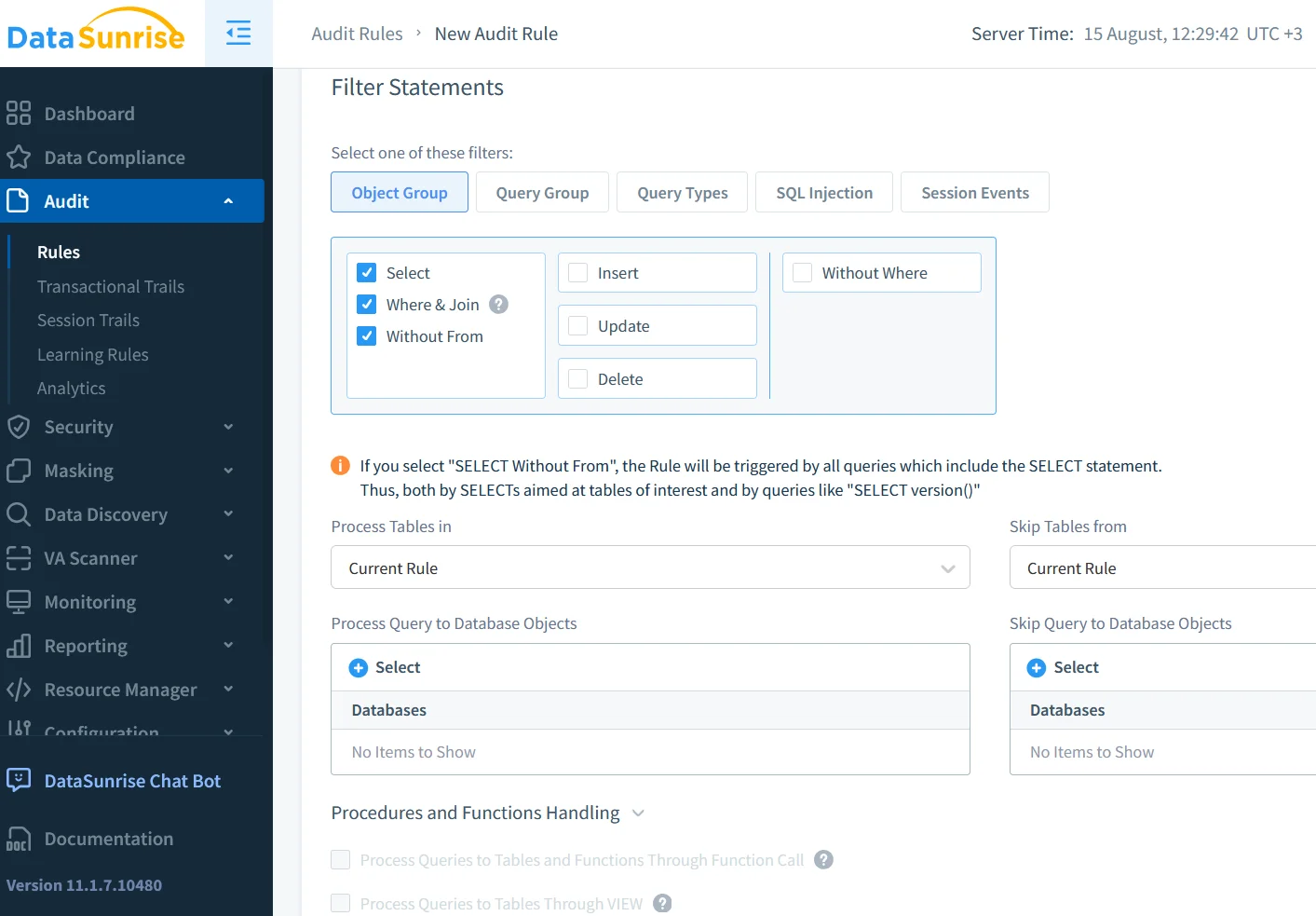
While native auditing covers basic needs, DataSunrise extends functionality with cross-platform audit trails, dynamic masking, and automated data discovery. This enables organizations to log all queries to sensitive collections, mask confidential fields in real time for unauthorized users, and document access attempts for compliance.
Dynamic Masking and Data Discovery
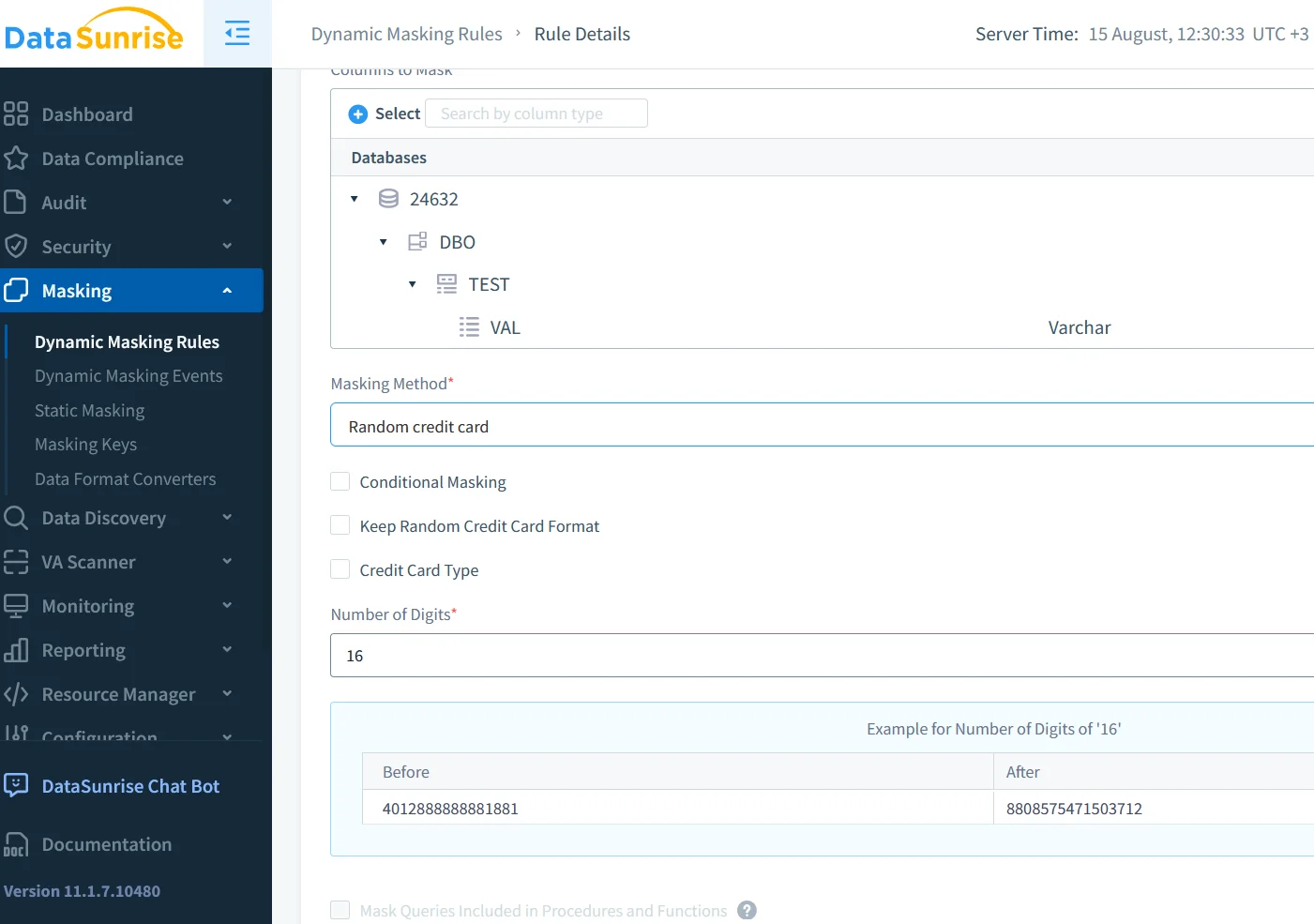
Dynamic masking hides sensitive information without changing the source data, which is crucial for GDPR and HIPAA compliance. Before applying masking, DataSunrise’s data discovery scans MongoDB collections to identify and classify PII or PHI. These classifications then drive audit policies automatically.
Security Advantages Beyond Compliance
MongoDB audit trails can deter insider threats by tracking privileged user behavior. They also provide forensic evidence during investigations and help improve security policies by revealing access trends over time.
Example Query to Inspect Audit Logs
If logs are stored in JSON:
db.getSiblingDB("auditDB").auditLogs.aggregate([
  { $match: { atype: "authenticate" } },
  { $project: { ts: 1, user: 1, param: 1 } },
  { $sort: { ts: -1 } }
]);
This query returns authentication events along with timestamps and user details.
Compliance and Reporting
With DataSunrise’s compliance manager, MongoDB audit trails can be aligned with SOX or PCI DSS requirements. The platform can generate audit-ready reports that meet both internal and external audit standards.
Integrating Audit Trails into a Security Strategy
When integrated with intrusion detection systems, behavioral analytics, and threat intelligence tools, MongoDB audit logs provide a comprehensive layer of defense. Security teams can refine access controls and consistently enforce role-based access control, ensuring that permissions match business needs.
Conclusion
Understanding what is MongoDB audit trail means recognizing its dual value as a compliance enabler and security measure. MongoDB Enterprise’s native auditing provides a strong baseline for monitoring activity, while DataSunrise enhances it with advanced masking, real-time monitoring, and automated compliance mapping—delivering complete visibility and control over database access.
Protect Your Data with DataSunrise
Secure your data across every layer with DataSunrise. Detect threats in real time with Activity Monitoring, Data Masking, and Database Firewall. Enforce Data Compliance, discover sensitive data, and protect workloads across 50+ supported cloud, on-prem, and AI system data source integrations.
Start protecting your critical data today
Request a Demo Download Now