Apache Cassandra Data Governance
Introduction
Apache Cassandra powers mission-critical systems across industries where scale, availability, and resilience are essential. Yet as data volumes grow, the challenge is not only storing information, but governing it. Data governance ensures information is accurate, secure, traceable, and used responsibly.
For organizations working with sensitive information, apache cassandra data governance goes beyond compliance. It is about building trust in data, enabling collaboration between technical teams and business users, and ensuring accountability in every query, transaction, or dataset.
Effective governance frameworks focus on clarity and stewardship — knowing who owns the data, who can use it, and how it is protected.
Apache Cassandra Data Governance Challenges with Native Configurations
Cassandra includes foundational tools that touch governance — but each comes with limitations when scaled to enterprise needs.
Audit Logging for Accountability
Cassandra records database activities such as authentication attempts, DML statements, and schema changes through its audit logging system. Configuration is made in cassandra.yaml:
audit_logging_options:
    enabled: true
    logger: BinAuditLogger
    included_categories: [DML, DDL, AUTH]
    roll_cycle: HOURLY
This provides a local record of actions but only on coordinator nodes. Governance teams must manually aggregate logs from multiple machines to reconstruct activity.
Native audit logging creates visibility but lacks centralization, which is critical for effective governance.
For a broader understanding, see how audit logs function as part of governance frameworks.
Access and Role Management
Cassandra’s role-based access control (RBAC) allows administrators to assign permissions. For example, defining a role for a governance data steward might look like this:
CREATE ROLE data_steward
WITH LOGIN = true
AND PASSWORD = 'StrongPass#2025'
AND SUPERUSER = false;

GRANT SELECT ON KEYSPACE hr_data TO data_steward;
This enables responsibility segmentation, but governance policies often require finer granularity — such as conditional masking or activity restrictions — that Cassandra cannot provide natively. See more on role-based access control in enterprise environments.
Full Query Logging for Transparency
Cassandra also supports Full Query Logging (FQL) to capture all successful queries for later inspection. Enabling it requires configuration changes:
full_query_logging_options:
    log_dir: /var/log/cassandra/fql
    roll_cycle: HOURLY
    block: true
    max_queue_weight: 268435456
Queries can then be replayed with fqltool:
$ bin/fqltool replay --target localhost:9042 /var/log/cassandra/fql
This can highlight usage trends or governance issues such as excessive access to specific tables. However, FQL excludes failed attempts and does not distinguish between sensitive and non-sensitive data, limiting its value for governance.
Visibility Limitations of Native Setups for Apache Cassandra Data Governance
Perhaps the most significant governance gap: Cassandra provides no built-in data masking, discovery, or cataloging. For example, a table of patients may store sensitive identifiers directly:
CREATE TABLE patient_records (
    id UUID PRIMARY KEY,
    full_name text,
    ssn text,
    diagnosis text
);

SELECT * FROM patient_records;
Any user with SELECT rights sees full details — including sensitive identifiers. For governance programs that emphasize data protection and responsible access, this is a serious shortfall.
How DataSunrise Builds Apache Cassandra Data Governance
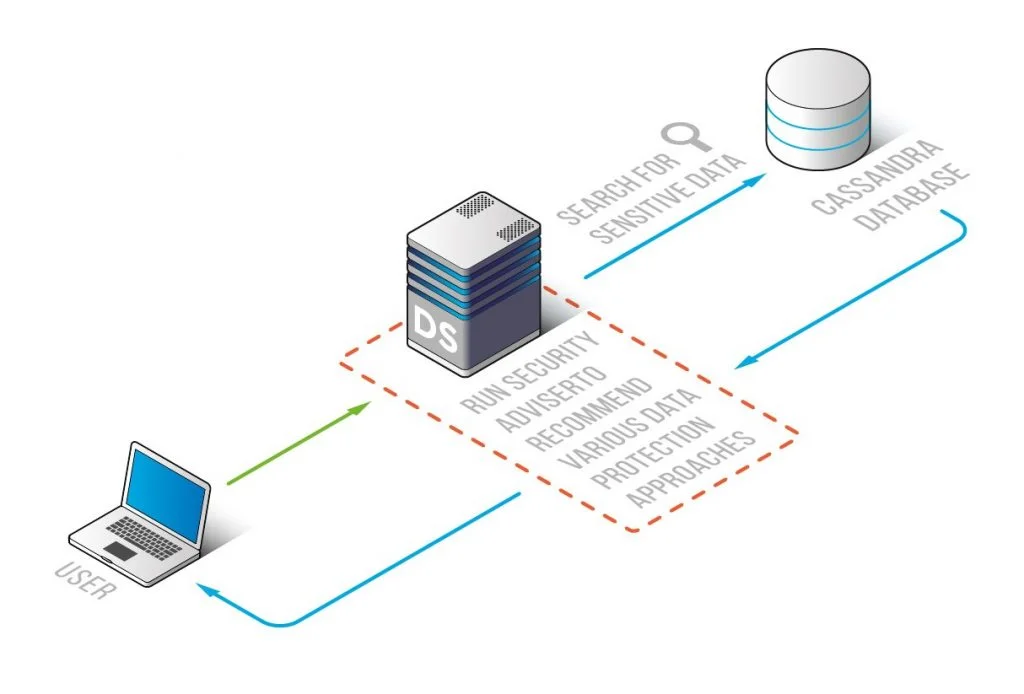
Data governance depends on visibility, control, and consistency. DataSunrise provides these elements through automation and centralized policy management. Its web-based console allows governance teams to establish and enforce standards without manual configurations or scripting.
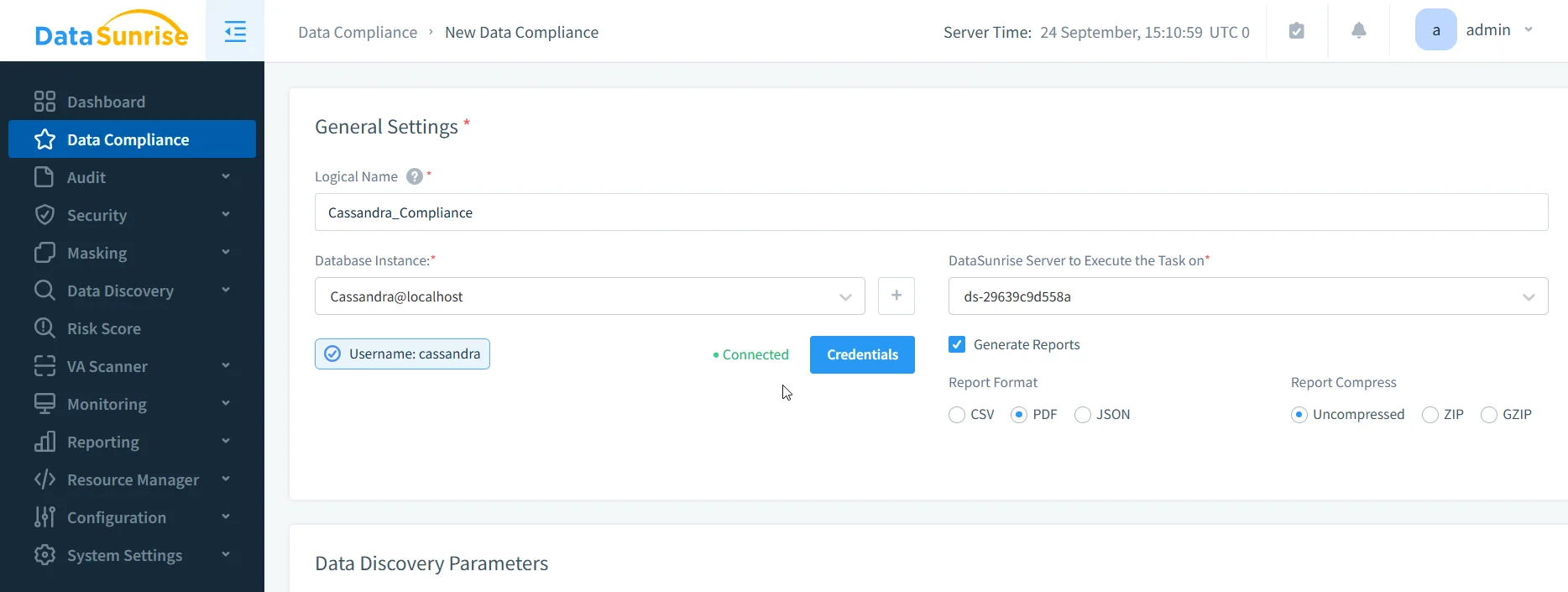
Scenario 1: Strengthening Accountability
With DataSunrise, all queries and user activities are monitored centrally. Instead of node-specific logs, governance teams gain a consolidated view of who accessed what, when, and why. Learn more in database activity monitoring.
Scenario 2: Protecting Sensitive Information
DataSunrise applies dynamic data masking and static masking rules that restrict sensitive attributes like SSNs or account numbers to authorized roles only.
Scenario 3: Enforcing Governance Policies
Through a built-in database firewall, organizations can define governance rules that automatically block unsafe queries or policy violations. This transforms governance principles into enforceable technical controls.
DataSunrise transforms Cassandra from a high-performance database into a governed data environment, where transparency and control are built-in rather than added after the fact.
Key Advantages of DataSunrise for Cassandra Governance
Beyond specific governance scenarios, DataSunrise provides foundational benefits that extend across compliance, security, and operational oversight.
- ✓ Unified Audit Trails across all Cassandra nodes and clusters.
- ✓ Real-time Database Activity Monitoring to ensure accountability.
- ✓ Comprehensive Data Security policies with automated enforcement.
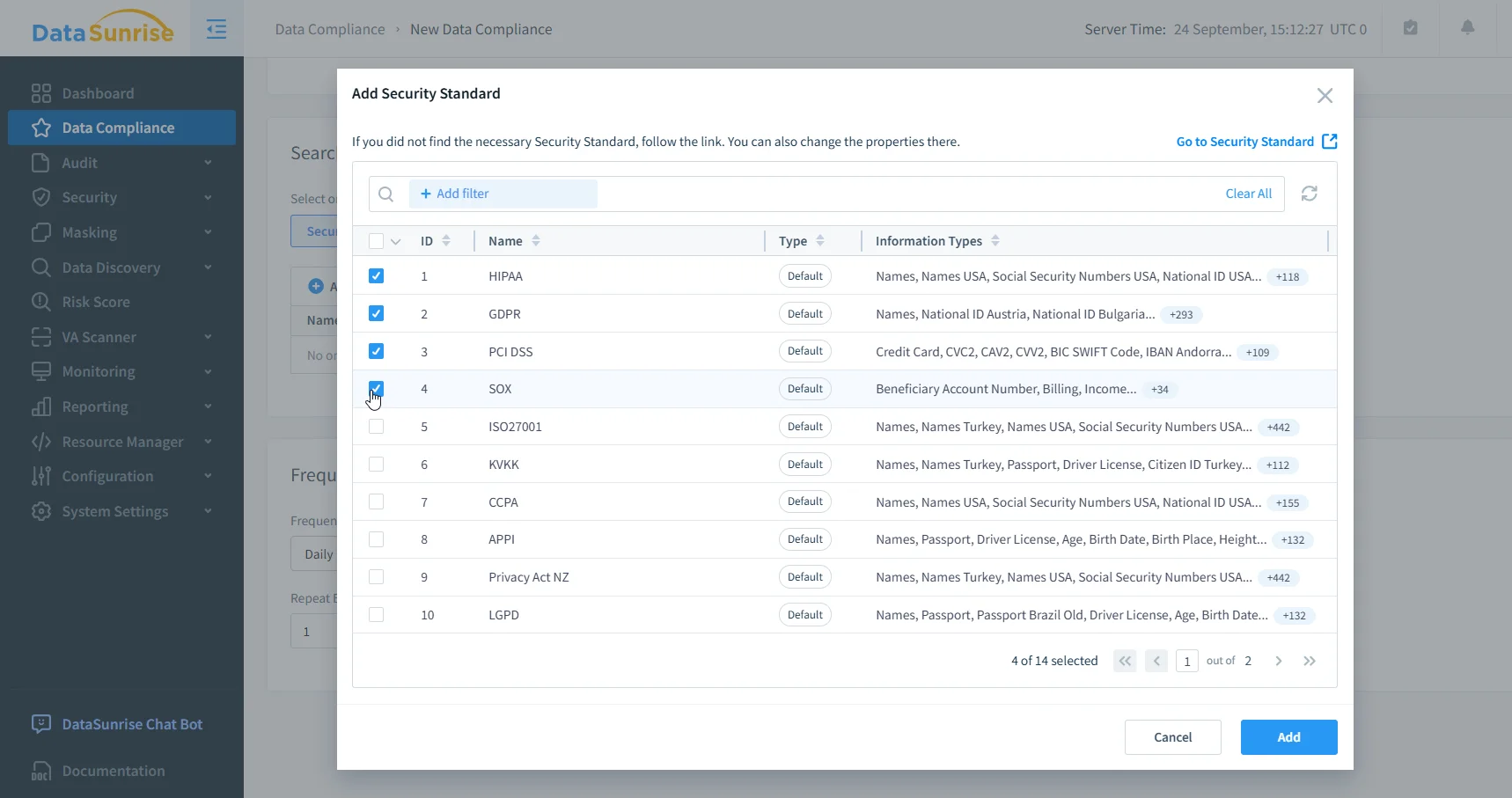
- ✓ Flexible Compliance Management aligned with GDPR, HIPAA, PCI DSS, and SOX.
- ✓ Advanced Sensitive Data Discovery using NLP and OCR methods for structured and unstructured assets.
Best Practices for Apache Cassandra Data Governance
Organizations looking to improve governance in Cassandra should:
- Assign stewardship roles and responsibilities to ensure accountability.
- Use automated data discovery to classify sensitive assets across clusters.
- Apply masking rules to protect attributes such as SSNs or financial data from unauthorized access.
- Centralize database security monitoring for consistent oversight.
- Provide governance dashboards and behavior analytics to make data programs visible to leadership.
Business Outcomes
Adopting DataSunrise for apache cassandra data governance results in:
- Reduced risk by preventing unauthorized data access.
- Improved trust in data accuracy and responsible handling.
- Operational efficiency by eliminating manual log reviews.
- Audit readiness with automated, exportable governance reports.
Conclusion
Native Cassandra offers audit logs, roles, and query capture, but these tools are fragmented and lack sensitivity awareness. They provide a starting point but fall short of full governance requirements.
DataSunrise closes these gaps with monitoring, discovery, masking, and policy enforcement. With DataSunrise, organizations can implement sustainable apache cassandra data governance programs that build accountability, protect sensitive information, and strengthen trust in business data.
Protect Your Data with DataSunrise
Secure your data across every layer with DataSunrise. Detect threats in real time with Activity Monitoring, Data Masking, and Database Firewall. Enforce Data Compliance, discover sensitive data, and protect workloads across 50+ supported cloud, on-prem, and AI system data source integrations.
Start protecting your critical data today
Request a Demo Download Now