Azure Cloud Storage Audit Tools
In today's cloud-first digital landscape, implementing comprehensive audit tools for Azure Cloud Storage has become a critical security requirement. According to Verizon's 2024 Data Breach Investigation Report, organizations with robust cloud storage monitoring detect unauthorized access attempts 89% faster and reduce security incident costs by up to 68%.
With cloud storage breaches increasing by 43% year-over-year, traditional manual audit approaches are inadequate for protecting distributed cloud assets. Azure Cloud Storage provides native auditing capabilities, but organizations in regulated industries often require more sophisticated audit trails to satisfy stringent compliance requirements.
This guide explores Azure's native cloud storage audit tools and demonstrates how DataSunrise's Zero-Touch Compliance Automation can enhance your cloud security monitoring.
Native Azure Cloud Storage Audit Tools
Azure Cloud Storage includes several built-in audit mechanisms that provide essential visibility into your distributed cloud environment through various access controls and monitoring capabilities.
1. Azure Storage Analytics and Metrics
Azure Storage provides comprehensive audit capabilities through Storage Analytics:
# Enable storage analytics via PowerShell
$ctx = New-AzStorageContext -StorageAccountName "enterpriseauditlogs" -StorageAccountKey $key

# Configure logging for blob operations
Set-AzStorageServiceLoggingProperty -ServiceType Blob -Context $ctx -LoggingOperations read,write,delete -RetentionDays 365
2. Activity Log Integration
Monitor administrative operations through Azure Activity Log:
# Query storage account activity logs
az monitor activity-log list \
  --resource-group "StorageAuditRG" \
  --start-time "2024-01-01T00:00:00Z" \
  --query "[?resourceType == 'Microsoft.Storage/storageAccounts']"
3. Testing Cloud Storage Operations
Execute sample operations to generate audit data:
from azure.storage.blob import BlobServiceClient

# Initialize and test operations
blob_service_client = BlobServiceClient(account_url="https://audittest.blob.core.windows.net", credential="<access_key>")
container_client = blob_service_client.create_container("audit-test-container")

# Upload, download, update, and delete operations for comprehensive audit testing
4. Azure Portal Interface for Audit Management
The Azure Portal provides an intuitive interface for accessing cloud storage audit information without requiring specialized query language expertise:
- Storage Insights: Navigate to your storage account and select "Insights" under Monitoring for comprehensive dashboards with visual representations of access patterns, performance metrics, and error rates
- Metrics Dashboard: View real-time performance indicators, operation counts, transaction volumes, and capacity utilization across different storage tiers
- Activity Log: Review administrative operations, configuration changes, role assignments, and account-level modifications with detailed timestamp information
- Access Control (IAM): Monitor role assignments, permission modifications, and access policy changes with complete audit trails of who made changes and when
- Alerts Configuration: Set up automated notifications for unusual storage access patterns, failed authentication attempts, or threshold breaches with customizable severity levels
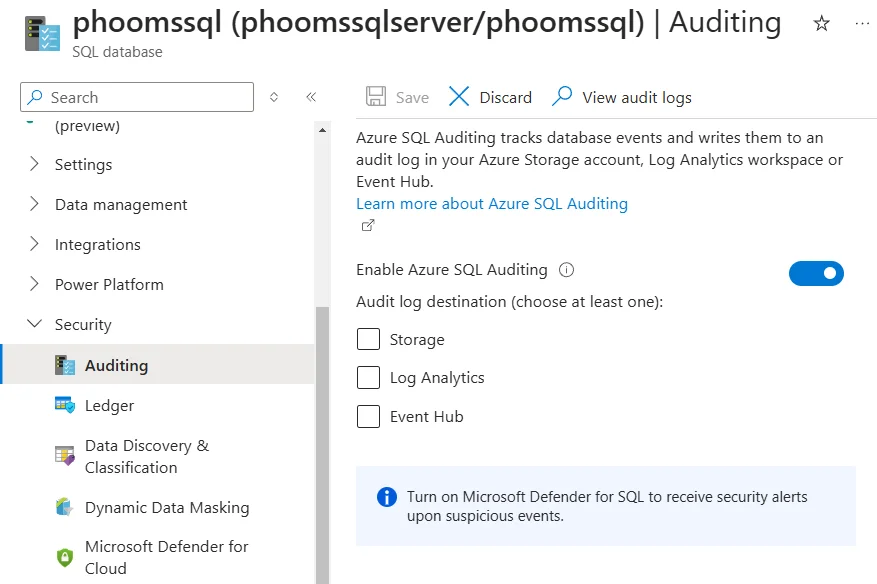
This web-based interface makes it easier for security analysts and compliance officers to monitor cloud storage activities without specialized technical expertise while providing filtering capabilities to focus on specific time periods, operations, or users.
Limitations of Native Azure Cloud Storage Audit Tools
While Azure's native audit tools provide essential functionality, organizations with advanced security requirements encounter several limitations:
| Native Tool Feature | Key Limitation | Business Impact |
|---|---|---|
| Storage Analytics | Limited contextual information about file content | Challenging to understand security implications |
| Activity Logs | Basic operation logging without behavioral analysis | Difficulty identifying sophisticated attacks |
| Retention Management | Azure Monitor storage constraints and costs | May not satisfy long-term compliance needs |
| Real-Time Intelligence | Threshold-based alerts with limited context | Delayed response to security incidents |
| Compliance Integration | No automated regulatory framework mapping | Time-consuming audit preparation |
Enhanced Cloud Storage Audit Tools with DataSunrise
DataSunrise significantly enhances cloud security monitoring through Autonomous Compliance Orchestration and sophisticated analytics designed for distributed cloud storage environments.
Setting Up DataSunrise for Azure Cloud Storage Audit
1. Connect to Azure Storage Account
Establish a secure connection between DataSunrise and your Azure Storage environment through the administrative interface. DataSunrise supports all Azure Storage types for comprehensive coverage.
2. Create Cloud Storage-Specific Audit Rules
Configure sophisticated audit policies using DataSunrise's No-Code Policy Automation interface to monitor specific containers, track user activities, and set up alerts for suspicious operations.
3. Review Comprehensive Audit Results
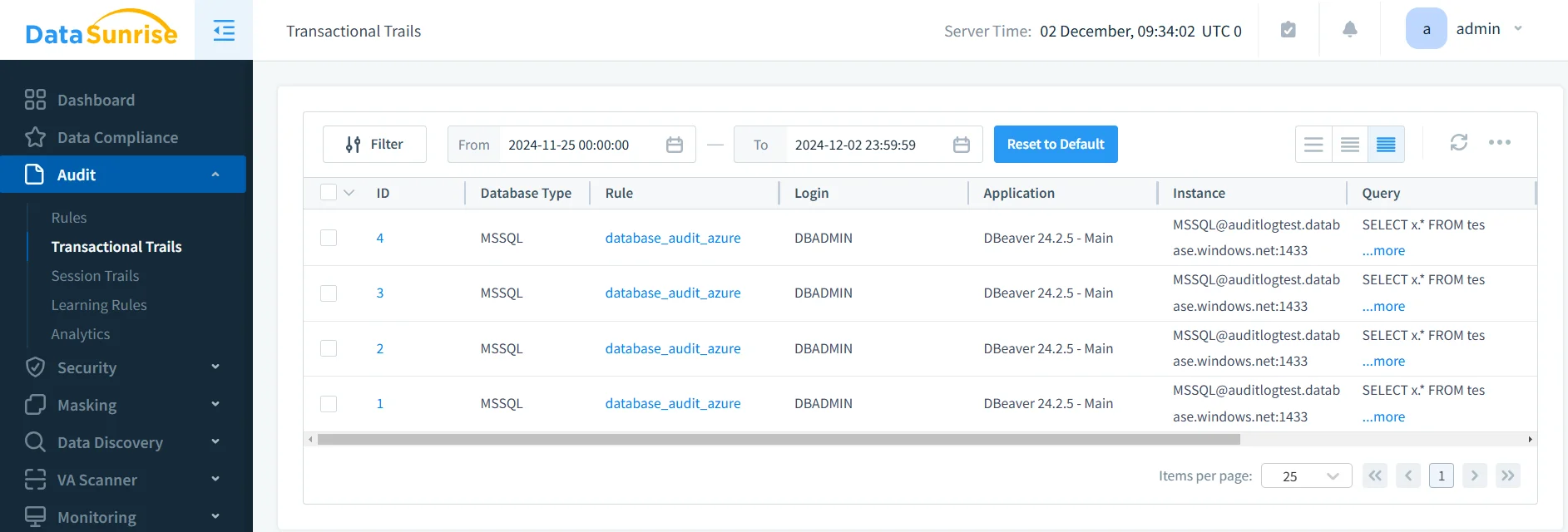
Access detailed audit information through DataSunrise's unified dashboard with advanced filtering, real-time monitoring, and intelligent correlation capabilities for comprehensive data activity history.
Key Advantages of DataSunrise for Azure Cloud Storage
- Auto-Discover & Mask: Automatically identify and classify sensitive data using NLP algorithms and machine learning
- Intelligent Policy Orchestration: Create sophisticated audit policies without writing complex code
- Real-Time Notifications: Receive immediate alerts for suspicious activities with contextual information
- User Behavior Analysis: Establish baselines and automatically detect anomalies using ML algorithms
- Automated Compliance Reporting: Generate pre-configured reports for GDPR, HIPAA, PCI DSS, and SOX
- Dynamic Data Masking: Protect sensitive files in real-time while maintaining functionality
- Cross-Platform Visibility: Monitor cloud storage alongside databases from a unified console with support for over 40 data storage platforms
Best Practices for Azure Cloud Storage Audit Tools Implementation
To maximize effectiveness, consider these strategic best practices:
1. Performance-Optimized Strategy
- Align audit strategies with storage tier design to minimize performance impact
- Apply detailed monitoring to critical containers while using sampling for high-volume operations
- Balance comprehensive auditing with storage and compute costs
2. Data-Centric Configuration
- Focus comprehensive auditing on containers with PII, financial data, or regulated information
- Monitor complex operations and cross-region access patterns that might indicate security threats
- Implement automated data discovery for content classification
3. Enhanced Security Implementation
- Deploy DataSunrise's comprehensive security suite beyond native capabilities
- Leverage machine learning for behavioral baseline establishment and threat detection
- Utilize unified monitoring for cross-platform correlation
Conclusion
As organizations increasingly rely on Azure Cloud Storage for business-critical data, implementing robust audit tools has become essential for security, compliance, and operational excellence. While Azure provides foundational native audit capabilities, organizations with complex requirements benefit significantly from enhanced solutions like DataSunrise.
DataSunrise provides Zero-Touch Compliance Automation, advanced audit tools, and real-time monitoring that transforms Azure Cloud Storage audit tools into strategic security assets. With flexible deployment modes, organizations can establish enterprise-grade cloud storage protection.
Protect Your Data with DataSunrise
Secure your data across every layer with DataSunrise. Detect threats in real time with Activity Monitoring, Data Masking, and Database Firewall. Enforce Data Compliance, discover sensitive data, and protect workloads across 50+ supported cloud, on-prem, and AI system data source integrations.
Start protecting your critical data today
Request a Demo Download Now