Database Audit for Amazon RDS

As organizations deploy increasingly sensitive workloads to the cloud, ensuring transparency and control over data operations becomes critical. For Amazon RDS, a managed database service used across sectors, implementing a database audit strategy is no longer optional. This article explores how to build an effective Database Audit for Amazon RDS using native tools and advanced third-party capabilities like DataSunrise, all while aligning with security, compliance, and GenAI-driven intelligence.
Why Amazon RDS Needs Audit Controls
Amazon RDS simplifies the operational overhead of running databases, but abstraction shouldn't mean invisibility. Without audit trails, malicious changes, privilege abuse, or data leaks can go unnoticed. A robust audit solution ensures that database activities are logged in real-time, analyzed for anomalies, and reported in compliance-ready formats. Beyond visibility, compliance mandates such as HIPAA, PCI-DSS, and GDPR require provable evidence of data access patterns.
Enabling Native Amazon RDS Audit Features
Amazon RDS supports logging through CloudTrail, CloudWatch, and database-specific log exports. For engines like PostgreSQL and MySQL, logs such as general_log, slow_query_log, and log_connections can be enabled via DB parameter groups. For instance, in PostgreSQL, running ALTER SYSTEM SET log_statement = 'all'; allows for SQL-level visibility.
Once logs are configured, they can be exported to CloudWatch. This is done by navigating to the RDS console, selecting the database instance, and enabling the appropriate log exports under the configuration section. Exporting logs to CloudWatch allows for alerting and long-term retention without manual log inspection.
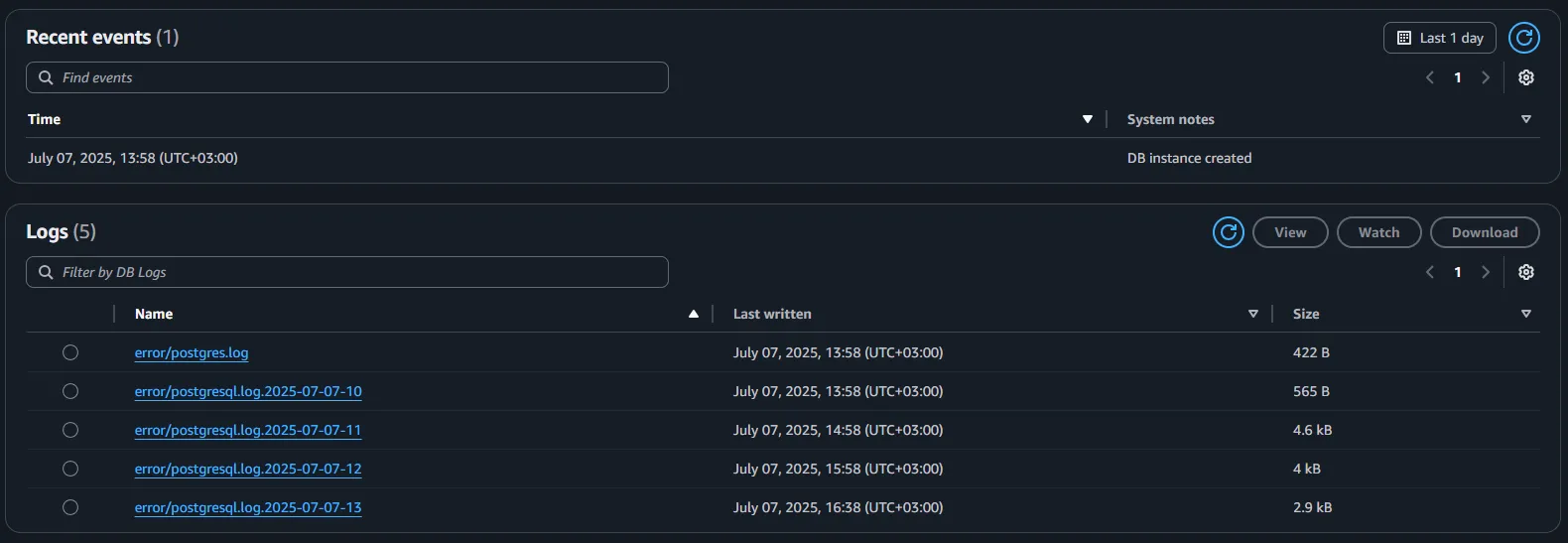
On a broader level, AWS CloudTrail can capture API-level events related to RDS, such as modifications to DB instances or snapshot activities. While not providing SQL-level audit detail, it enhances visibility into infrastructure-level operations. It's important to note, however, that native logging can lead to increased storage use. Regularly managing audit storage is necessary to avoid cost or performance issues.
Going Beyond Native: Real-Time Audit with DataSunrise
For organizations that need SQL-level detail and advanced alerting, DataSunrise extends audit capabilities for Amazon RDS. It provides real-time monitoring, custom audit rules, and user behavior analysis without altering the underlying database or application logic.
DataSunrise functions as a proxy layer, intercepting queries and logging them with rich context. It integrates with AWS IAM and supports tagging for better business-role mapping. Audit rules can be defined using conditional logic. For example:
{
  "rule": "Audit all SELECT on customer_data",
  "condition": "if access_role != 'readonly'",
  "notify": "Security Team"
}
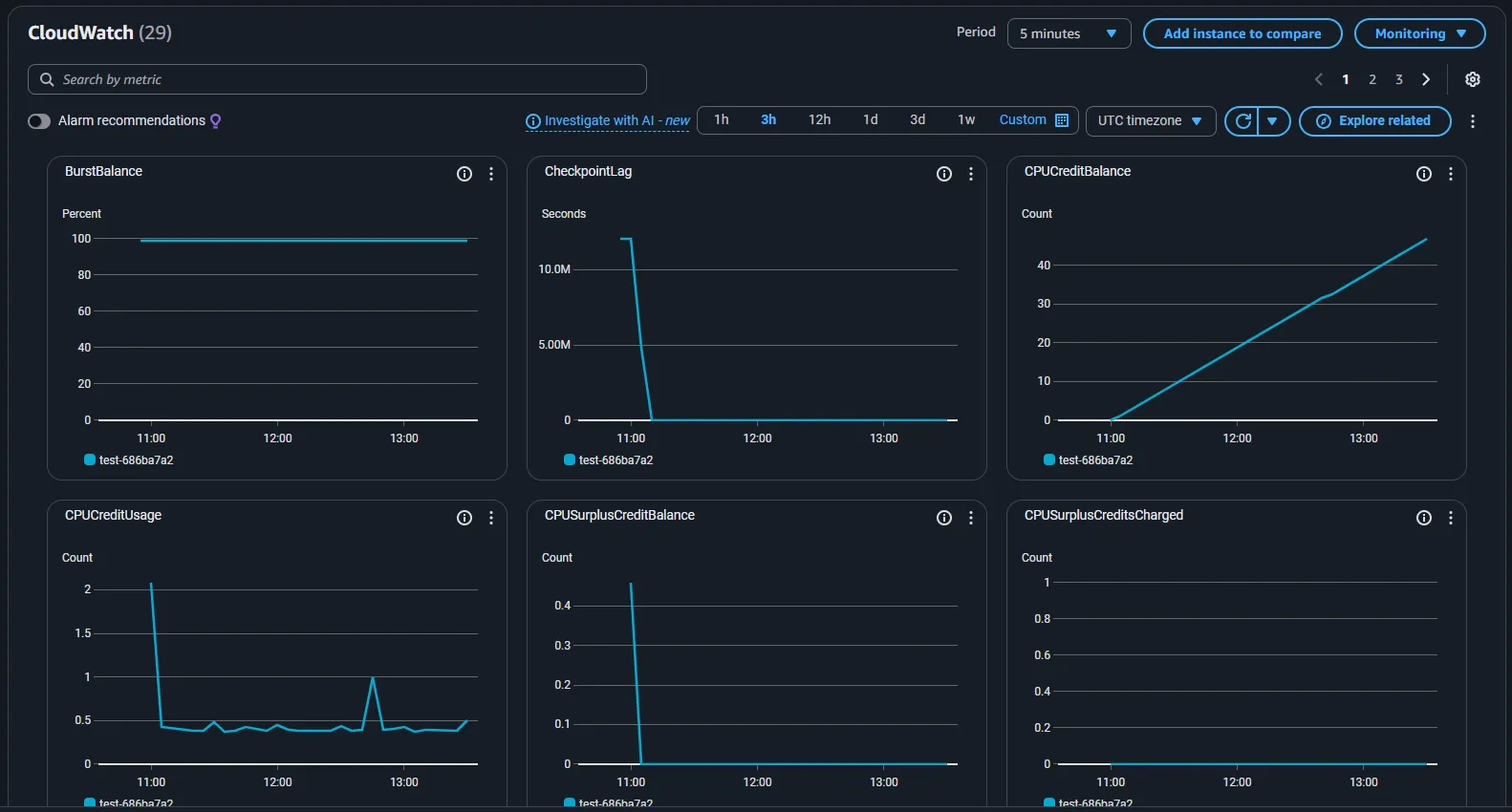
This allows teams to set up alerts on abnormal access or enforce fine-grained monitoring based on roles or user behaviors.
Dynamic Masking: Protecting Sensitive Queries in Real Time
Auditing alone does not ensure data protection. Dynamic Data Masking adds an essential layer of privacy by hiding sensitive information during query execution. For instance, if a user without permission to view personally identifiable information runs a query such as SELECT ssn, name FROM customers;, they will receive results where the SSN is masked, such as XXX-XX-1234 instead of the real value.
These masking rules can be customized per column or based on patterns. This approach ensures that sensitive data is hidden from unauthorized users, which is particularly important during analytics workflows or while preparing datasets for GenAI model training and inference.
Data Discovery for RDS in GenAI Context
Before you can protect data, you need to know where it is. DataSunrise Data Discovery allows you to scan Amazon RDS schemas and locate sensitive or regulated data. It can identify fields containing PII, PHI, PCI information, as well as custom-tagged data like "classified" or "restricted."
This capability becomes especially important in GenAI projects. When using Amazon RDS as a data source for fine-tuning a customer service model, for example, discovery tools ensure that sensitive information is not inadvertently exposed or embedded into training data.
How GenAI Helps Secure RDS Workloads
Large Language Models (LLMs) can assist security teams in multiple ways. They can detect behavioral anomalies, such as a developer issuing thousands of DELETE statements in a short period. They also provide policy recommendations based on schema analysis, helping teams formulate effective audit and masking rules.
Moreover, GenAI enables natural language querying. Security teams can ask questions like, "Who accessed salary data last week?" and receive both the SQL statement and the answer. This capability bridges the gap between technical detail and operational insight.
Here's an example prompt for an AI assistant:
"Generate a rule to alert if SELECTs exceed 500/min from any user on the finance schema"
And the output might look like:
{
  "rule": "SELECT flood protection",
  "threshold": 500,
  "schema": "finance",
  "action": "Alert & block"
}
This kind of automation makes audit configuration faster and more intuitive, reducing human error and response time.
Ensuring Compliance with Audit and Masking
Combining audit trails, data masking, and discovery tools helps align Amazon RDS environments with stringent compliance standards. Whether you're adhering to GDPR, HIPAA, or SOX requirements, these controls offer demonstrable safeguards.
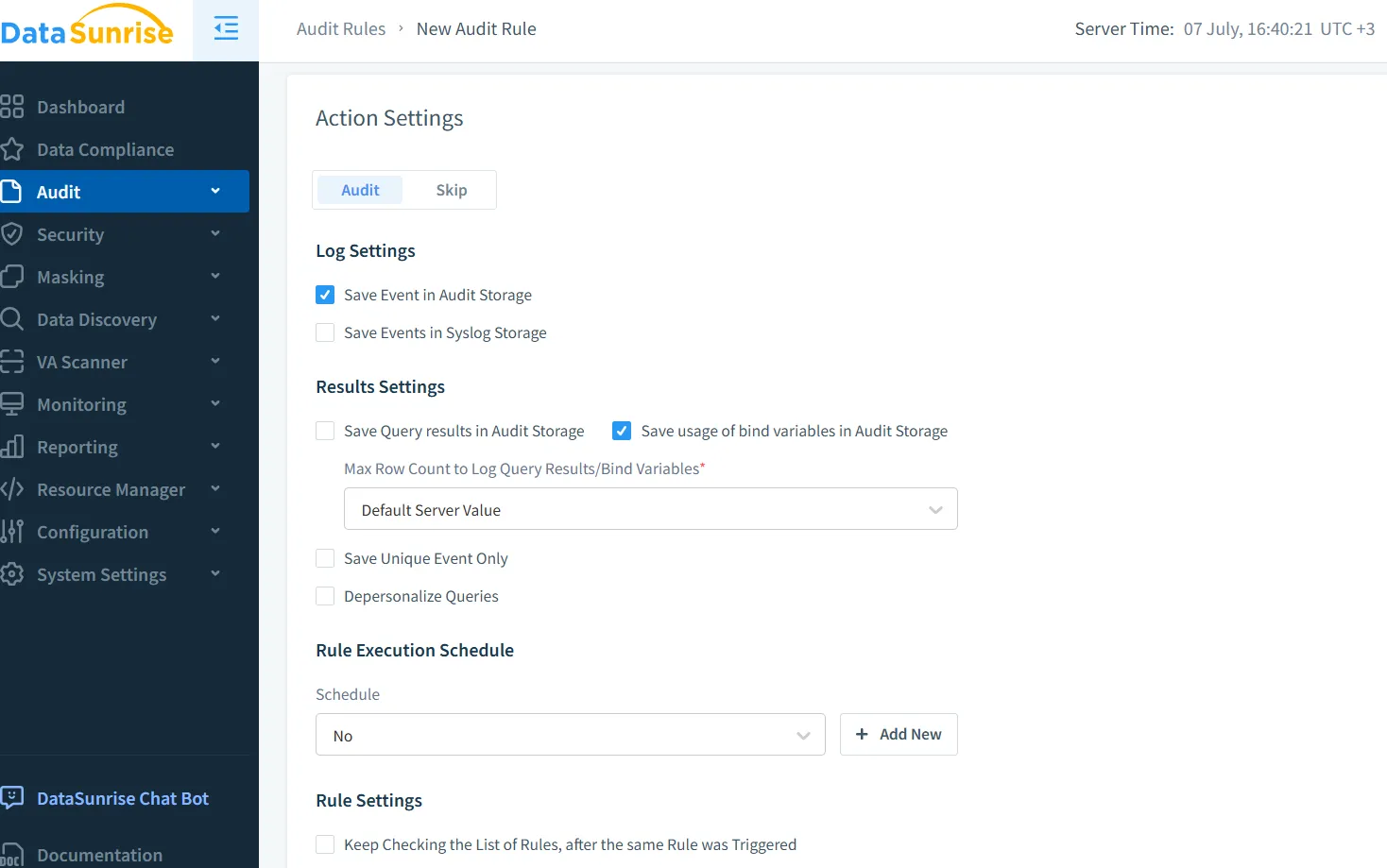
With the Compliance Manager in DataSunrise, organizations can automatically generate reports detailing audit coverage, policy violations, and access events. This supports compliance audits and contributes to building a long-term database activity history, which is essential for forensic investigation and regulatory transparency.
Final Thoughts
Building a Database Audit for Amazon RDS means balancing visibility, performance, and privacy. Native AWS tools provide a good starting point, but extending them with DataSunrise unlocks deeper insights and better control.
With GenAI entering the security landscape, combining automated discovery, real-time audit, and dynamic masking becomes critical. Whether you're fine-tuning LLMs on customer data or running financial applications, it's the right time to rethink how your RDS audit stack is built.
To explore more on masking, discovery, and compliance, visit our Data Compliance Overview or browse the full Knowledge Center.
Protect Your Data with DataSunrise
Secure your data across every layer with DataSunrise. Detect threats in real time with Activity Monitoring, Data Masking, and Database Firewall. Enforce Data Compliance, discover sensitive data, and protect workloads across 50+ supported cloud, on-prem, and AI system data source integrations.
Start protecting your critical data today
Request a Demo Download Now