Data Anonymization in MariaDB
Modern database environments rarely operate in isolation. A single MariaDB instance often supports production workloads, analytics, reporting, development, and testing at the same time. While this consolidation improves efficiency, it also increases the likelihood that sensitive information is accessed outside its intended scope.
Data anonymization in MariaDB addresses this challenge by transforming sensitive data so that it can no longer be associated with identifiable individuals. Unlike access controls or encryption, anonymization focuses on eliminating privacy risk while preserving the structural integrity of datasets used for operational and analytical purposes. This approach naturally complements broader data security strategies by reducing exposure rather than merely restricting access.
This article explains how data anonymization can be implemented in MariaDB using native techniques and how centralized platforms such as DataSunrise extend anonymization into a controlled, auditable, and compliance-aligned process.
What Is Data Anonymization?
Data anonymization is the process of modifying sensitive data so that individuals cannot be identified, either directly or indirectly. When implemented correctly, anonymized data cannot be re-identified, even when combined with additional datasets. This makes anonymization a critical component of modern data compliance and privacy-focused data governance strategies.
Key properties of anonymization include:
- Irreversible transformations
- Removal of direct and indirect identifiers
- Preservation of schema structure and data relationships
- Continued usability for analytics, testing, and reporting
Anonymization differs from data masking and pseudonymization. Masking controls visibility at query time, while pseudonymization replaces identifiers but may still allow re-identification under certain conditions. Anonymization permanently alters the data to remove privacy risk and supports long-term protection of personally identifiable information (PII).
Native Data Anonymization Techniques in MariaDB
MariaDB does not include a dedicated anonymization framework. Instead, anonymization is typically implemented using SQL functions, update operations, and derived values.
In-Place Anonymization with SQL
Sensitive fields can be overwritten directly using deterministic or synthetic values. In practice, this is usually done inside a transaction and applied to a clearly scoped dataset.
 */ START TRANSACTION; /*

-- Verify target data before anonymization
SELECT id, email, phone, full_name
FROM customers
LIMIT 5;

-- Overwrite sensitive fields with synthetic values
UPDATE customers
SET
    email     = CONCAT('user', id, '@example.com'),
    phone     = '000-000-0000',
    full_name = 'REDACTED';

-- Optional verification after update
SELECT id, email, phone, full_name
FROM customers
LIMIT 5;

COMMIT;/*
This approach permanently replaces original values while preserving column types, constraints, and application compatibility.
Hash-Based Transformations
Hashing can be used to anonymize identifiers while maintaining deterministic consistency across datasets.
 */START TRANSACTION;

-- Inspect original identifiers
SELECT user_id, national_id
FROM users
LIMIT 5;

-- Apply irreversible hash transformation
UPDATE users
SET
    national_id = SHA2(national_id, 256);

-- Verify anonymized output
SELECT user_id, national_id
FROM users
LIMIT 5;

COMMIT; /*
Hash-based anonymization removes readability and allows joins across anonymized datasets when the same hashing logic is applied consistently. However, the original values cannot be restored.
Randomization and Noise Injection
Numeric values can be anonymized by injecting controlled randomness while preserving overall statistical behavior.
*/START TRANSACTION;

-- Review original numeric values
SELECT order_id, total_amount
FROM orders
LIMIT 5;

-- Apply bounded noise to numeric fields
UPDATE orders
SET
    total_amount = total_amount + FLOOR(RAND() * 10 - 5);

-- Validate post-anonymization values
SELECT order_id, total_amount
FROM orders
LIMIT 5;

COMMIT;/*
This method helps preserve analytical usefulness (averages, trends, distributions) while preventing exposure of exact original values.
Centralized Data Anonymization with DataSunrise
DataSunrise provides a centralized anonymization layer that works independently of MariaDB schemas and application logic. Anonymization rules are defined once and enforced consistently across environments, eliminating the need for manual SQL scripts. This approach fits naturally into broader data security practices used to reduce sensitive data exposure. As a result, anonymization becomes a controlled and repeatable security process rather than an ad hoc operation.
Sensitive Data Discovery and Classification
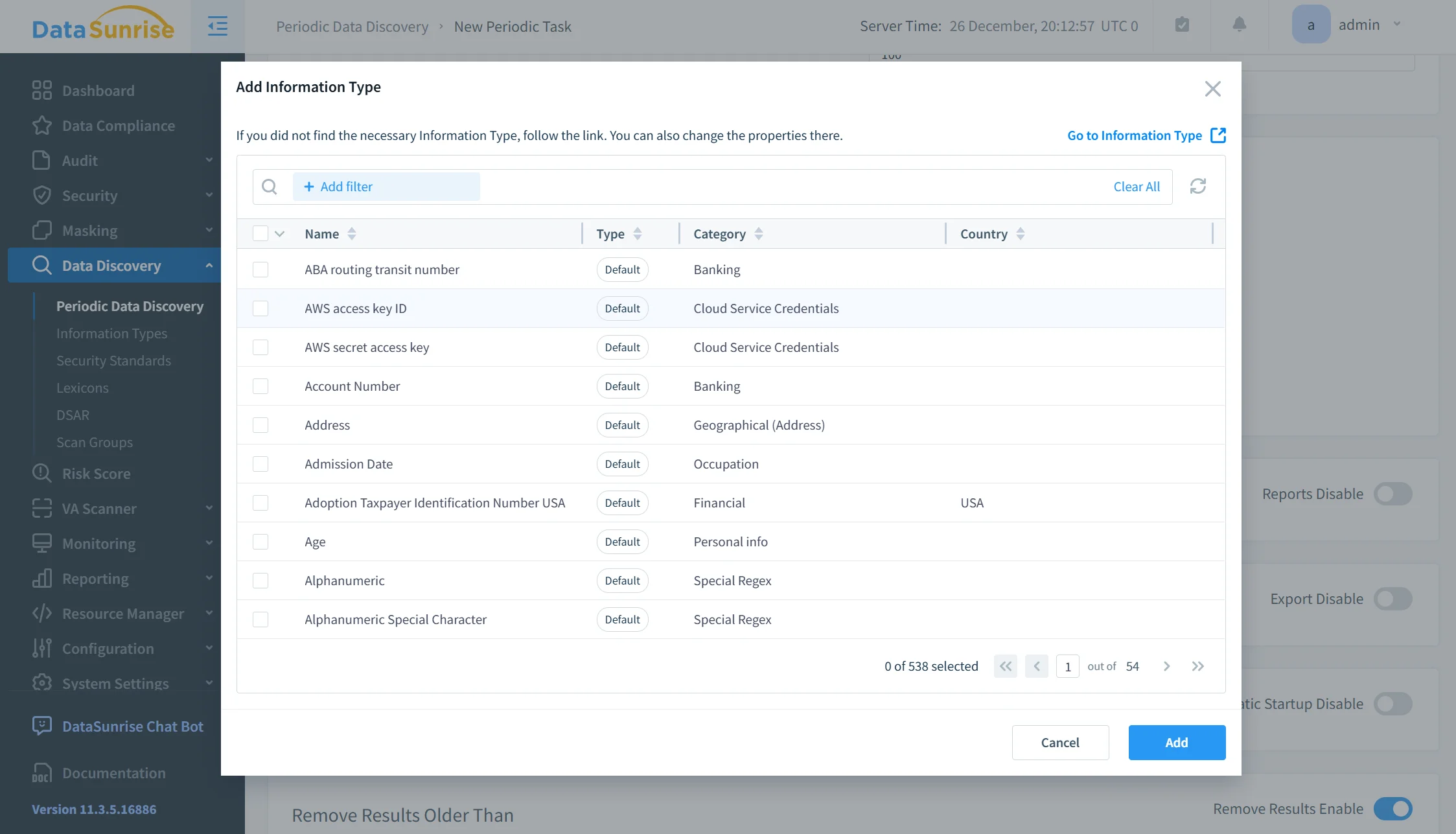
Before anonymization, DataSunrise automatically scans MariaDB schemas to detect sensitive data based on actual content and patterns. The discovery process follows established data discovery principles rather than relying on column names or manual tagging. Newly added tables and fields are classified automatically as data structures evolve. This creates an always up-to-date inventory of sensitive data assets ready for protection.
Policy-Driven Anonymization Rules
Anonymization rules are defined at the data category level instead of being tied to individual tables or columns. Once configured, these rules apply automatically to all matching fields across schemas and databases. This approach differs from traditional data masking techniques, as anonymization permanently alters the data. The result is consistent anonymization coverage with significantly reduced manual maintenance.
Controlled Anonymization Workflows
DataSunrise applies anonymization during controlled workflows such as data cloning, export, or test data provisioning. Sensitive data is anonymized before it leaves protected environments, which is critical for secure test data management processes. This enables safe reuse of production-like data in downstream systems without exposing real values. Operational workflows continue without disruption while privacy risks are minimized.
Auditable Anonymization Operations
All anonymization actions are logged and fully traceable within the system. Audit records capture what data was anonymized, which rules were applied, and when the operation occurred. This information is integrated into centralized database activity monitoring workflows. As a result, organizations maintain consistent oversight and accountability across environments.
Compliance and Privacy Alignment
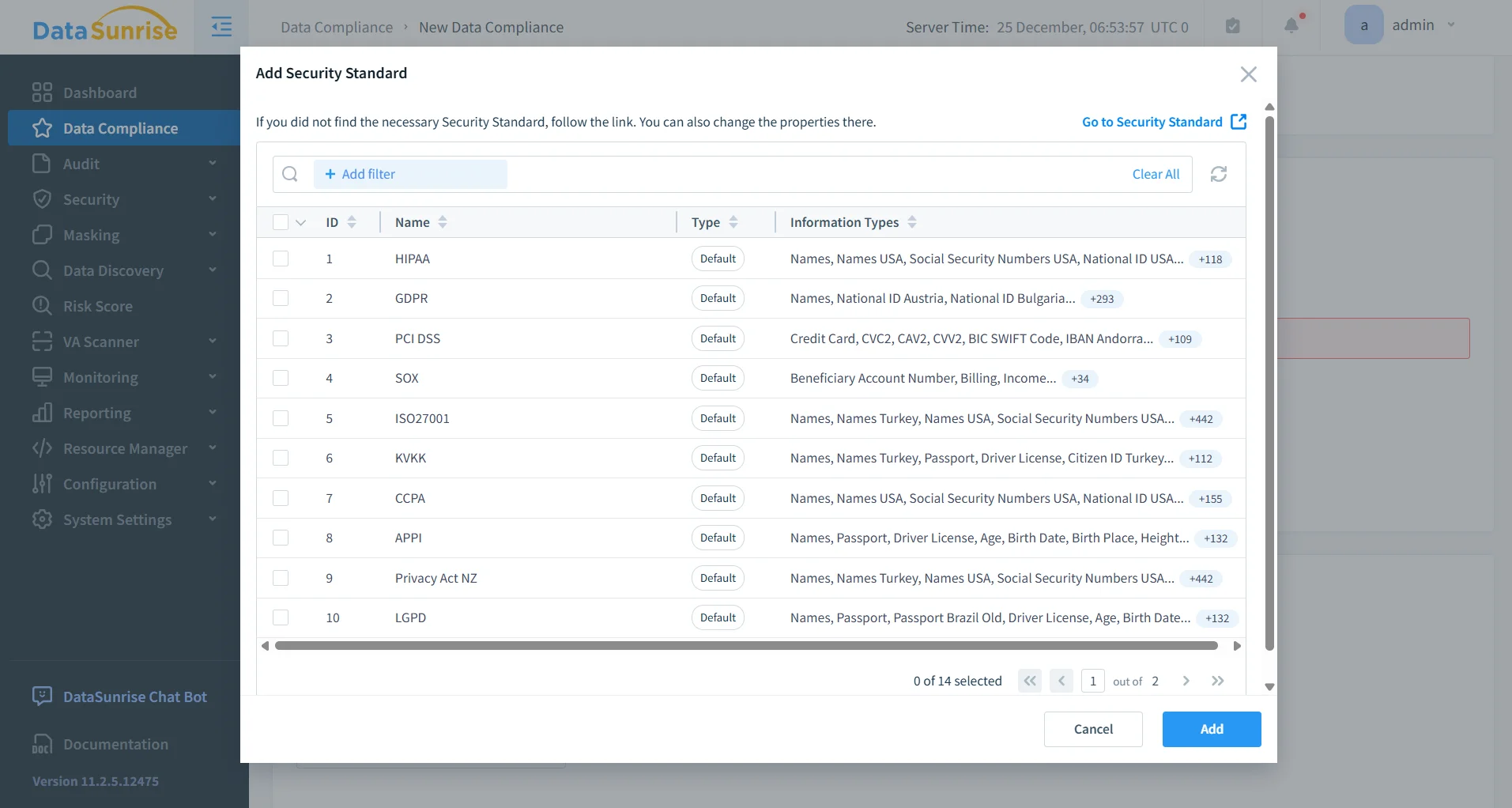
Data anonymization plays a key role in meeting privacy and regulatory obligations. By permanently removing personal identifiers, anonymized datasets reduce regulatory exposure and compliance scope. This directly supports structured data compliance initiatives across regulated environments. Anonymization therefore becomes an integral part of an ongoing compliance strategy rather than a one-time technical measure.
Business Impact of MariaDB Data Anonymization
| Business Impact Area | Practical Effect |
|---|---|
| Reduced data exposure risk | Sensitive data is protected in non-production environments, lowering the chance of accidental leaks during development and testing |
| Faster data provisioning | Compliant datasets can be prepared quickly for development, analytics, and QA without manual sanitization |
| Lower audit overhead | Traceable anonymization workflows simplify audits and reduce time spent on evidence collection |
| Safer data sharing | Teams can exchange datasets with confidence, knowing sensitive values are permanently anonymized |
Instead of restricting access, anonymization enables broader and safer data usage across MariaDB environments.
Conclusion
MariaDB offers the flexibility to implement anonymization using native SQL techniques. These methods are suitable for controlled scenarios where permanent transformation of data is acceptable and align with core principles of database security.
For organizations that require scalable governance, consistency across environments, and audit-ready anonymization workflows, centralized platforms such as DataSunrise extend MariaDB with policy-driven, discoverable, and traceable anonymization controls that support modern data compliance requirements.
By embedding anonymization into structured workflows rather than ad-hoc scripts, organizations can reduce privacy risk while maintaining the usability of their MariaDB data assets.
Protect Your Data with DataSunrise
Secure your data across every layer with DataSunrise. Detect threats in real time with Activity Monitoring, Data Masking, and Database Firewall. Enforce Data Compliance, discover sensitive data, and protect workloads across 50+ supported cloud, on-prem, and AI system data source integrations.
Start protecting your critical data today
Request a Demo Download Now