How to Audit Amazon RDS
Amazon RDS is a powerful managed database service, but without proper auditing, it can become a blind spot in your data security strategy. This article explains how to audit Amazon RDS effectively, using both native features and advanced tools like DataSunrise. It also shows how auditing integrates with GenAI security, helping businesses stay compliant and protected in real time.
Why Auditing Matters for Amazon RDS
Auditing tracks who accessed your RDS instance, when, and what they did. This is essential for compliance, anomaly detection, and incident response. Without proper audit trails, you risk missing unauthorized data access or accidental modifications.
Read more on data activity history and audit trails to understand why a full-picture audit is critical.
Native Amazon RDS Audit Setup
Amazon RDS provides several ways to enable auditing depending on the engine:
- PostgreSQL and MySQL: Enable the
general_log,slow_query_log, orlog_statement(PostgreSQL) to track user activity. - Oracle: Use Fine-Grained Auditing (FGA) and Unified Auditing.
- SQL Server: Leverage SQL Server Audit objects or Extended Events.
For PostgreSQL:
ALTER SYSTEM SET log_statement = 'all';
SELECT pg_reload_conf();
For MySQL:
SET GLOBAL general_log = 'ON';
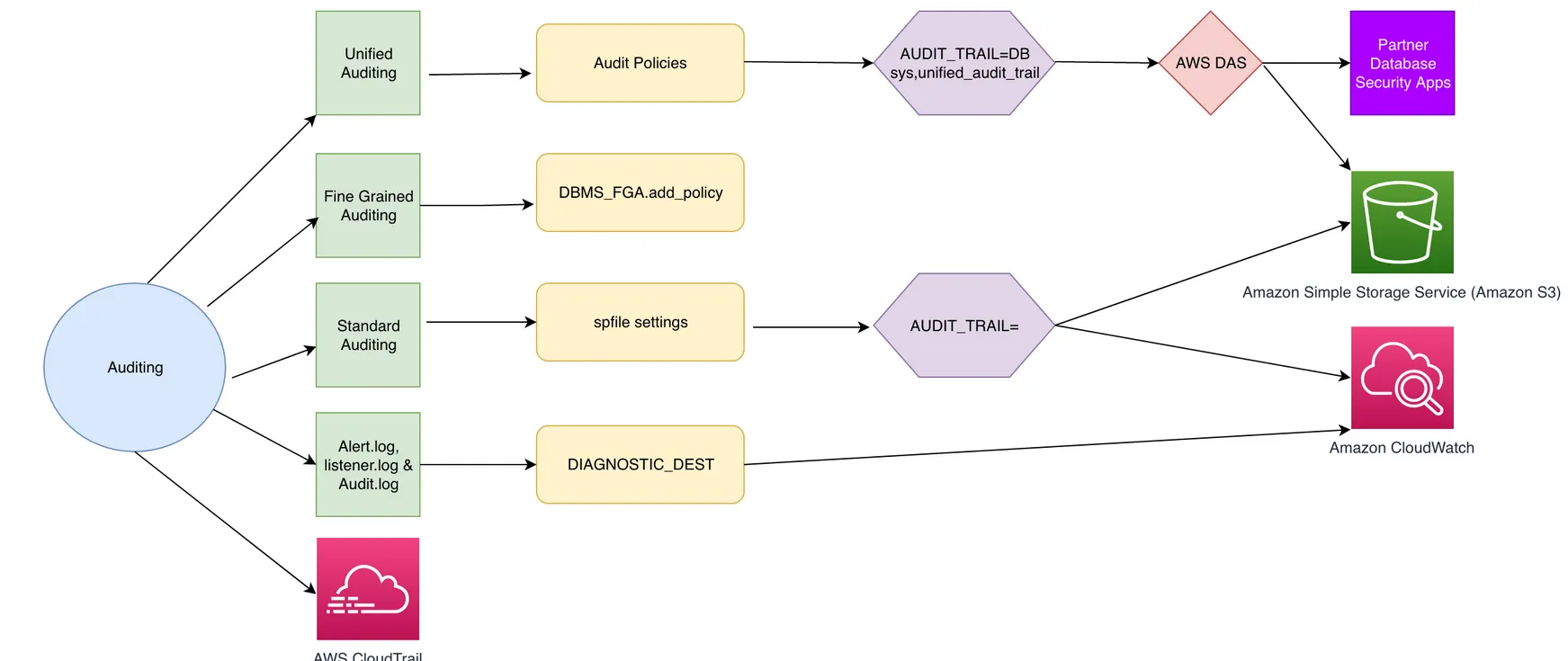
To centralize logs, enable Amazon RDS to export logs to CloudWatch for visualization and alerting.
Real-Time Audit and Alerts
RDS logs can be streamed to CloudWatch, but they are often not in real-time. For faster detection, use DataSunrise real-time notifications via integrations with Slack, Teams, or email.
DataSunrise can analyze queries as they happen, match against audit rules, and trigger alerts on suspicious behavior like excessive data exports or SQL injection attempts.
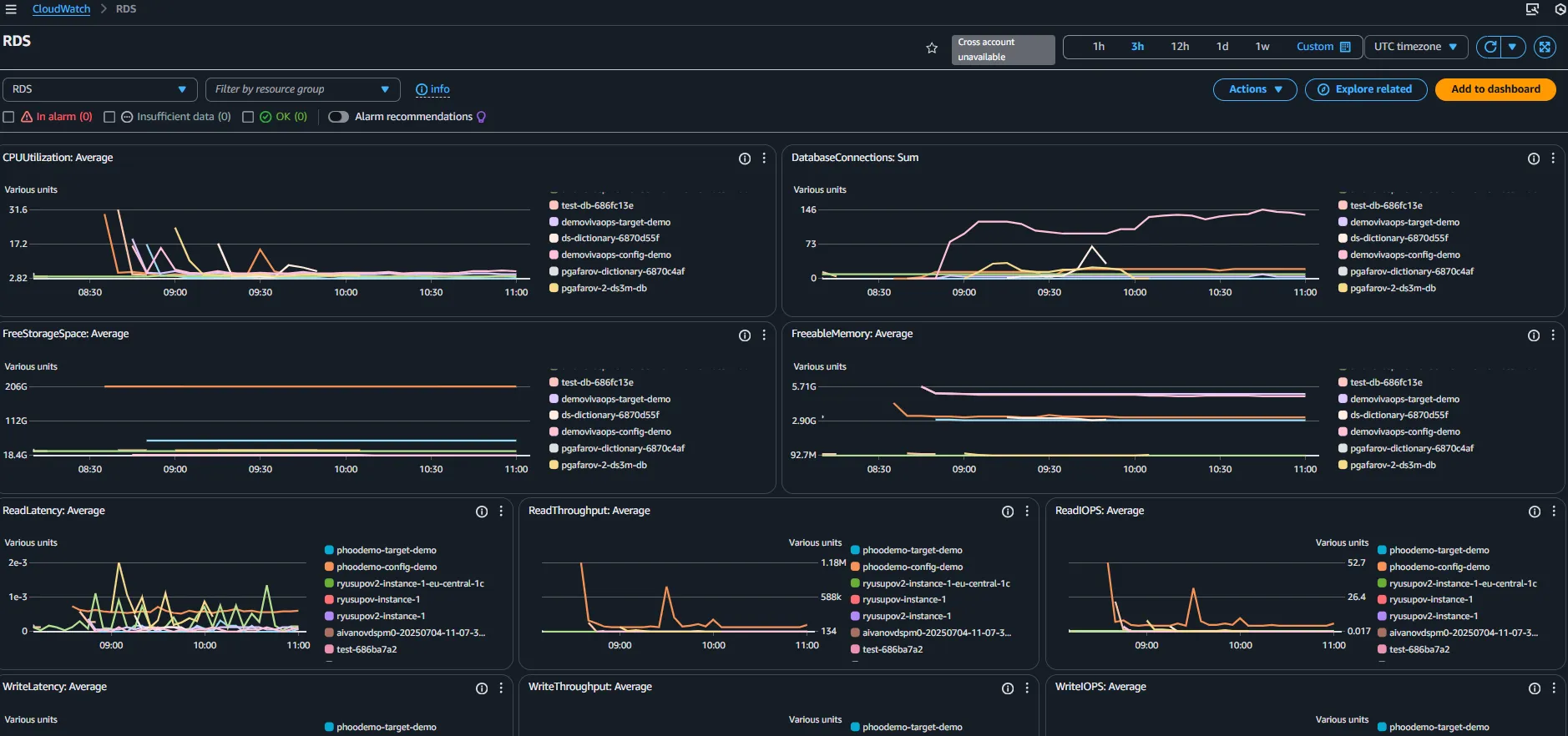
Explore how database activity monitoring gives you visibility into user behavior in production.
Adding GenAI to Your Security Stack
Generative AI models can improve security posture when integrated into audit systems. For example, a fine-tuned LLM can review SQL logs and detect anomalies in behavior patterns.
Here’s a conceptual example using a PostgreSQL audit table:
SELECT * FROM audit_log
WHERE query_text LIKE '%SELECT%'
  AND user_name = 'ai_user'
  AND timestamp >= now() - interval '1 hour';
You could feed this into a GenAI model for contextual scoring, and trigger alerts if the behavior deviates from known baselines.
DataSunrise offers behavior analytics that support this approach and can be extended with LLM-based decisioning.
Data Discovery and Compliance Mapping
Before auditing, it's important to know what to audit. DataSunrise’s data discovery tool helps identify sensitive fields (e.g., SSNs, emails) so you can create focused rules.
From there, apply role-based policies to meet GDPR or HIPAA requirements. The compliance manager automates mapping sensitive data to security and audit rules.
Dynamic Data Masking for Live Environments
Auditing alone isn't always enough. You should also limit what users see during query execution. Dynamic masking replaces sensitive values at runtime without changing the data in storage.
Use this to protect PII from testers, analysts, or third-party tools:
SELECT credit_card_number FROM customers;
-- returns XXXX-XXXX-XXXX-1234 for masked users
This can be enforced via DataSunrise masking policies, which integrate with your RDS proxy configuration.
Advanced Audit with DataSunrise
DataSunrise sits between your users and Amazon RDS, logging, filtering, and transforming traffic in real time. Unlike native logs, it provides:
- Fine-grained audit logs
- SQL injection protection
- Real-time masking
- User identity correlation
- Automated compliance reports
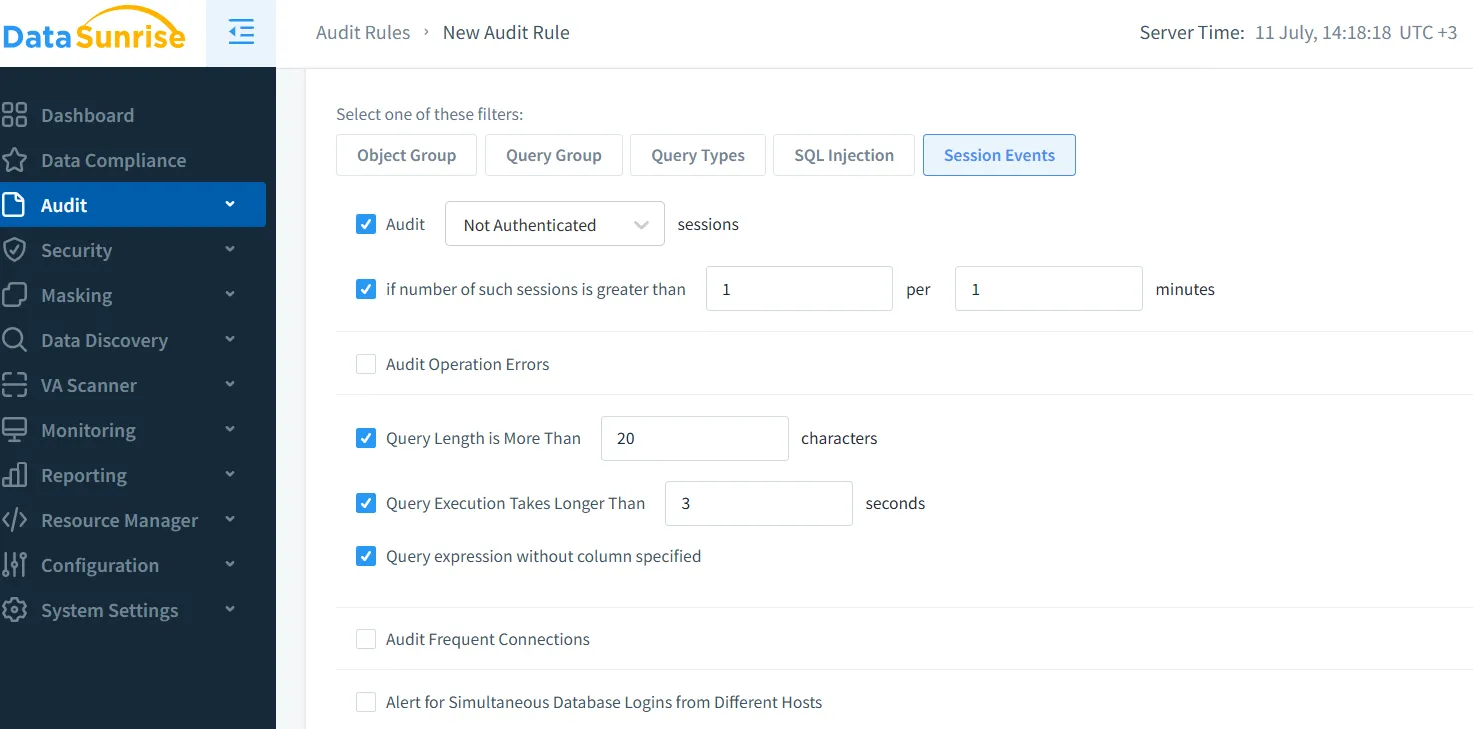
The tool also supports over 40 platforms and is deployed via reverse proxy or inline mode.
Conclusion
Knowing how to audit Amazon RDS is not just about logging activity—it’s about creating a real-time, intelligent, and compliant security layer around your data. Native tools are a good start, but platforms like DataSunrise bring you to the next level with real-time analytics, masking, and compliance automation.
Learn more about how data-inspired security evolves your audit strategy in modern cloud environments.
Protect Your Data with DataSunrise
Secure your data across every layer with DataSunrise. Detect threats in real time with Activity Monitoring, Data Masking, and Database Firewall. Enforce Data Compliance, discover sensitive data, and protect workloads across 50+ supported cloud, on-prem, and AI system data source integrations.
Start protecting your critical data today
Request a Demo Download Now