How to Automate Data Compliance for Azure Cosmos DB for PostgreSQL
Implementing automated data compliance for Azure Cosmos DB for PostgreSQL has become essential for organizations managing distributed relational data. According to IBM's 2024 Data Breach Report, organizations with comprehensive automated compliance systems detect violations 91% faster and reduce regulatory penalties by up to 68%. With average compliance-related costs reaching $6.2 million annually, manual compliance approaches are no longer viable.
Azure Cosmos DB for PostgreSQL provides a powerful distributed PostgreSQL platform with comprehensive monitoring capabilities, but organizations operating under regulatory frameworks like GDPR, HIPAA, PCI DSS, and SOX require sophisticated automation to maintain continuous compliance across globally distributed database clusters.
This guide explores Azure Cosmos DB for PostgreSQL's security features and demonstrates how DataSunrise enhances compliance automation with Zero-Touch Compliance Automation and Continuous Regulatory Calibration.
Understanding Azure Cosmos DB for PostgreSQL Compliance Challenges
Azure Cosmos DB for PostgreSQL introduces unique compliance considerations that differ from traditional single-node PostgreSQL deployments:
Multi-Node Distribution: Data spreads across coordinator and worker nodes, requiring unified compliance policies across the entire cluster.
Distributed Query Processing: Complex queries execute across multiple nodes, creating audit trails that must be correlated for complete compliance visibility.
Cross-Region Deployment: Global distribution requirements must align with data security regulations and regional privacy laws.
Regulatory Framework Requirements: Organizations must satisfy GDPR, HIPAA, PCI DSS, and SOX simultaneously across distributed PostgreSQL clusters with comprehensive audit trails.
Native Azure Cosmos DB for PostgreSQL Compliance Capabilities
Azure Cosmos DB for PostgreSQL includes several built-in features for implementing database security controls across coordinator and worker nodes.
1. Azure Monitor Integration for Compliance Tracking
Configure comprehensive compliance monitoring through Azure diagnostic settings:
# Enable compliance monitoring via Azure CLI
az monitor diagnostic-settings create \
  --name "CosmosDB-PostgreSQL-Compliance" \
  --resource "/subscriptions/{subscription-id}/resourceGroups/{resource-group}/providers/Microsoft.DBforPostgreSQL/serverGroupsv2/{cluster-name}" \
  --logs '[{
    "category": "PostgreSQLLogs",
    "enabled": true,
    "retentionPolicy": {"enabled": true, "days": 2555}
  }]' \
  --workspace "/subscriptions/{subscription-id}/resourceGroups/{resource-group}/providers/Microsoft.OperationalInsights/workspaces/{workspace-name}"
2. PostgreSQL-Specific Compliance Configuration
Enable PostgreSQL audit logging across the distributed cluster:
-- Enable comprehensive audit logging on coordinator node
ALTER SYSTEM SET log_statement = 'all';
ALTER SYSTEM SET log_connections = 'on';
ALTER SYSTEM SET log_disconnections = 'on';

-- Apply configuration across cluster
SELECT pg_reload_conf();
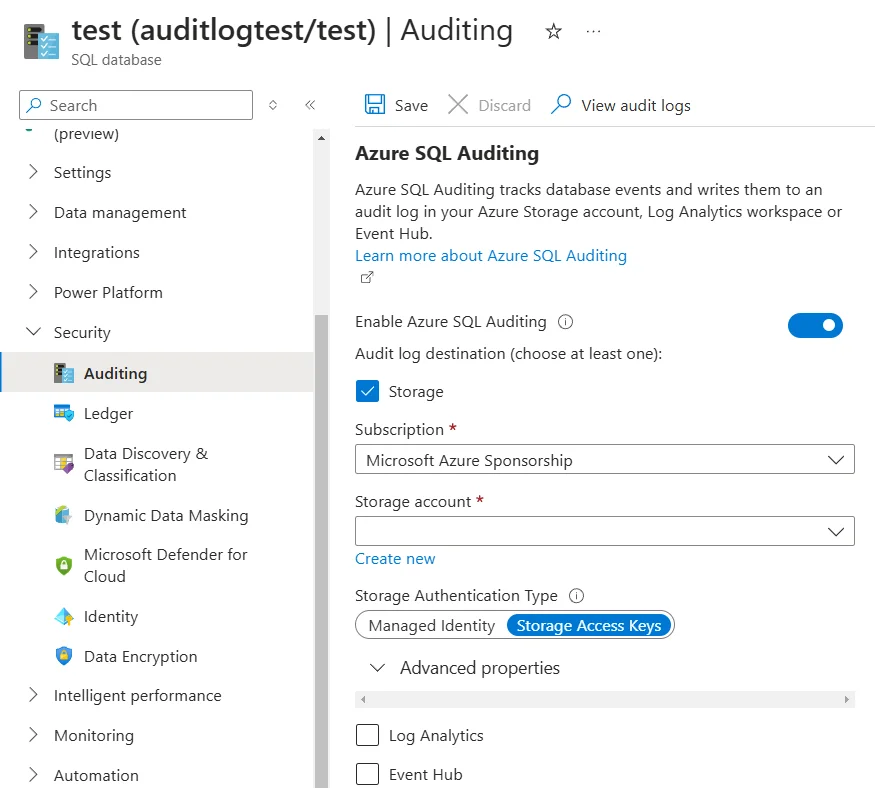
3. Azure Portal Web Interface for Compliance Management
The Azure Portal provides an intuitive interface for managing compliance without requiring specialized technical expertise:
- Activity Log: Review administrative operations and configuration changes across the distributed cluster
- Metrics Dashboard: Monitor performance indicators and resource utilization patterns
- Logs Interface: Run custom KQL queries against compliance audit data with advanced filtering
- Alerts Configuration: Set up automated notifications for compliance violations and unusual activity patterns
- Security Center Integration: Access centralized security recommendations and compliance posture management
Limitations of Native Compliance Capabilities
While Azure Cosmos DB for PostgreSQL provides foundational compliance features, organizations encounter several limitations:
| Native Feature | Key Limitation | Compliance Impact |
|---|---|---|
| PostgreSQL Logging | Manual log analysis across nodes | Time-intensive compliance validation |
| Data Discovery | No automated sensitive data identification | Critical data may remain unprotected |
| Policy Enforcement | Manual configuration across cluster | Inconsistent compliance policies |
| Regulatory Mapping | No automated framework alignment | Difficulty demonstrating compliance |
Automated Data Compliance with DataSunrise
DataSunrise transforms Azure Cosmos DB for PostgreSQL compliance through Autonomous Compliance Orchestration designed specifically for distributed PostgreSQL environments. Unlike manual approaches, DataSunrise delivers continuous data protection with Continuous Regulatory Calibration across your entire distributed cluster.
Setting Up DataSunrise for Azure Cosmos DB for PostgreSQL
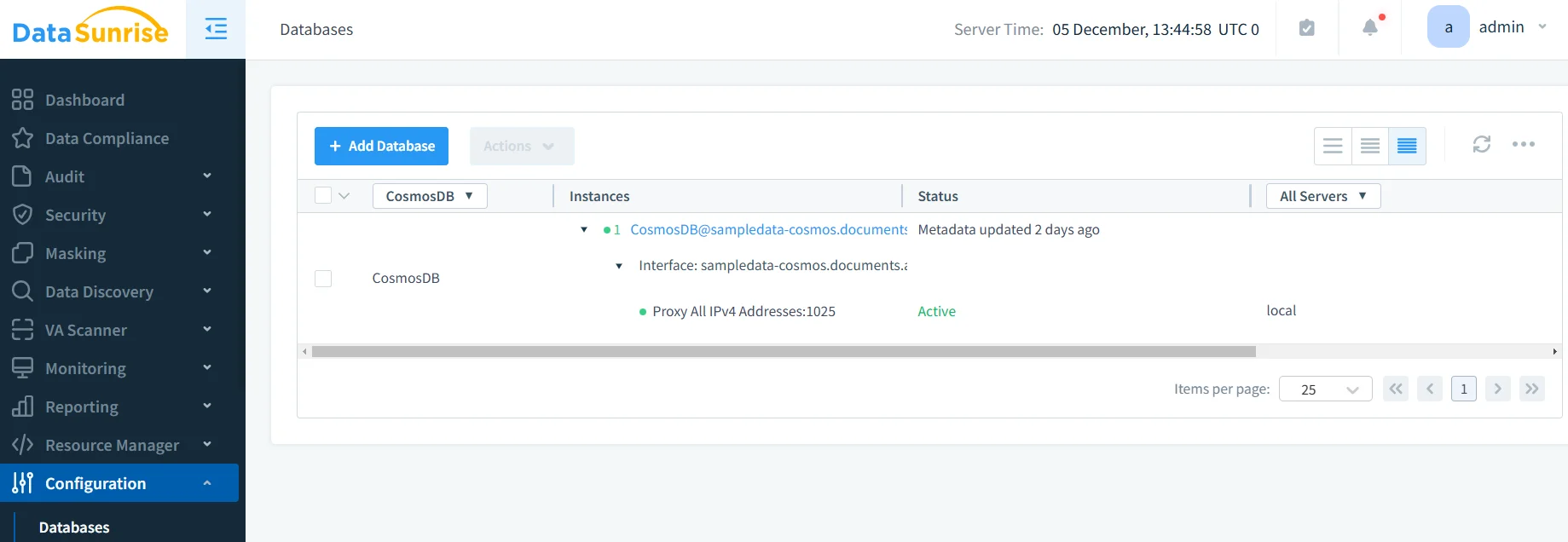
1. Connect to Distributed PostgreSQL Cluster
Establish secure connections to both coordinator and worker nodes through DataSunrise's interface, ensuring comprehensive compliance coverage across the entire distributed architecture.
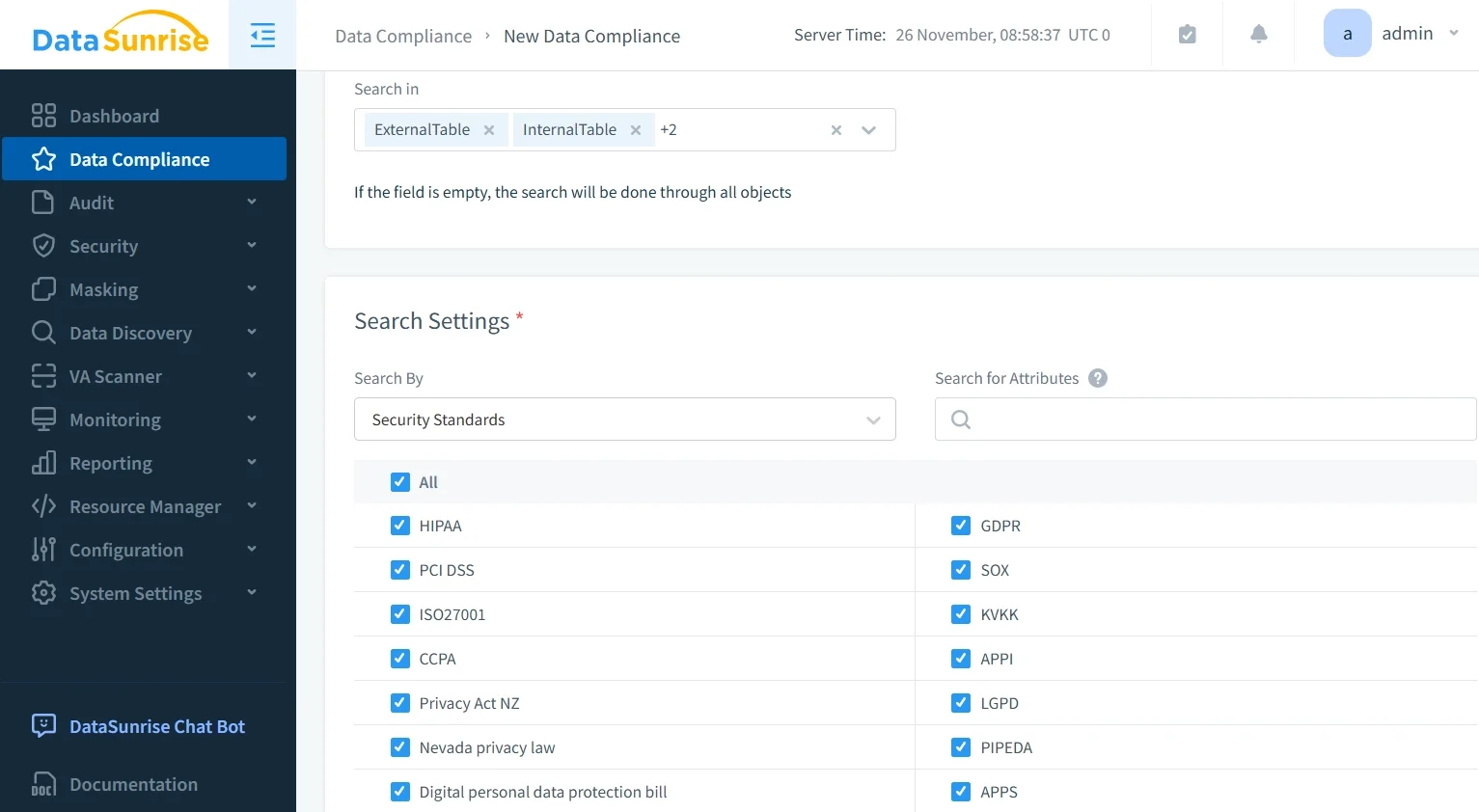
2. Create Automated Compliance Rules
Configure compliance policies through DataSunrise's No-Code Policy Automation interface to automatically identify sensitive data, implement access controls, and apply regulatory requirements across your distributed PostgreSQL cluster.
3. Monitor Automated Compliance
Access real-time compliance dashboards with comprehensive visibility into regulatory adherence across your distributed PostgreSQL environment.
Key Advantages of DataSunrise for Azure Cosmos DB for PostgreSQL
DataSunrise provides significant enhancements over native compliance capabilities:
Auto-Discover & Classify: Automatically identify and classify sensitive data across distributed PostgreSQL tables using NLP algorithms and machine learning, ensuring 95% greater accuracy than manual approaches.
No-Code Policy Automation: Create sophisticated compliance policies without writing complex SQL, reducing implementation time from months to hours.
Continuous Regulatory Calibration: Automatically adjust compliance policies as regulations evolve, ensuring ongoing adherence without manual intervention.
Real-Time Notifications: Receive immediate alerts for compliance violations with contextual information and recommended remediation actions.
Automated Compliance Reporting: Generate pre-configured reports for multiple regulatory frameworks, reducing audit preparation time by up to 90%.
Dynamic Data Masking: Protect sensitive data in real-time across distributed queries while maintaining application functionality.
Cross-Platform Integration: Monitor compliance across heterogeneous environments with support for over 40 data storage platforms, ensuring consistent security policies across your entire infrastructure.
Best Practices for Automated Compliance Implementation
1. Strategic Compliance Planning
Focus automated compliance on distributed tables containing sensitive information while implementing performance-optimized configuration aligned with PostgreSQL cluster architecture and database performance considerations.
2. Regulatory Framework Integration
Configure DataSunrise to simultaneously satisfy multiple regulatory requirements with automated policy orchestration and evidence preservation capabilities.
3. Operational Excellence
Establish real-time compliance monitoring with intelligent alerting and automated remediation capabilities integrated with existing DevOps workflows.
Conclusion
As organizations increasingly rely on Azure Cosmos DB for PostgreSQL for business-critical applications, implementing automated data compliance has become essential. While native PostgreSQL compliance features provide foundational capabilities, organizations with complex regulatory requirements benefit significantly from enhanced automation solutions like DataSunrise.
DataSunrise delivers comprehensive automated compliance specifically designed for distributed PostgreSQL environments, offering Zero-Touch Compliance Automation and Continuous Regulatory Calibration. With flexible deployment modes, DataSunrise transforms compliance from a resource-intensive burden into a strategic competitive advantage.
Protect Your Data with DataSunrise
Secure your data across every layer with DataSunrise. Detect threats in real time with Activity Monitoring, Data Masking, and Database Firewall. Enforce Data Compliance, discover sensitive data, and protect workloads across 50+ supported cloud, on-prem, and AI system data source integrations.
Start protecting your critical data today
Request a Demo Download Now