How to Ensure Compliance for AlloyDB for PostgreSQL
In today's increasingly regulated data landscape, ensuring compliance for AlloyDB for PostgreSQL has become a critical requirement. According to IBM's 2024 Data Breach Report, organizations with comprehensive audit trail systems identify potential security threats significantly faster and reduce breach-related costs substantially. With data breach costs averaging $4.45 million and compliance regulations constantly evolving, implementing robust compliance measures for AlloyDB environments is essential.
AlloyDB for PostgreSQL, Google Cloud's fully managed PostgreSQL-compatible database service, offers native monitoring capabilities. However, organizations in regulated industries often require more sophisticated solutions to meet stringent requirements for GDPR, HIPAA, PCI DSS, SOX, and other regulatory frameworks.
This guide explores AlloyDB's native compliance capabilities and demonstrates how DataSunrise can enhance your compliance posture with Zero-Touch Compliance Automation.
Native AlloyDB Compliance Capabilities
AlloyDB includes several built-in features that support compliance requirements through Google Cloud's monitoring infrastructure.
1. Cloud Audit Logs Configuration
AlloyDB integrates with Google Cloud's audit logging system:
# Enable audit logging via gcloud CLI
gcloud logging sinks create alloydb-compliance-sink \
  storage.googleapis.com/compliance-audit-logs \
  --log-filter='resource.type="alloydb.googleapis.com/Instance"'
2. Query Insights for Activity Monitoring
AlloyDB's Query Insights provides visibility into query performance:
-- View top queries by execution time
SELECT query, total_time, calls, mean_time
FROM pg_stat_statements
ORDER BY total_time DESC LIMIT 20;

-- Monitor user activity patterns
SELECT usename, application_name, client_addr, query
FROM pg_stat_activity
WHERE state != 'idle';
3. AlloyDB Studio for Compliance Monitoring
AlloyDB Studio provides an intuitive web-based interface for monitoring database activities and compliance-related operations. This integrated development environment enables security teams to review database operations without specialized CLI expertise.
Through AlloyDB Studio, administrators can:
- Monitor Active Sessions: View real-time user connections, query executions, and resource utilization patterns
- Analyze Query History: Review executed queries with detailed performance metrics and execution plans
- Track Configuration Changes: Monitor administrative modifications to database settings and security parameters
- Export Compliance Data: Generate reports of database activities for compliance documentation and audit preparation
- Visualize Access Patterns: Identify unusual query patterns or unauthorized access attempts through intuitive dashboards
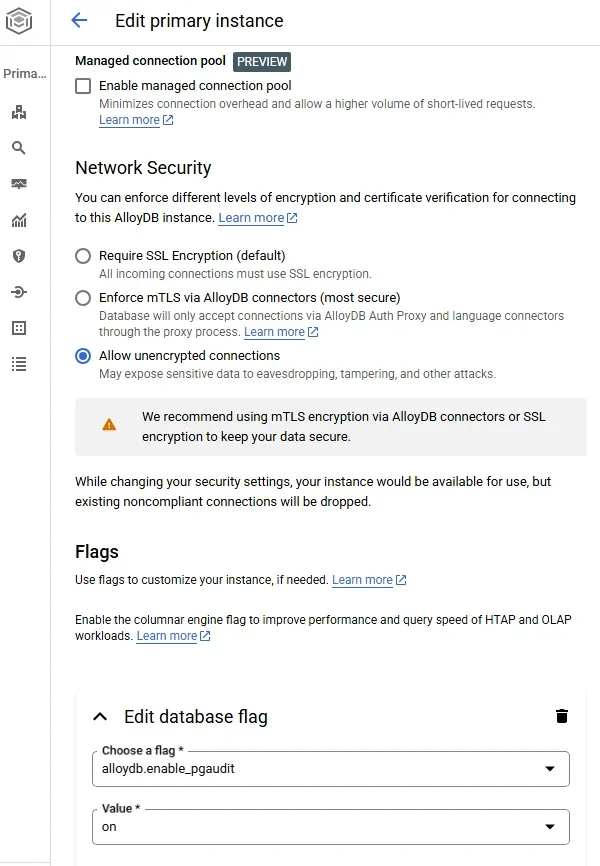
The Studio interface integrates seamlessly with Google Cloud's IAM, ensuring that compliance monitoring activities themselves are properly authenticated and logged for regulatory requirements.
Enhanced Compliance with DataSunrise
DataSunrise's Database Regulatory Compliance Manager dramatically enhances AlloyDB's native capabilities through Autonomous Compliance Orchestration designed for cloud database security environments.
Implementing DataSunrise for AlloyDB Compliance
1. Connect Your AlloyDB Instance
Establish a secure connection through DataSunrise's interface with support for both private and public endpoints.
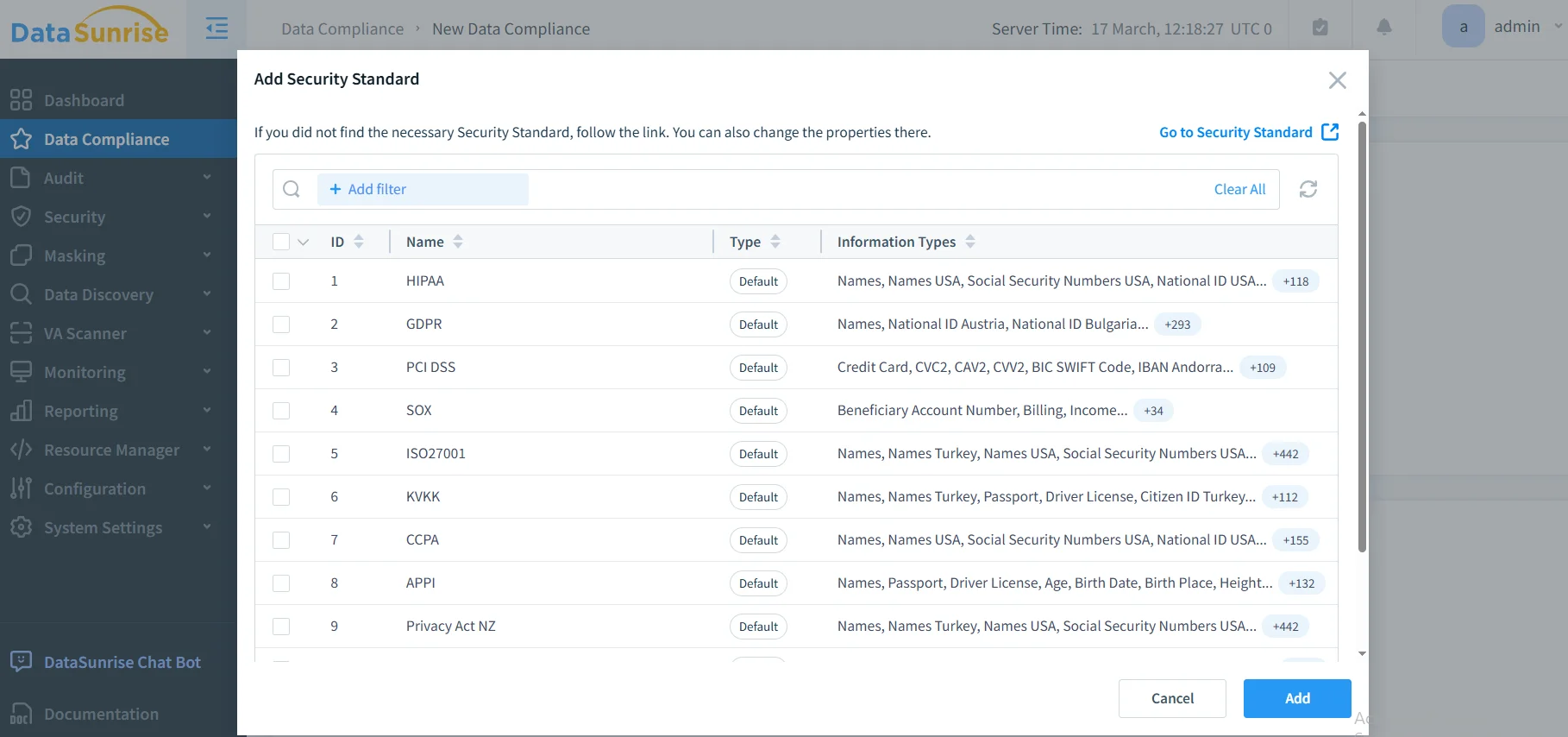
2. Configure Compliance Policies
Use No-Code Policy Automation to set up pre-configured templates for GDPR, HIPAA, PCI DSS, and SOX with automated data discovery and classification.
3. Enable Automated Reporting
Configure one-click compliance reports for auditors with scheduled delivery and multiple export formats.
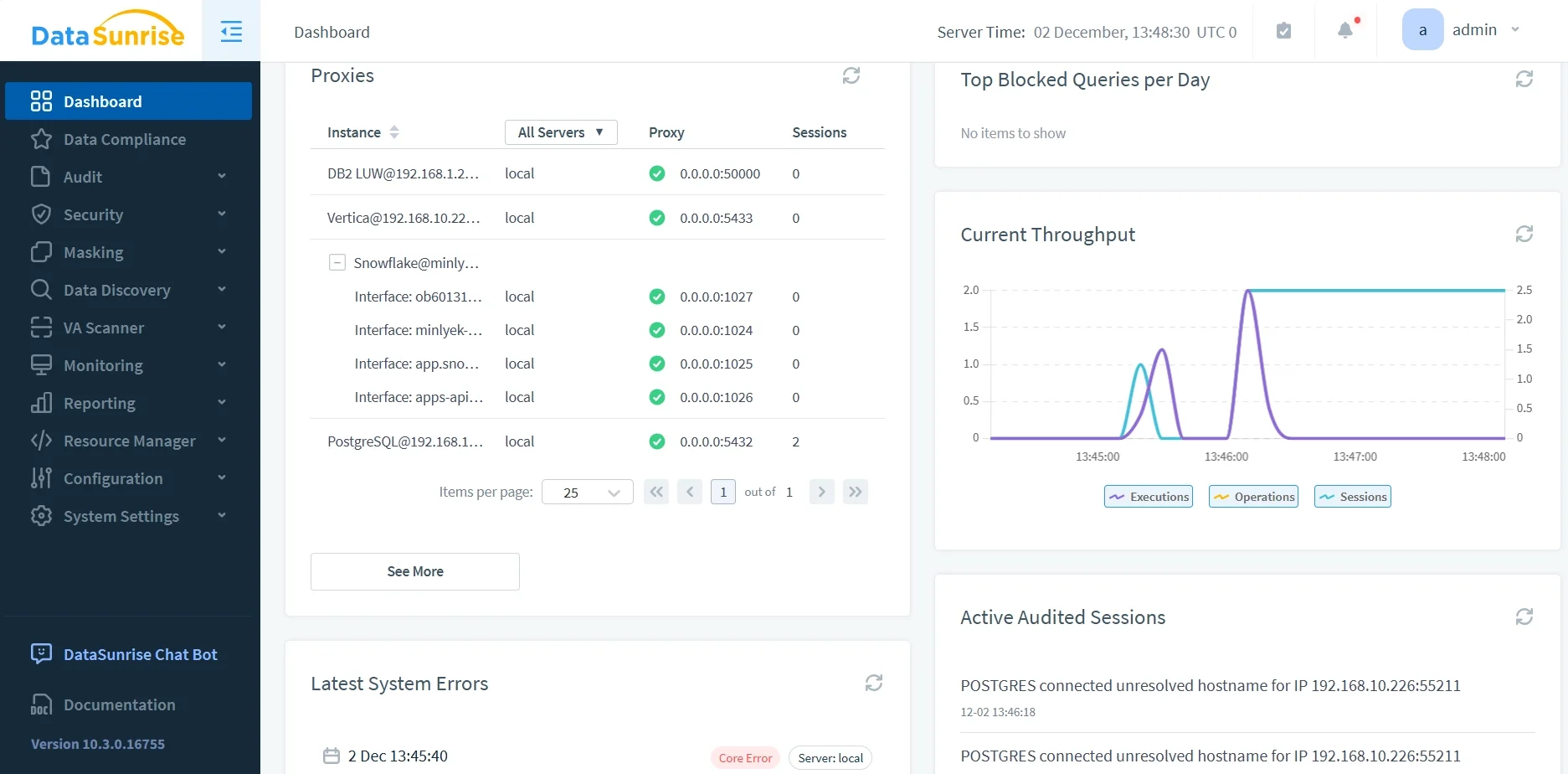
4. Monitor Compliance Status
Access real-time compliance metrics and violation alerts through DataSunrise's unified dashboard.
Key Advantages of DataSunrise for AlloyDB Compliance
DataSunrise provides significant enhancements:
Auto-Discover & Classify: Automatically scan databases to identify sensitive information according to regulatory frameworks, supporting structured, semi-structured, and unstructured data types.
Compliance Autopilot: Implement continuous regulatory calibration that automatically adjusts policies as requirements evolve, eliminating compliance gaps.
Zero-Touch Policy Enforcement: Deploy compliance policies with minimal configuration, reducing implementation time from weeks to hours.
Surgical Precision Masking: Protect sensitive data with dynamic data masking that maintains application functionality while enforcing compliance.
User Behavior Analytics: Establish baselines and automatically detect anomalies using ML algorithms to identify potential violations.
Automated Compliance Reporting: Generate pre-configured reports that map directly to regulatory requirements for GDPR, HIPAA, PCI DSS, and SOX.
Cross-Platform Compliance: Apply consistent policies across heterogeneous environments with support for over 40 data storage platforms.
Best Practices for AlloyDB Compliance Implementation
1. Data-Centric Compliance Strategy
Focus on sensitive data classification and access controls. Implement role-based access controls enforcing least privilege principles with enhanced monitoring of privileged users.
2. Continuous Monitoring Approach
Implement real-time compliance validation with intelligent alerting. Leverage machine learning to establish normal access patterns and detect anomalies.
3. Audit Trail Management
Maintain comprehensive activity logging with tamper-evident storage. Establish retention policies satisfying regulatory requirements (typically 3-7 years).
4. Enhanced Compliance with DataSunrise
Deploy DataSunrise's comprehensive database activity monitoring suite to extend beyond native capabilities. Leverage Compliance Autopilot and unified governance across platforms.
5. Regular Compliance Validation
Conduct scheduled compliance audits and vulnerability assessments. Maintain comprehensive documentation demonstrating due diligence.
Compliance Framework Coverage
DataSunrise provides specialized support for major regulatory frameworks:
| Framework | Key Capabilities |
|---|---|
| GDPR | Automated personal data detection, right to erasure tracking, consent management, cross-border data transfer monitoring, breach notification support |
| HIPAA | PHI discovery and classification, access controls enforcing minimum necessary standard, encryption validation, comprehensive audit trails, BAA compliance support |
| PCI DSS | Cardholder Data Environment monitoring, PAN detection and masking, access control validation (Requirements 7 & 8), logging and monitoring (Requirement 10), quarterly reporting |
| SOX | Financial data access tracking, segregation of duties enforcement, change management audit trails, access certification processes, annual documentation generation |
Conclusion
As organizations increasingly rely on AlloyDB for PostgreSQL to manage regulated data, implementing comprehensive compliance measures has become essential. While AlloyDB provides foundational native capabilities, organizations with complex requirements benefit significantly from enhanced solutions like DataSunrise.
DataSunrise's Database Regulatory Compliance Manager offers Zero-Touch Compliance Automation with advanced monitoring, intelligent policy orchestration, and automated reporting. With flexible deployment modes, DataSunrise transforms AlloyDB compliance from a resource-intensive challenge into a streamlined, automated process.
Protect Your Data with DataSunrise
Secure your data across every layer with DataSunrise. Detect threats in real time with Activity Monitoring, Data Masking, and Database Firewall. Enforce Data Compliance, discover sensitive data, and protect workloads across 50+ supported cloud, on-prem, and AI system data source integrations.
Start protecting your critical data today
Request a Demo Download Now