How to Manage Data Compliance for PostgreSQL
Managing data compliance for PostgreSQL has become a critical requirement for organizations across all industries. According to IBM's 2024 Cost of a Data Breach Report, organizations with comprehensive compliance management systems reduce regulatory penalties by up to 68% and detect compliance violations 82% faster than those relying on manual processes. With global data protection regulations like GDPR imposing fines up to €20 million or 4% of annual revenue, implementing robust compliance management for PostgreSQL databases is no longer optional—it's a business imperative.
PostgreSQL, the world's most advanced open source relational database, powers mission-critical applications across industries from healthcare to finance. While PostgreSQL offers excellent database security features and logging capabilities, achieving comprehensive compliance requires sophisticated solutions that can automatically discover sensitive data, enforce granular access controls, maintain detailed audit trails, and generate compliance reports.
This comprehensive guide explores PostgreSQL's native compliance capabilities and demonstrates how DataSunrise's Zero-Touch Compliance Automation can transform your PostgreSQL compliance management into a streamlined, automated process.
Understanding PostgreSQL Data Compliance Requirements
Data compliance for PostgreSQL involves systematically implementing policies, procedures, and technical controls that ensure your database operations adhere to applicable regulatory frameworks. Organizations typically face multiple overlapping regulations, each with distinct requirements:
- GDPR: Requires explicit consent management, data subject rights fulfillment, and breach notification within 72 hours
- HIPAA: Mandates comprehensive safeguards for protected health information with detailed access controls and audit logs
- PCI DSS: Establishes requirements for credit card data including network security and regular monitoring
- SOX: Requires internal controls over financial reporting with database security and audit trail preservation
Native PostgreSQL Compliance Capabilities
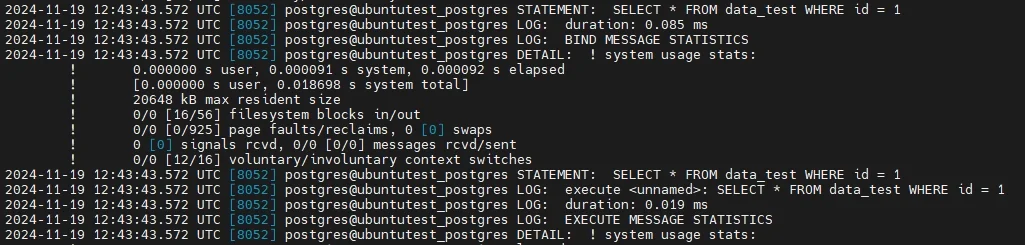
PostgreSQL includes several built-in features that support compliance management, providing a foundation for implementing regulatory controls and maintaining audit trails.
1. PostgreSQL Logging and Auditing
Enable comprehensive logging for compliance tracking:
-- Enable comprehensive logging for compliance tracking
ALTER SYSTEM SET log_statement = 'all';
ALTER SYSTEM SET log_connections = 'on';
ALTER SYSTEM SET log_duration = 'on';
ALTER SYSTEM SET log_line_prefix = '%t [%p-%l] %q%u@%d ';
SELECT pg_reload_conf();
2. Row Level Security (RLS) for Access Control
Implement granular data access controls:
-- Enable RLS on sensitive tables
ALTER TABLE customer_data ENABLE ROW LEVEL SECURITY;

-- Create policy for department-based access
CREATE POLICY dept_policy ON customer_data
    FOR ALL TO application_users
    USING (department = current_setting('app.current_user_dept'));
3. Role-Based Access Controls
Create compliance-focused role management:
-- Create compliance roles and permissions
CREATE ROLE compliance_officer;
CREATE ROLE data_analyst;
GRANT SELECT ON sensitive_tables TO compliance_officer;
GRANT SELECT ON aggregated_views TO data_analyst;
Enhanced PostgreSQL Compliance Management with DataSunrise
DataSunrise dramatically enhances PostgreSQL compliance through Autonomous Compliance Orchestration and Zero-Touch Data Protection designed specifically for regulatory requirements.
Setting Up DataSunrise for PostgreSQL Compliance
1. Connect to PostgreSQL Database
Establish secure connection through DataSunrise's interface, supporting all PostgreSQL versions and deployment models including cloud, on-premises, and hybrid configurations.
2. Implement Auto-Discover & Classify
Automatically scan and identify sensitive data according to GDPR, HIPAA, PCI DSS, and SOX frameworks using intelligent classification algorithms and machine learning.
3. Configure No-Code Policy Automation
Create sophisticated compliance policies through intuitive interface without complex SQL, reducing configuration time from weeks to hours while ensuring consistent enforcement.
4. Enable Real-Time Compliance Monitoring
Activate continuous monitoring with immediate alerts for policy violations, unusual access patterns, and potential regulatory breaches.
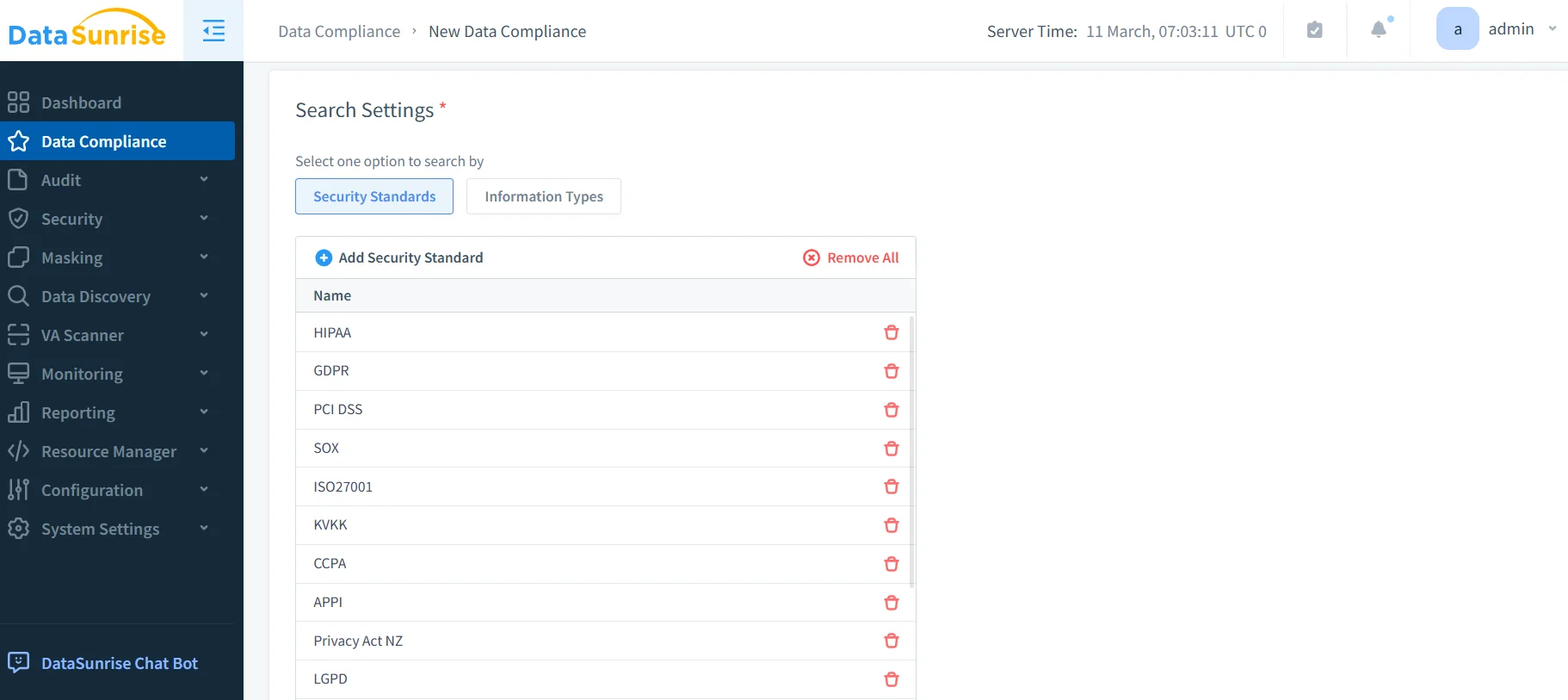
5. Generate Automated Compliance Reports
Configure pre-built reports that automatically collect evidence, analyze compliance posture, and generate audit-ready documentation.
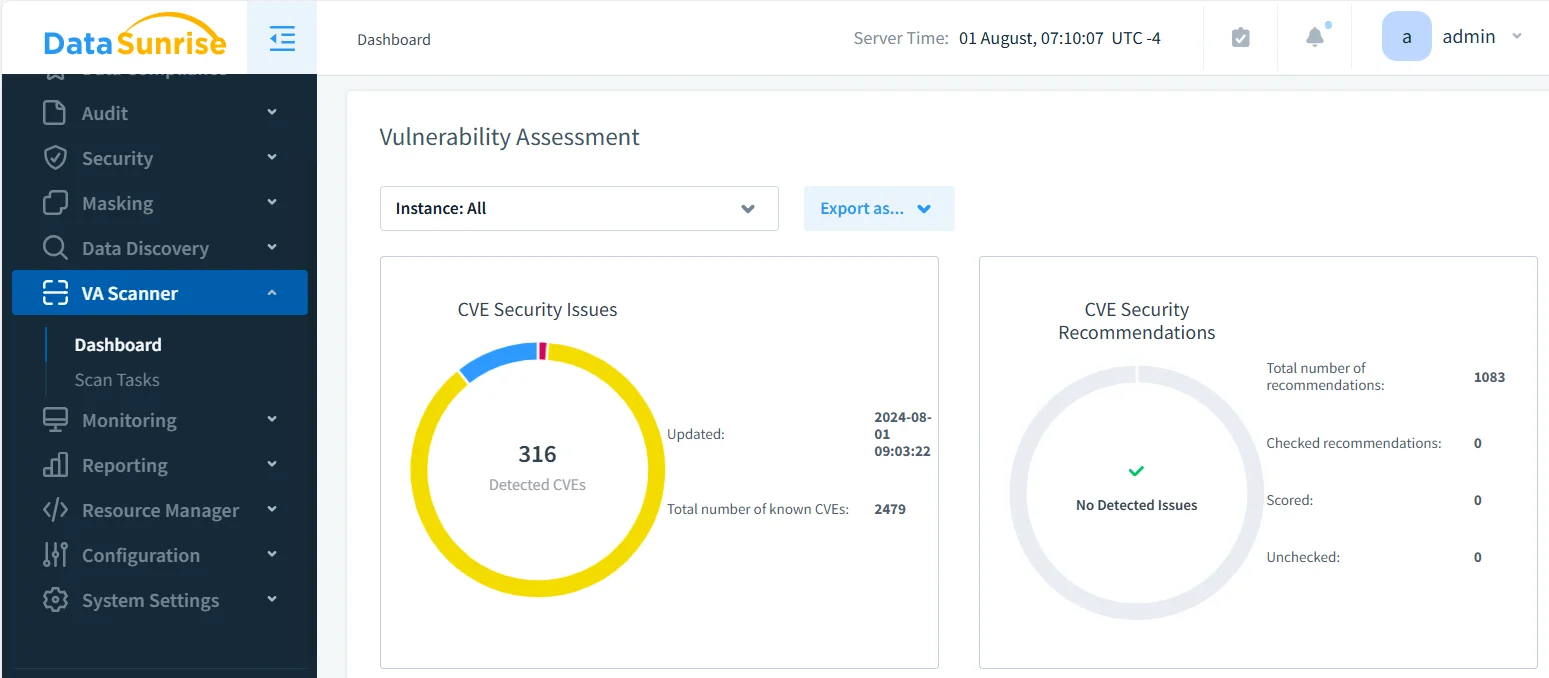
Key Advantages of DataSunrise for PostgreSQL Compliance
- Comprehensive Data Classification: Ensures no sensitive data escapes compliance controls through advanced NLP algorithms and machine learning
- Intelligent Policy Orchestration: Provides consistent enforcement across all environments with No-Code Policy Automation
- Continuous Regulatory Calibration: Automatically adapts policies as regulations evolve without manual intervention
- Real-Time Violation Alerts: Enable rapid incident response with contextual information and recommended actions
- Cross-Platform Consistency: Apply uniform policies across 40+ data storage platforms for heterogeneous environments
- Behavioral Analytics Integration: Detects anomalous activities indicating potential violations or security threats
PostgreSQL Compliance Best Practices
Implementing effective compliance management requires strategic approaches that balance regulatory requirements with operational efficiency:
Data-Centric Compliance Strategy
1. Sensitive Data Mapping: Create comprehensive inventories with regulatory framework mapping
2. Data Discovery and Classification: Implement tiered controls based on sensitivity levels and business criticality
3. Data Lineage Tracking: Maintain detailed records for compliance reporting and data subject requests
Access Control Optimization
1. Principle of Least Privilege: Implement minimum necessary permissions with regular reviews
2. Segregation of Duties: Establish clear separation between development, testing, and production environments
3. Regular Access Reviews: Conduct periodic assessments to identify compliance gaps and security threats
Audit Trail Excellence
• Comprehensive Logging: Capture business context, user justification, and data usage patterns
2. Tamper-Evident Storage: Implement secure, immutable storage with encryption and access controls
3. Long-Term Retention: Establish policies exceeding regulatory minimums while balancing costs
Automated Compliance Implementation
1. Deploy DataSunrise: Implement comprehensive compliance beyond native PostgreSQL capabilities
2. Policy Automation: Utilize No-Code Policy Automation for sophisticated policy management
3. Continuous Monitoring: Leverage real-time monitoring and behavioral analytics for proactive identification
Business Benefits of PostgreSQL Compliance Management
| Benefit Category | Business Impact |
|---|---|
| Risk Mitigation | Reduced regulatory penalties and legal exposure through proactive gap identification |
| Operational Efficiency | Significant cost reduction through automated compliance processes and audit preparation |
| Competitive Advantage | Enhanced market differentiation and customer trust through superior data protection |
| Business Enablement | Improved decision-making while maintaining compliance through streamlined data access |
| Stakeholder Confidence | Enhanced corporate governance through transparent compliance reporting |
Conclusion
As regulatory requirements continue to evolve, managing data compliance for PostgreSQL has become both more critical and more complex. While PostgreSQL offers solid foundational capabilities, achieving comprehensive compliance requires sophisticated solutions that automatically discover sensitive data, enforce granular policies, and adapt to changing regulatory frameworks.
DataSunrise transforms PostgreSQL compliance management through Zero-Touch Data Protection and Autonomous Compliance Orchestration. With flexible deployment modes supporting all environments, DataSunrise provides consistent compliance coverage while reducing administrative overhead and regulatory risk.
Ready to transform your PostgreSQL compliance management? Schedule an online demo today to experience enterprise-grade compliance automation that protects your organization while streamlining regulatory adherence.