Data Masking Tools and Techniques for SQL Server
Modern Microsoft SQL Server environments rarely suffer from a lack of data. They suffer from a lack of restraint. Production databases routinely contain customer records, financial transactions, authentication data, healthcare information, internal business logic, and enough sensitive material to make compliance auditors develop stress-induced eye twitches.
Data masking in Microsoft SQL Server helps organizations protect sensitive information without destroying operational usability. Instead of exposing real values, masking techniques replace, obfuscate, randomize, tokenize, or dynamically rewrite sensitive data while preserving application behavior and testing workflows.
For organizations dealing with GDPR, HIPAA, PCI DSS, SOX, and similar regulations, masking has evolved from “nice security feature” into “mandatory survival mechanism.” Native SQL Server capabilities provide a baseline. However, enterprise-scale environments usually require centralized governance, automation, real-time policy orchestration, and cross-platform consistency that native tools alone struggle to deliver.
This article explores native SQL Server masking techniques, practical implementation examples, limitations, and how DataSunrise extends masking into an autonomous enterprise-grade compliance framework.
For additional background on enterprise protection strategies, review the Data Security knowledge base and the Dynamic Data Masking guide.
Importance of Data Masking Tools and Techniques
Data masking tools and techniques are important because modern organizations no longer operate inside isolated database environments. Sensitive SQL Server data constantly moves across internal departments, cloud services, contractors, analytics systems, CI/CD pipelines, AI training environments, and external support teams. Every transfer increases exposure risk.
Masking reduces that exposure by ensuring that operational workflows continue without revealing actual confidential information.
Unlike encryption, which primarily protects stored or transmitted data, masking focuses on controlled visibility. Authorized systems continue functioning normally while users, developers, analysts, or third parties only see sanitized values.
This becomes especially important in environments where full production access is unnecessary but operational realism still matters.
Without masking strategies, organizations often encounter problems such as:
- Developers working directly with live customer records
- Analysts accessing unnecessary financial details
- Test environments containing regulated information
- Third-party vendors handling unprotected exports
- AI and reporting systems ingesting raw sensitive datasets
Effective masking techniques allow organizations to:
- Maintain realistic testing conditions
- Reduce insider threat exposure
- Support secure analytics workflows
- Limit compliance scope
- Minimize breach impact
- Improve data governance maturity
For Microsoft SQL Server specifically, masking tools help simplify security management across:
- Large enterprise databases
- Hybrid cloud infrastructures
- Azure SQL deployments
- Distributed reporting systems
- Multi-tenant environments
- DevOps and staging pipelines
As infrastructures grow, manually maintaining masking logic directly inside database schemas becomes increasingly difficult. Native masking features often require fragmented rule management, separate administrative workflows, and continuous manual adjustments across environments.
That operational overhead is exactly why organizations adopt centralized masking platforms capable of automating discovery, enforcement, monitoring, and compliance reporting from a unified security layer instead of duct-taping together hundreds of isolated masking rules like some cursed SQL archaeology project.
Organizations looking to strengthen database protection strategies should also review:
- Database Security
- Data Discovery
- Microsoft SQL Server Dynamic Data Masking
- SQL Server Security Center
Native Data Masking Techniques in Microsoft SQL Server
Microsoft SQL Server provides several approaches for masking sensitive information. Some methods rewrite query results dynamically, while others permanently transform stored values inside copied datasets.
Dynamic Data Masking (DDM)
Dynamic Data Masking rewrites query results at runtime without modifying the underlying stored data.
SQL Server supports several built-in masking functions:
CREATE TABLE Employees (
    EmployeeID INT PRIMARY KEY,
    FullName NVARCHAR(100),
    EmailAddress NVARCHAR(100) MASKED WITH (FUNCTION = 'email()'),
    PhoneNumber NVARCHAR(30) MASKED WITH (FUNCTION = 'partial(2,"XXXXXXX",2)'),
    Salary DECIMAL(10,2) MASKED WITH (FUNCTION = 'default()')
);
Example query:
SELECT FullName, EmailAddress, PhoneNumber, Salary
FROM Employees;
Example output for restricted users:
| FullName | EmailAddress | PhoneNumber | Salary |
|---|---|---|---|
| John Smith | [email protected] | 12XXXXXXX89 | 0 |
Dynamic masking works well for reporting systems, customer support portals, shared analytics environments, and restricted developer access where operational workflows must continue without exposing sensitive values.
However, SQL Server DDM still has several limitations. Privileged users may bypass masking policies, masking rules remain tied directly to database schemas, and native capabilities provide limited contextual awareness. Centralized governance across multiple environments is also weak, especially in hybrid or cross-platform infrastructures.
Tiny feature. Massive compliance expectations. Enterprise reality at its finest.
Static Data Masking
Static masking permanently replaces sensitive values inside copied or non-production datasets.
This approach is commonly used in QA environments, development systems, analytics sandboxes, and outsourced testing environments where realistic datasets are required without exposing live production data.
Example using UPDATE statements:
UPDATE Customers
SET
    Email = CONCAT('user', CustomerID, '@masked.local'),
    CreditCard = CONCAT('XXXX-XXXX-XXXX-', RIGHT(CreditCard,4)),
    SSN = CONCAT('XXX-XX-', RIGHT(SSN,4));
Another common approach uses randomized replacement:
UPDATE Employees
SET Salary = Salary + (RAND(CHECKSUM(NEWID())) * 5000);
Static masking lowers exposure risk because original production values never leave protected environments unchanged.
The problem appears once environments scale. Large masking scripts spread across multiple databases eventually become operational spaghetti stitched together with undocumented SQL, rushed fixes, and pure emotional damage from whoever inherits the system later.
Tokenization
Tokenization replaces sensitive values with non-sensitive placeholders while storing original values separately inside secured lookup systems.
Example:
| Original Value | Token |
|---|---|
| 4111-1111-1111-1111 | TKN-9F2A11 |
| [email protected] | TKN-A71BC2 |
Unlike masking, tokenization allows controlled reversibility, which makes it useful for systems that still require occasional access to original information under strict authorization controls.
This technique is heavily used in PCI DSS environments, payment systems, healthcare platforms, and cross-border compliance operations.
SQL Server does not provide enterprise-grade tokenization orchestration natively, so organizations usually depend on external security platforms or custom middleware solutions.
Because apparently building a fragile homemade token vault is some kind of enterprise rite of passage.
Data Substitution and Shuffling
Some environments require realistic datasets instead of simple obfuscation.
Substitution replaces original values with believable synthetic alternatives:
UPDATE Customers
SET FirstName =
(
    SELECT TOP 1 FakeName
    FROM FakeNames
    ORDER BY NEWID()
);
Shuffling preserves statistical distribution while breaking direct relationships between records:
WITH Randomized AS (
    SELECT
        CustomerID,
        Email,
        ROW_NUMBER() OVER (ORDER BY NEWID()) AS rn
    FROM Customers
)
UPDATE c1
SET Email = c2.Email
FROM Randomized c1
JOIN Randomized c2 ON c1.CustomerID = c2.rn;
These techniques help maintain statistical realism, functional testing accuracy, AI and machine learning workflows, and reporting consistency while reducing exposure of original sensitive information.
Enterprise Data Masking with DataSunrise
DataSunrise deploys Zero-Touch Data Masking and Autonomous Compliance Orchestration to deliver centralized protection across Microsoft SQL Server environments with minimal operational overhead.
Unlike solutions that require constant tuning, fragmented scripts, and manual policy maintenance, DataSunrise delivers Continuous Compliance Alignment through intelligent automation, centralized governance, and adaptive security controls.
The platform extends masking far beyond simple field obfuscation by integrating auditing, compliance automation, behavioral analytics, and real-time policy enforcement into a unified protection framework.
Centralized Data Masking Architecture
DataSunrise externalizes masking logic from the database schema itself. Instead of embedding masking rules directly inside Microsoft SQL Server objects, administrators manage policies through a centralized interface.
This architecture simplifies security operations across on-premise SQL Server deployments, Azure SQL environments, hybrid infrastructures, multi-database ecosystems, and cloud-native architectures.
The platform supports several deployment modes including proxy mode, sniffer mode, and native audit trailing mode. These flexible deployment options allow organizations to integrate masking controls without redesigning existing applications or database infrastructures.
Because rewriting enterprise applications just to hide a Social Security number is the kind of project that ruins careers and sleep schedules simultaneously.
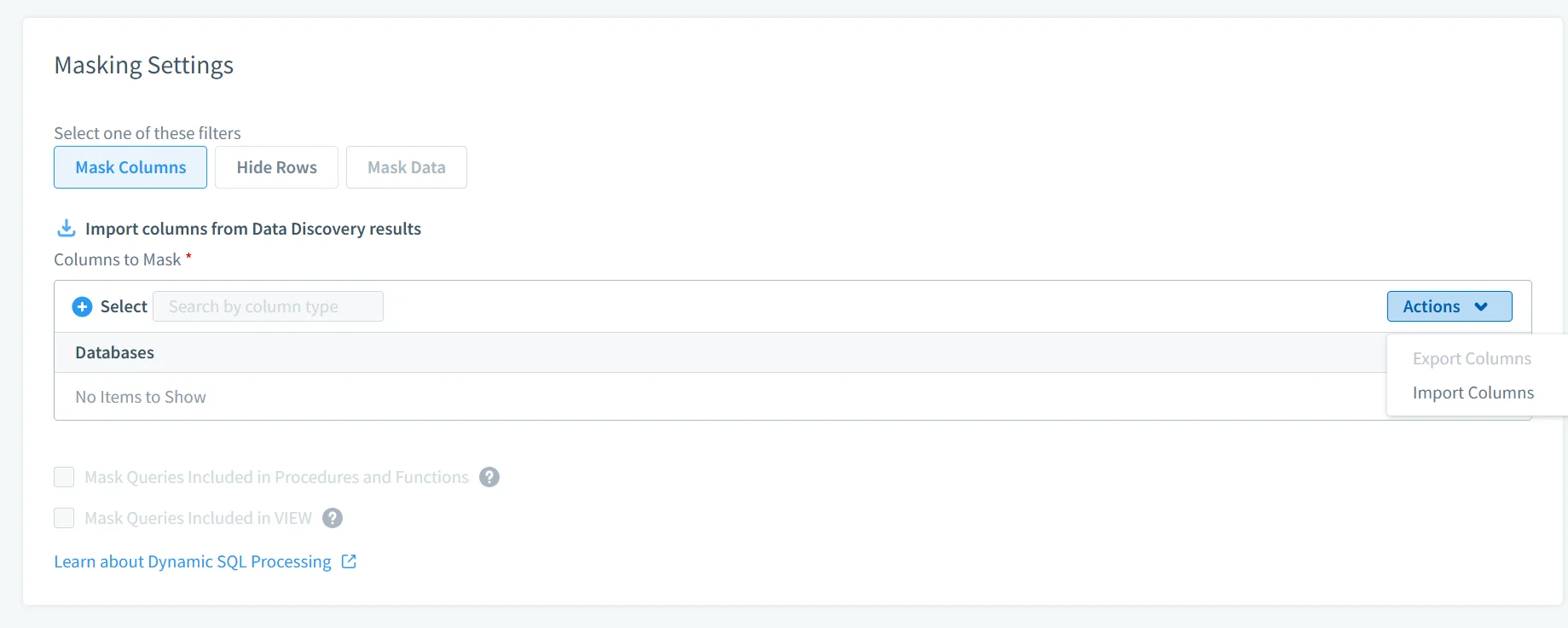
Zero-Touch Data Masking
DataSunrise uses Zero-Touch Data Masking to automate sensitive data protection with minimal manual configuration.
The platform can automatically identify sensitive fields, apply masking rules dynamically, synchronize policies across environments, adjust masking behavior based on user roles, and protect both structured and semi-structured data.
Masking policies can be configured with surgical precision, allowing organizations to define user-specific masking, query-based masking, context-aware masking, partial or full obfuscation, and conditional access controls.
This significantly reduces administrative complexity compared to maintaining isolated native SQL Server masking rules across dozens or hundreds of systems.
Compliance Autopilot and Policy Automation
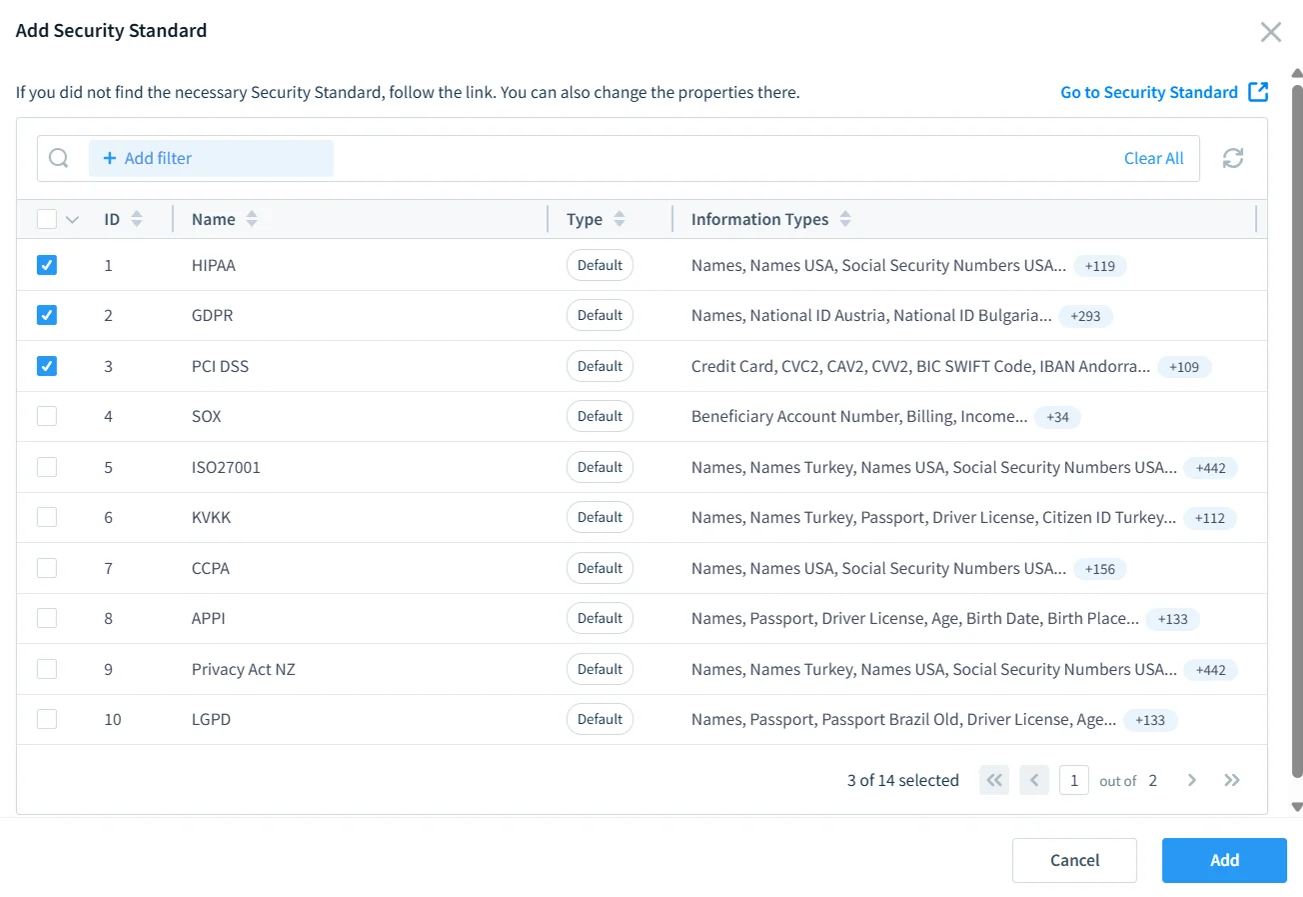
One of the strongest capabilities within DataSunrise is Compliance Autopilot.
The platform continuously analyzes environments for compliance risks and automatically aligns masking, auditing, and discovery policies with major regulatory frameworks such as GDPR, HIPAA, PCI DSS, SOX, ISO 27001, SOC 2, and NIST.
Instead of manually mapping security controls to compliance requirements, organizations can automate large portions of compliance management through Automatic Compliance Policy Generation, Continuous Regulatory Calibration, Real-Time Regulatory Alignment, Compliance Drift Detection, and Audit-Ready Reporting.
This dramatically reduces manual compliance overhead while helping organizations minimize security gaps across distributed infrastructures.
Intelligent Data Discovery and Classification
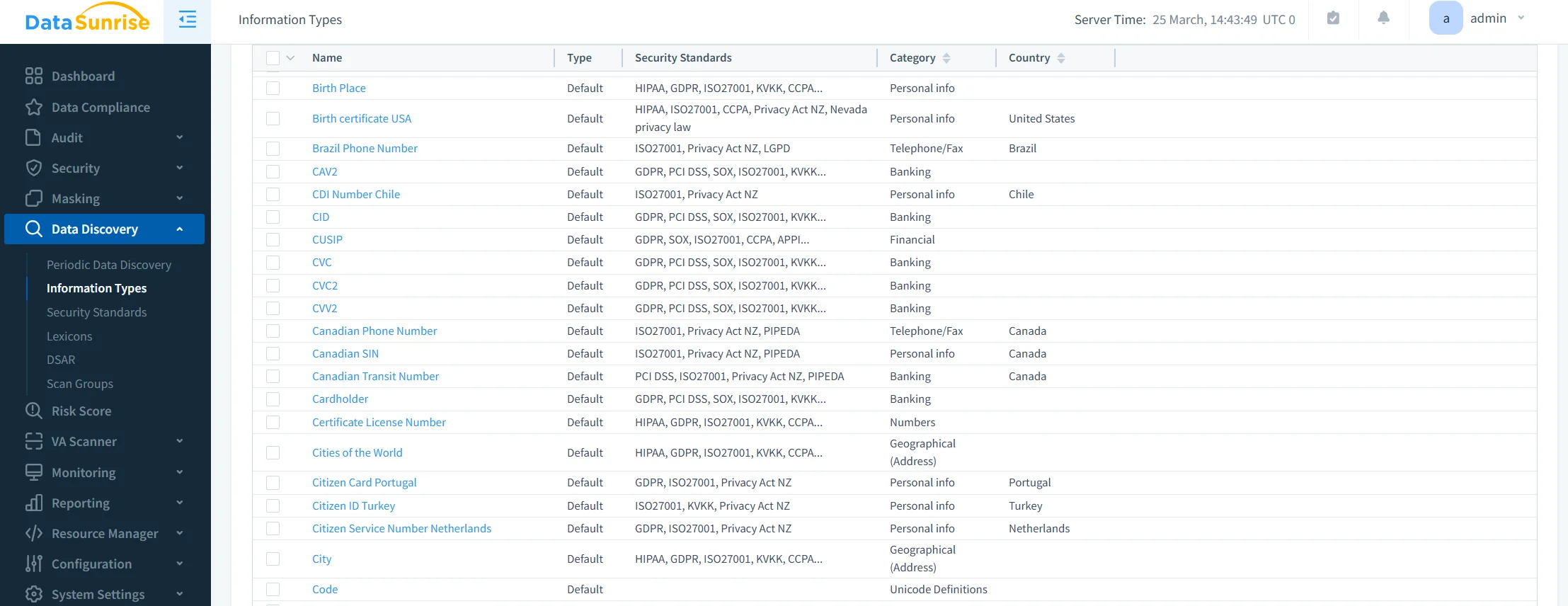
DataSunrise integrates intelligent discovery engines capable of locating sensitive information across multiple storage layers.
The platform supports NLP Data Discovery, OCR Image Scanning, ML-based classification, and structured and unstructured data analysis.
This allows organizations to discover sensitive information not only inside Microsoft SQL Server tables, but also within file systems, cloud storage, data lakes, exported documents, and images containing sensitive text.
Periodic scanning tasks continuously identify new compliance risks and automatically update masking and security policies when new sensitive assets appear.
Unlike traditional discovery solutions that focus only on databases, DataSunrise extends protection across broader enterprise storage ecosystems.
ML Audit Rules and Behavioral Analytics
DataSunrise combines masking with advanced auditing and behavioral analysis capabilities.
The platform uses ML Audit Rules, User Behavior Analytics, Suspicious Activity Detection, Real-Time Notifications, and Context-Aware Protection to monitor database activity continuously.
This enables organizations to identify abnormal query behavior, insider threats, excessive data access, suspicious export activity, and unauthorized privilege usage before these activities escalate into larger security incidents.
Instead of functioning as a standalone masking utility, DataSunrise becomes part of a broader Unified Security Framework capable of coordinating masking, auditing, security rules, and compliance monitoring from a centralized platform.
Business Impact of Modern Data Masking
| Benefit | Business Impact |
|---|---|
| Reduced Data Exposure | Limits breach severity and minimizes unauthorized access to sensitive information through Dynamic Data Masking controls |
| Faster Compliance Audits | Simplifies evidence collection and accelerates regulatory reporting workflows using Compliance Manager capabilities |
| Safer Non-Production Environments | Protects development, QA, and analytics systems from production data leakage with Static Data Masking |
| Centralized Governance | Improves operational consistency across hybrid and multi-cloud infrastructures with Database Security controls |
| Automated Policy Management | Reduces manual administrative effort and lowers configuration errors through Data Discovery and automated policy orchestration |
| Cross-Platform Coverage | Unifies enterprise security policies across databases, cloud storage, and data lakes with Database Activity Monitoring |
| Real-Time Protection | Minimizes compliance gaps through continuous masking, auditing, and monitoring enforcement across distributed environments |
Conclusion
Data masking in Microsoft SQL Server has evolved far beyond simple field obfuscation. Modern organizations require scalable protection strategies capable of securing structured, semi-structured, and unstructured data across cloud, hybrid, and on-premise infrastructures.
Native SQL Server masking capabilities provide a useful starting point. However, maintaining enterprise-wide masking consistency, regulatory alignment, and centralized governance using isolated native tools quickly becomes operationally inefficient.
DataSunrise transforms masking into a centralized autonomous security architecture through Zero-Touch Data Masking, Compliance Autopilot, Intelligent Policy Orchestration, and Unified Security Framework integration.
Unlike fragmented masking workflows that require constant manual adjustments, DataSunrise delivers Continuous Compliance Posture management across Microsoft SQL Server ecosystems while minimizing administrative complexity and reducing operational risk.
The platform combines enterprise-grade automation with the granular controls technical teams demand, providing scalable protection for modern compliance-driven infrastructures through integrated Data Discovery, Database Security, Database Activity Monitoring, and Static Data Masking capabilities.
Protect Your Data with DataSunrise
Secure your data across every layer with DataSunrise. Detect threats in real time with Activity Monitoring, Data Masking, and Database Firewall. Enforce Data Compliance, discover sensitive data, and protect workloads across 50+ supported cloud, on-prem, and AI system data source integrations.
Start protecting your critical data today
Request a Demo Download Now