Generative AI Audit
Generative AI is rapidly reshaping the technology landscape, driving innovations such as OpenAI’s ChatGPT, Amazon Bedrock, and a growing number of AI-powered platforms. As organizations increasingly adopt these technologies, they also face new privacy and security challenges, particularly when handling and exposing Personally Identifiable Information (PII).
This article explores the auditing challenges associated with generative AI systems, examines key privacy risks, and presents practical approaches to improving auditing processes while enhancing the protection of sensitive data.
The Expanding World of Generative AI Audit
Generative AI has transcended beyond a single platform. Today, we see a diverse ecosystem:
- OpenAI’s ChatGPT: A conversational AI that has become synonymous with generative capabilities.
- Amazon Bedrock: A fully managed service allowing easy integration of foundation models into applications.
- Google’s Bard: An experimental conversational AI service powered by LaMDA.
- Microsoft’s Azure OpenAI Service: Providing access to OpenAI’s models with the added security and enterprise features of Azure.
These platforms provide API access for developers and web-based interfaces for users. This greatly increases the risk of data breaches.
Privacy Risks in the Generative AI Landscape
The widespread adoption of generative AI introduces several privacy concerns:
- Data Retention: AI models may store inputs for improvement, potentially including sensitive information.
- Unintended Information Disclosure: Users might accidentally reveal PII during interactions.
- Model Exploitation: Sophisticated attacks could potentially extract training data from models.
- Cross-Platform Data Aggregation: Using multiple AI services could lead to comprehensive user profiles.
- API Vulnerabilities: Insecure API implementations might expose user data.
General Strategies for Mitigating Privacy Risks
To address these concerns, organizations should consider the following approaches:
- Data Minimization: Limit the amount of personal data processed by AI systems.
- Anonymization and Pseudonymization: Transform data to remove or obscure identifying information.
- Encryption: Implement strong encryption for data in transit and at rest.
- Access Controls: Strictly manage who can access AI systems and stored data.
- Regular Security Audits: Conduct thorough reviews of AI systems and their data handling practices.
- User Education: Inform users about the risks and best practices when interacting with AI.
- Compliance Frameworks: Align AI usage with regulations like GDPR, CCPA, and industry-specific standards.
Auditing Generative AI Interactions: Key Aspects
Effective auditing is crucial for maintaining security and compliance. Key aspects include:
- Comprehensive Logging: Record all interactions, including user inputs and AI responses.
- Real-time Monitoring: Implement systems to detect and alert on potential privacy breaches immediately.
- Pattern Analysis: Use machine learning to identify unusual usage patterns that might indicate misuse.
- Periodic Reviews: Regularly examine logs and usage patterns to ensure compliance and identify potential risks.
- Third-party Audits: Engage external experts to provide unbiased assessments of your AI usage and security measures.
DataSunrise: A Comprehensive Solution for AI Auditing
DataSunrise offers a robust solution for auditing generative AI interactions across various platforms. Our system integrates seamlessly with different AI services, providing a unified approach to security and compliance.
Key Components of DataSunrise’s AI Audit Solution:
- Proxy Service: Intercepts and analyzes traffic between users and AI platforms.
- Data Discovery: Automatically identifies and classifies sensitive information in AI interactions.
- Real-time Monitoring: Provides immediate alerts on potential privacy violations.
- Audit Logging: Creates detailed, tamper-proof logs of all AI interactions.
- Compliance Reporting: Generates reports tailored to various regulatory requirements.
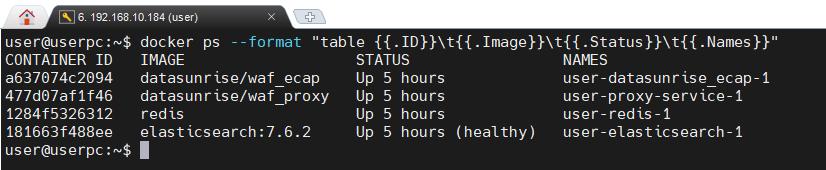
The image below shows four Docker containers running. These containers are providing DataSunrise Web Application Firewall functionality, enhancing the security of the depicted system.
Example Setup with DataSunrise
A typical DataSunrise deployment for AI auditing might include:
- DataSunrise Proxy: Deployed as a reverse proxy in front of AI services.
- Redis: For caching and session management, improving performance.
- Elasticsearch: For efficient storage and retrieval of audit logs.
- Kibana: For visualizing audit data and creating custom dashboards.
- DataSunrise Management Console: For configuring policies and viewing reports.
This setup can be easily deployed using container orchestration tools like Docker and Kubernetes, ensuring scalability and ease of management.
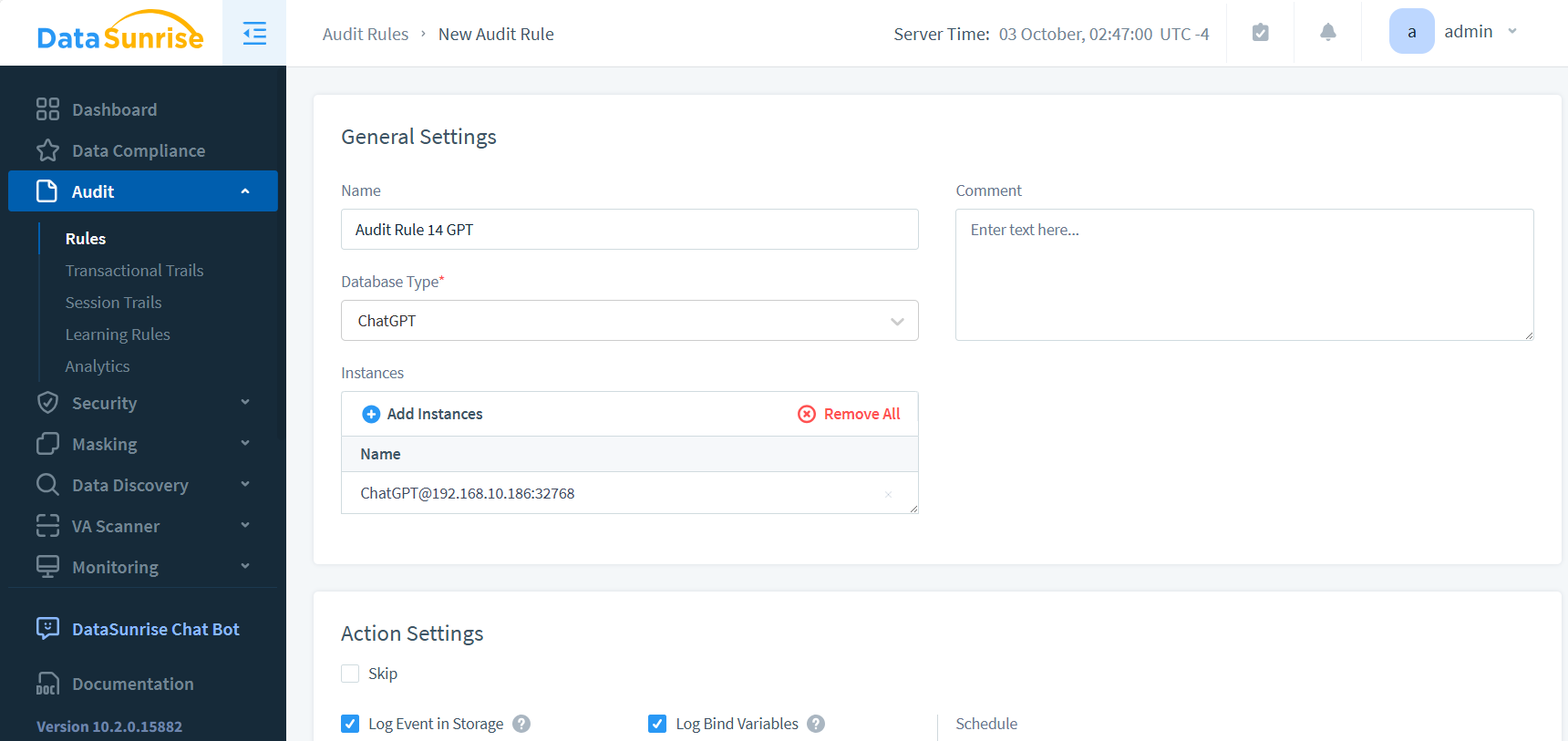
Audit rule configuration is fairly simple. In this example, the monitored instance is not a traditional database but ChatGPT running as a web application. This shows the flexibility of the auditing framework and its ability to monitor different types of application environments.
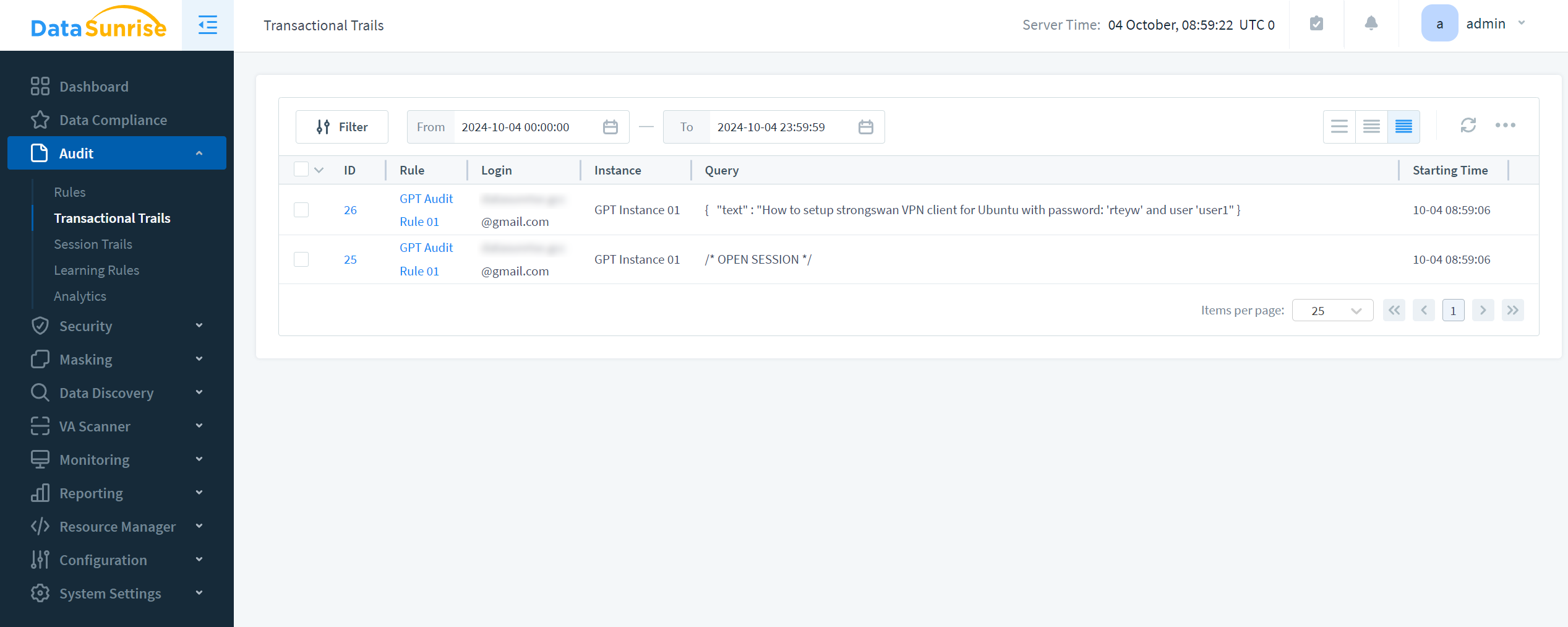
The audit output together with the corresponding GPT prompt is shown below:
Conclusion: Advancing Responsible AI Adoption
Generative AI has rapidly progressed from a promising technology into a core component of modern business operations. Organizations increasingly use AI to automate workflows, improve analytics, and optimize a wide variety of operational processes. As AI becomes more deeply integrated into enterprise environments, robust auditing, continuous monitoring, and comprehensive security controls are essential for ensuring reliable operation, supporting regulatory compliance, and maintaining effective governance.
Strong AI governance extends beyond establishing policies and procedures. Organizations also need technical mechanisms that provide clear visibility into AI activity. Detailed audit trails, continuous monitoring, and granular access controls help security teams understand how AI systems interact with users and sensitive data. Together, these capabilities enhance transparency, strengthen oversight, reduce operational risks, and simplify compliance management across evolving AI ecosystems.
Long-term confidence in generative AI depends on building trust through effective governance and security. By embedding privacy protections, security controls, and accountability into AI operations, organizations can scale AI initiatives more securely while protecting sensitive information, meeting regulatory expectations, and maintaining stakeholder confidence.
DataSunrise: An Integrated Approach to AI Security
DataSunrise delivers a unified framework for AI security by bringing auditing, continuous monitoring, and data protection capabilities together in one platform. It allows organizations to control access to sensitive information, apply security policies consistently, and maintain visibility across databases, cloud environments, and AI-driven applications.
Built to address the emerging risks associated with generative AI, the platform helps security teams identify suspicious activity more quickly, minimize potential exposure of sensitive data, and maintain dependable protection as AI technologies become increasingly integrated into enterprise workflows.
Explore our AI security solutions or schedule a live demo to see how DataSunrise can enhance AI governance and provide stronger protection for critical business information.