How to Manage Data Compliance for MongoDB
Organizations today face growing regulatory pressure to protect sensitive data and prove accountability. For businesses relying on MongoDB, managing compliance means ensuring visibility into database activity, protecting sensitive fields, and generating audit-ready reports. Regulations such as GDPR, HIPAA, and PCI DSS mandate strict controls, making compliance management essential.
Failure to comply with these regulations can lead to severe financial penalties, reputational damage, and operational disruptions. MongoDB environments often support large-scale applications where sensitive personal, financial, or healthcare data is stored, so any lapse in compliance may have widespread consequences. Beyond meeting legal requirements, effective compliance practices build customer trust and demonstrate responsible data security.
As data environments become more complex and distributed, manual oversight is no longer sufficient. Organizations need automation, centralized monitoring, and advanced audit rules to keep MongoDB deployments secure and aligned with evolving standards.
This article explores MongoDB’s native capabilities for compliance and how DataSunrise enhances them with advanced auditing, masking, and automation features.
What is Data Compliance?
Data compliance refers to the practice of ensuring that organizations manage, store, and process data according to established laws, frameworks, and security standards. It is not only about protecting sensitive information but also about building trust and demonstrating accountability.
Compliance typically involves meeting the requirements of major frameworks like GDPR and HIPAA Security Rule, which outline how personal and health-related data must be safeguarded.
On the organizational side, solutions like DataSunrise Compliance Manager provide automation for monitoring, reporting, and enforcement. These tools support continuous adherence to industry requirements, ensuring data security policies align with compliance regulations.
By adopting structured compliance measures, businesses reduce the risk of costly penalties, avoid breaches, and maintain customer trust in highly regulated industries.
Native MongoDB Compliance Capabilities
MongoDB provides basic tools for access control, auditing, and data protection. These features help administrators monitor activity and apply rules to meet baseline compliance requirements.
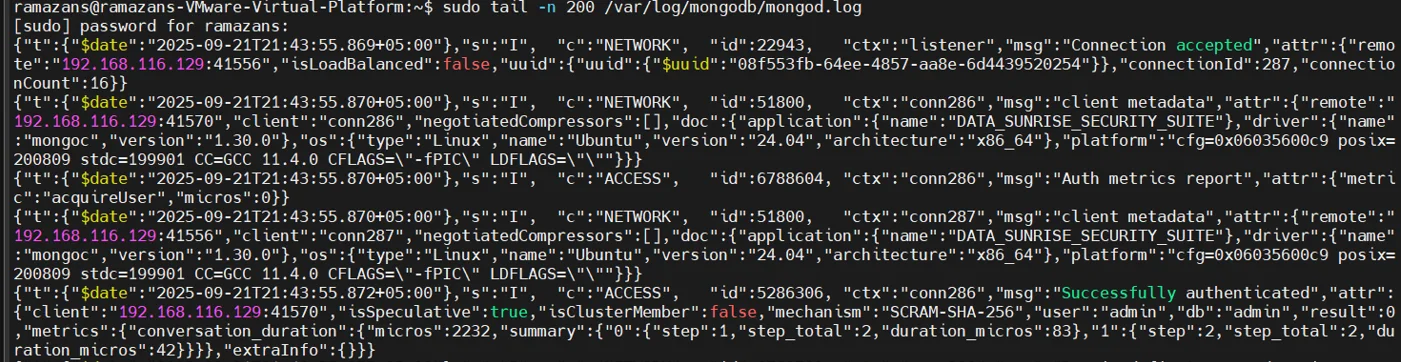
1. Enabling Audit Logs
MongoDB’s audit log feature records database operations. For example, enabling auditing in the mongod.conf file:
auditLog:
  destination: file
  format: JSON
  path: /var/log/mongodb/audit.json
This configuration logs operations such as authentication attempts, schema changes, and user actions.
2. Testing Activity Tracking
Create a test collection and insert sample data:
use complianceDB;

db.createCollection("patientRecords");

db.patientRecords.insertOne({
   name: "John Doe",
   ssn: "123-45-6789",
   diagnosis: "Hypertension"
});

db.patientRecords.find({});
These operations generate corresponding entries in the audit log for verification.
3. Reviewing Audit Logs
Audit entries can be queried with standard tools like jq or streamed into SIEM systems:
cat /var/log/mongodb/audit.json | jq '.'
This allows administrators to validate user actions and prepare compliance documentation.
Limitations
- Audit logs may impact performance in high-throughput environments.
- No built-in dynamic masking.
- Manual policy updates required after schema or role changes.
- Limited centralized visibility across multiple MongoDB clusters.
Enhanced Compliance with DataSunrise
While MongoDB’s native tools provide a foundation, modern enterprises need broader coverage, automation, and advanced controls. DataSunrise Compliance Manager extends MongoDB compliance capabilities significantly.
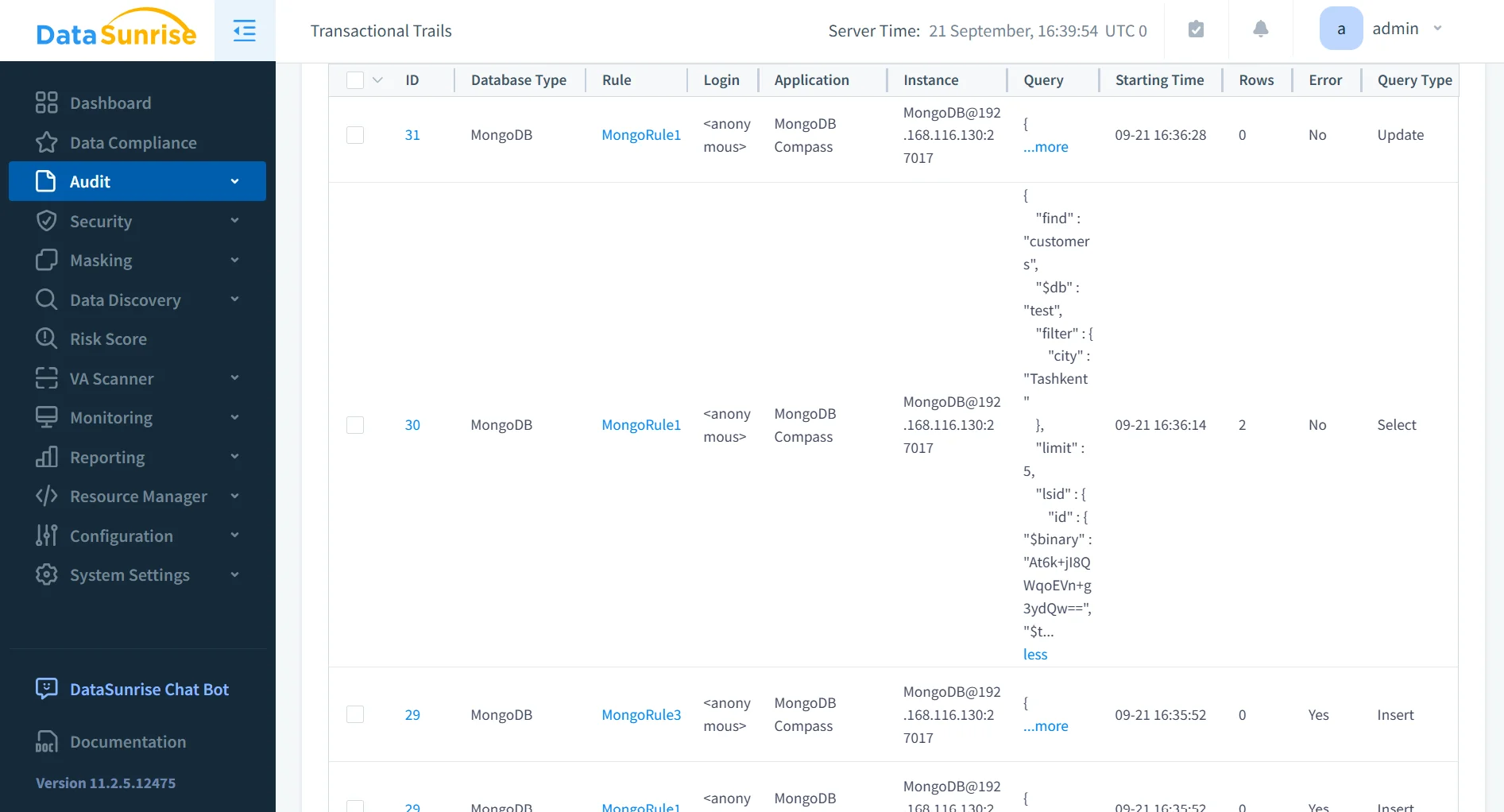
Comprehensive Audit Trails
DataSunrise maintains detailed audit trails that capture every action within MongoDB. These logs are consolidated from all instances and stored centrally, eliminating the complexity of managing separate audit files. Administrators can quickly trace who accessed which collection, what queries were executed, and when modifications occurred. This visibility provides an authoritative record for forensic investigations and regulatory reporting.
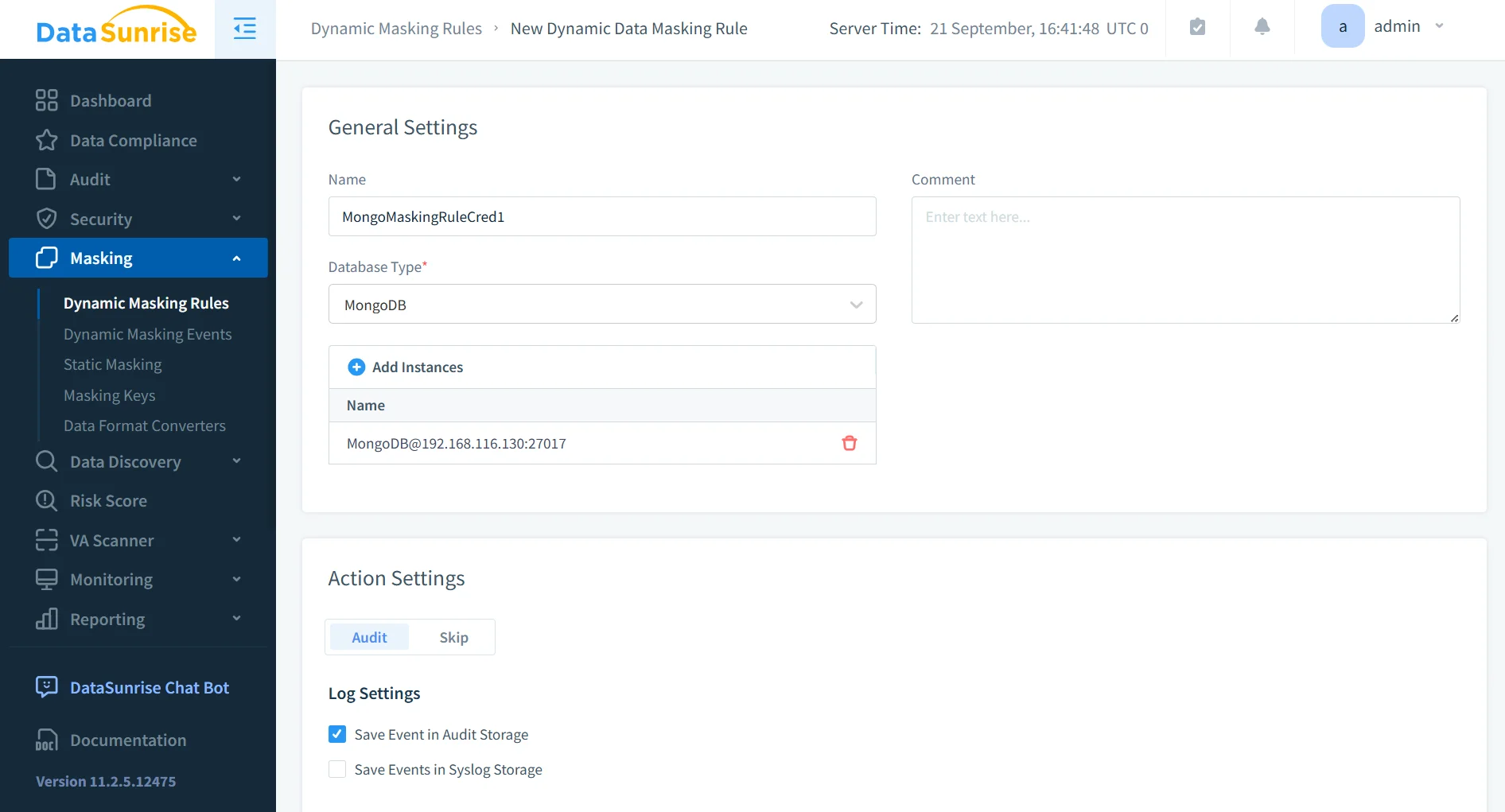
Dynamic Data Masking
With dynamic data masking, DataSunrise ensures sensitive information like SSNs, credit card numbers, or medical details are hidden from unauthorized users. Masking occurs in real time, allowing applications to function normally without exposing confidential values. For scenarios requiring test environments, static masking can be applied to generate safe, anonymized datasets.
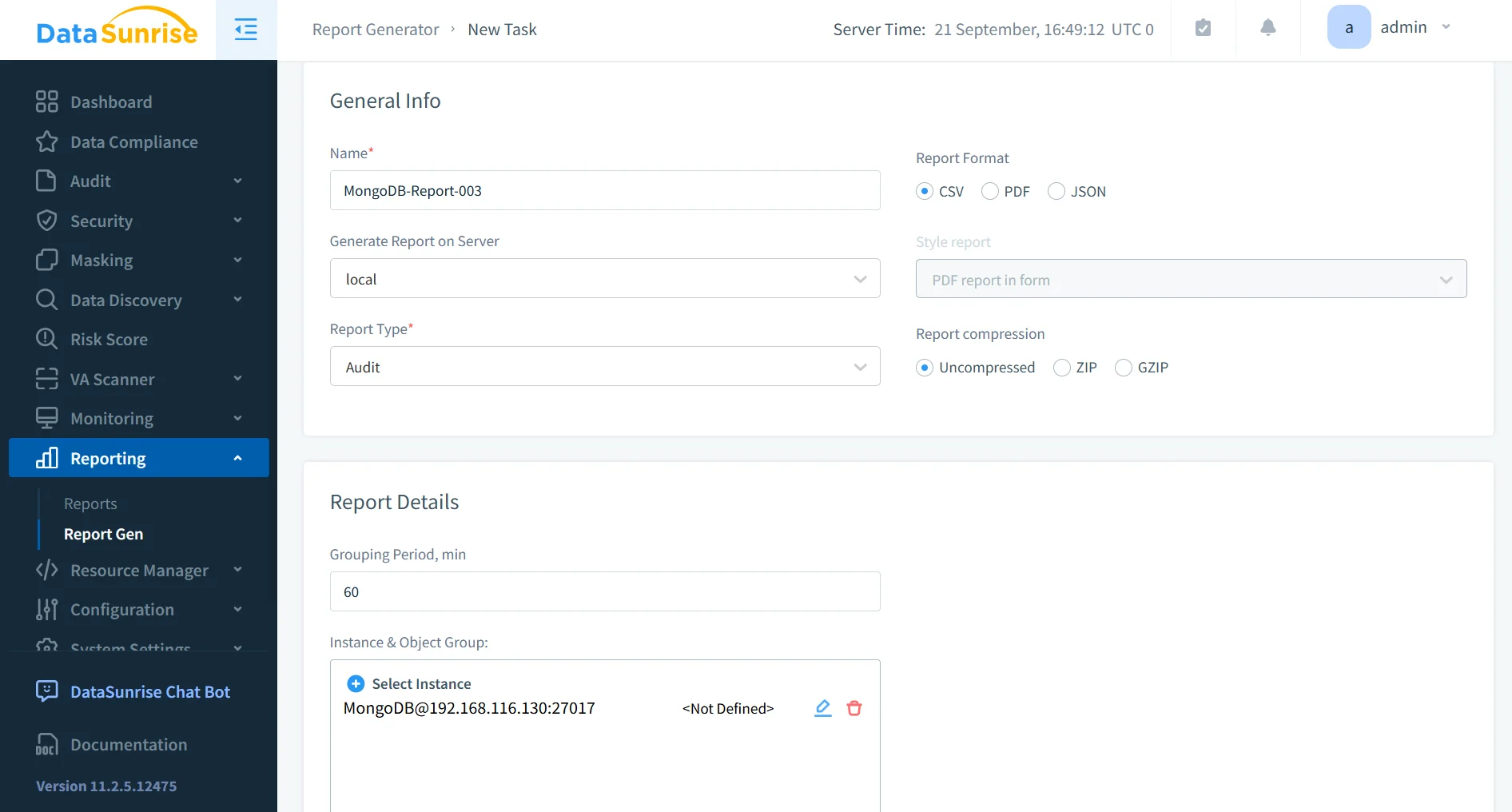
Automated Compliance Reporting
Automated reporting is one of DataSunrise’s strongest capabilities. Instead of manually compiling logs, administrators can generate compliance-ready reports for GDPR, HIPAA, SOX, and PCI DSS with a single click. Reports include audit evidence, user activity summaries, and data access patterns, reducing preparation time for regulatory inspections and ensuring organizations remain continuously audit-ready.
Centralized Monitoring
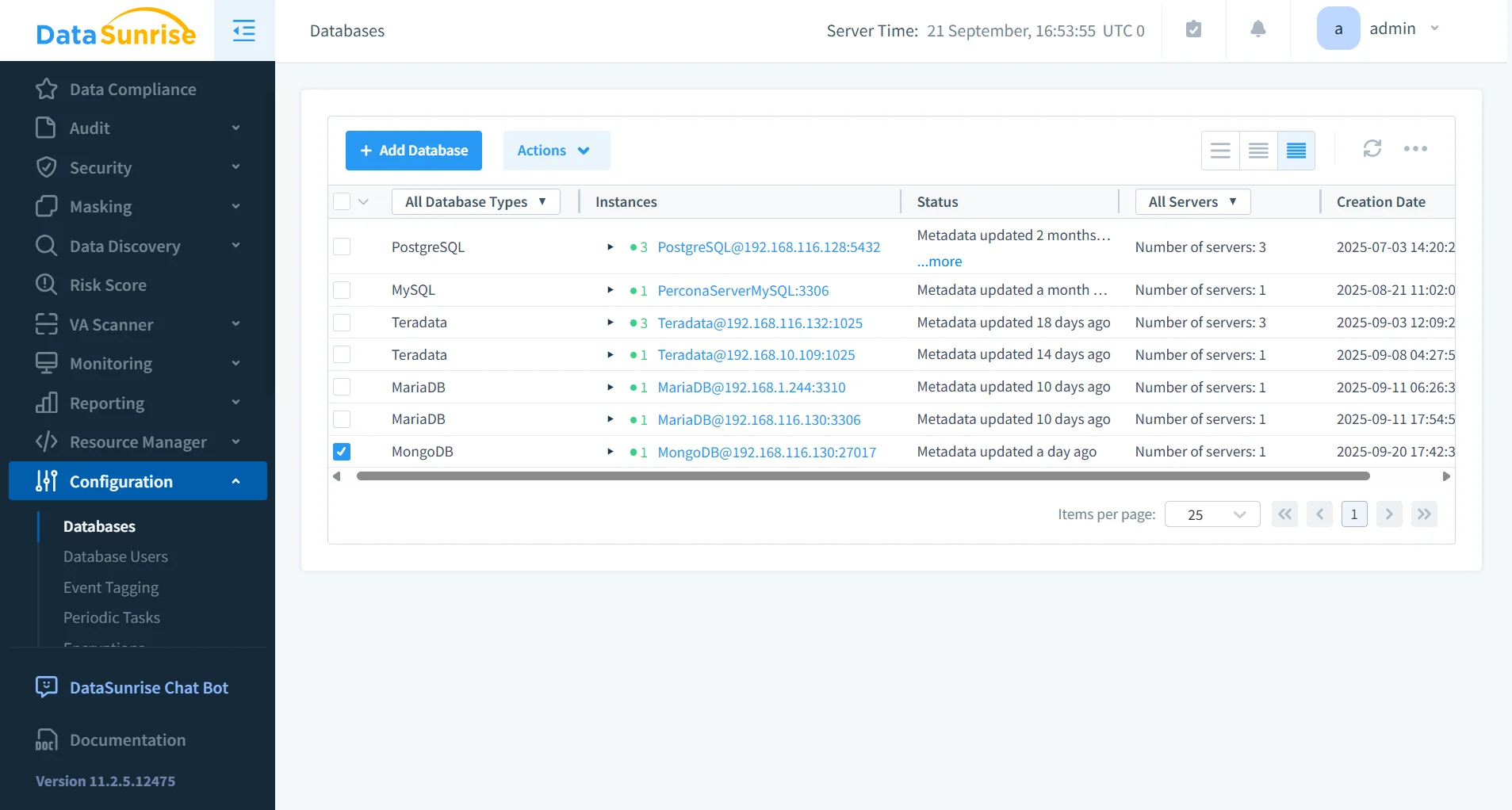
Through database activity monitoring, DataSunrise consolidates MongoDB compliance oversight with that of 40+ other platforms. This unified console allows security teams to enforce policies, review alerts, and assess risks across hybrid infrastructures without managing each database in isolation. Centralized monitoring reduces administrative burden and ensures consistent enforcement of compliance rules across the enterprise.
Behavior Analytics
Behavior analytics in DataSunrise uses advanced algorithms to detect abnormal MongoDB activity. By analyzing query frequency, access locations, and usage patterns, the system can identify potential insider threats or compromised accounts. Alerts are triggered in real time, enabling security teams to intervene before suspicious actions escalate into data breaches.
- Monitors deviations from normal query activity to detect misuse of data.
- Flags unauthorized access attempts from unusual geographic locations or devices.
- Identifies compromised accounts by tracking irregular login behavior.
- Helps compliance officers demonstrate proactive monitoring during audit inspections.
Business Benefits of Managing Compliance with DataSunrise
| Benefit | Description |
|---|---|
| Risk Reduction | Detect and prevent unauthorized activity before it leads to breaches. |
| Regulatory Alignment | Ensure continuous compliance with GDPR, HIPAA, PCI DSS, and SOX. |
| Operational Efficiency | Automate audit tasks, reducing manual workload. |
| Enhanced Trust | Demonstrate strong governance to customers, partners, and auditors. |
| Scalability | Manage MongoDB and 40+ other supported platforms. |
Conclusion
While MongoDB offers essential compliance features, they require manual oversight and lack centralized visibility. DataSunrise strengthens MongoDB compliance management with automated reporting, real-time masking, advanced auditing, and behavior analytics.
DataSunrise delivers the automation and depth enterprises need to maintain compliance and secure sensitive MongoDB data.
Protect Your Data with DataSunrise
Secure your data across every layer with DataSunrise. Detect threats in real time with Activity Monitoring, Data Masking, and Database Firewall. Enforce Data Compliance, discover sensitive data, and protect workloads across 50+ supported cloud, on-prem, and AI system data source integrations.
Start protecting your critical data today
Request a Demo Download Now