Azure Cosmos DB for PostgreSQL Data Audit Trail
Implementing comprehensive data audit trails for distributed PostgreSQL databases has become essential for modern enterprises. Recent cybersecurity research shows organizations with robust audit trail systems detect potential compliance violations 91% faster and reduce security incidents by up to 78%.
Azure Cosmos DB for PostgreSQL represents Microsoft's managed PostgreSQL offering for distributed, horizontally scalable deployments. As organizations migrate critical workloads to these distributed architectures, implementing comprehensive database activity monitoring has become crucial for maintaining security oversight and regulatory compliance.
This guide explores Azure Cosmos DB for PostgreSQL's native audit capabilities and demonstrates how DataSunrise can enhance your distributed PostgreSQL security with automated compliance and intelligent monitoring.
Overview of Native Azure Cosmos DB for PostgreSQL Data Audit Trail
Azure Cosmos DB for PostgreSQL provides foundational data audit trail capabilities through PostgreSQL's built-in logging mechanisms combined with Azure Monitor integration. These features enable monitoring of SQL operations, user authentication, and administrative changes across distributed node clusters.
The distributed architecture introduces unique audit considerations: operations occur across coordinator and worker nodes, data modifications span multiple shards, and distributed transactions require sophisticated correlation for complete audit logs.
How Azure Cosmos DB for PostgreSQL Data Audit Trail Works
The audit trail system operates through PostgreSQL's native logging infrastructure enhanced with Azure monitoring capabilities, maintaining records of:
- Data Modification Records: All INSERT, UPDATE, DELETE operations across distributed shards
- Query Execution Trails: SELECT queries, complex JOINs, and analytical operations spanning multiple nodes
- Administrative Activity Records: Schema modifications, user management, and cluster configuration changes
- Authentication Events: Login attempts, connections, and security-related activities
Native Audit Trail Configuration
To enable comprehensive data audit trails for Azure Cosmos DB for PostgreSQL, configure logging parameters and Azure Monitor integration. For detailed configuration options, refer to the Azure Cosmos DB for PostgreSQL audit documentation:
-- Enable comprehensive statement logging
ALTER SYSTEM SET log_statement = 'all';
ALTER SYSTEM SET log_min_duration_statement = 100;
ALTER SYSTEM SET log_connections = on;
ALTER SYSTEM SET log_disconnections = on;
ALTER SYSTEM SET log_checkpoints = on;

-- Configure audit-specific parameters
ALTER SYSTEM SET log_line_prefix = '%t [%p]: [%l-1] user=%u,db=%d,app=%a,client=%h ';
ALTER SYSTEM SET logging_collector = on;

-- Reload configuration
SELECT pg_reload_conf();
Additionally, configure Azure Monitor to capture PostgreSQL logs:
# Enable diagnostic settings for comprehensive audit trail
az monitor diagnostic-settings create \
  --name "CosmosDB-PostgreSQL-Audit-Trail" \
  --resource "/subscriptions/{subscription-id}/resourceGroups/{resource-group}/providers/Microsoft.DBforPostgreSQL/serverGroupsv2/{cluster-name}" \
  --logs '[{
    "category": "PostgreSQLLogs",
    "enabled": true,
    "retentionPolicy": {"enabled": true, "days": 365}
  }]' \
  --workspace "/subscriptions/{subscription-id}/resourceGroups/{resource-group}/providers/Microsoft.OperationalInsights/workspaces/{workspace-name}"
Azure Portal Interface for Audit Trail Review
The Azure Portal provides an intuitive web-based interface for accessing audit trail information without requiring specialized query expertise:
Activity Dashboard: View recent administrative operations and cluster-level changes
Monitoring Hub: Access real-time performance data and resource utilization across nodes
Logs Interface: Run custom KQL queries against audit trail data with advanced filtering
Insights Panel: Review pre-built monitoring workbooks with audit trail visualizations
Alerts Configuration: Set up automated notifications for suspicious patterns or security events
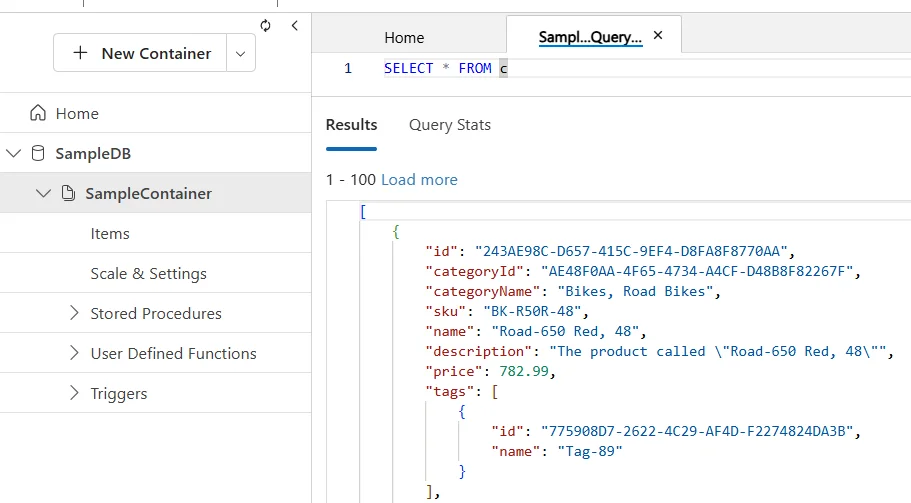
This interface enables database administrators and security teams to monitor distributed PostgreSQL activities without specialized technical expertise.
Integrating DataSunrise for Extensive Azure Cosmos DB for PostgreSQL Data Audit Trails
While Azure Cosmos DB for PostgreSQL provides foundational data audit trail capabilities, DataSunrise dramatically enhances monitoring through Comprehensive Data Classification and intelligent analytics designed specifically for distributed PostgreSQL environments. Unlike basic logging approaches, DataSunrise delivers enterprise-grade database security with sophisticated audit trail analysis.
Setting Up DataSunrise for Azure Cosmos DB for PostgreSQL
Step 1: Connect to Azure Cosmos DB for PostgreSQL Cluster
Begin by establishing a secure connection between DataSunrise and your Azure Cosmos DB for PostgreSQL environment through the intuitive administrative interface. DataSunrise supports connection to both coordinator and worker nodes for comprehensive cluster-wide monitoring coverage.
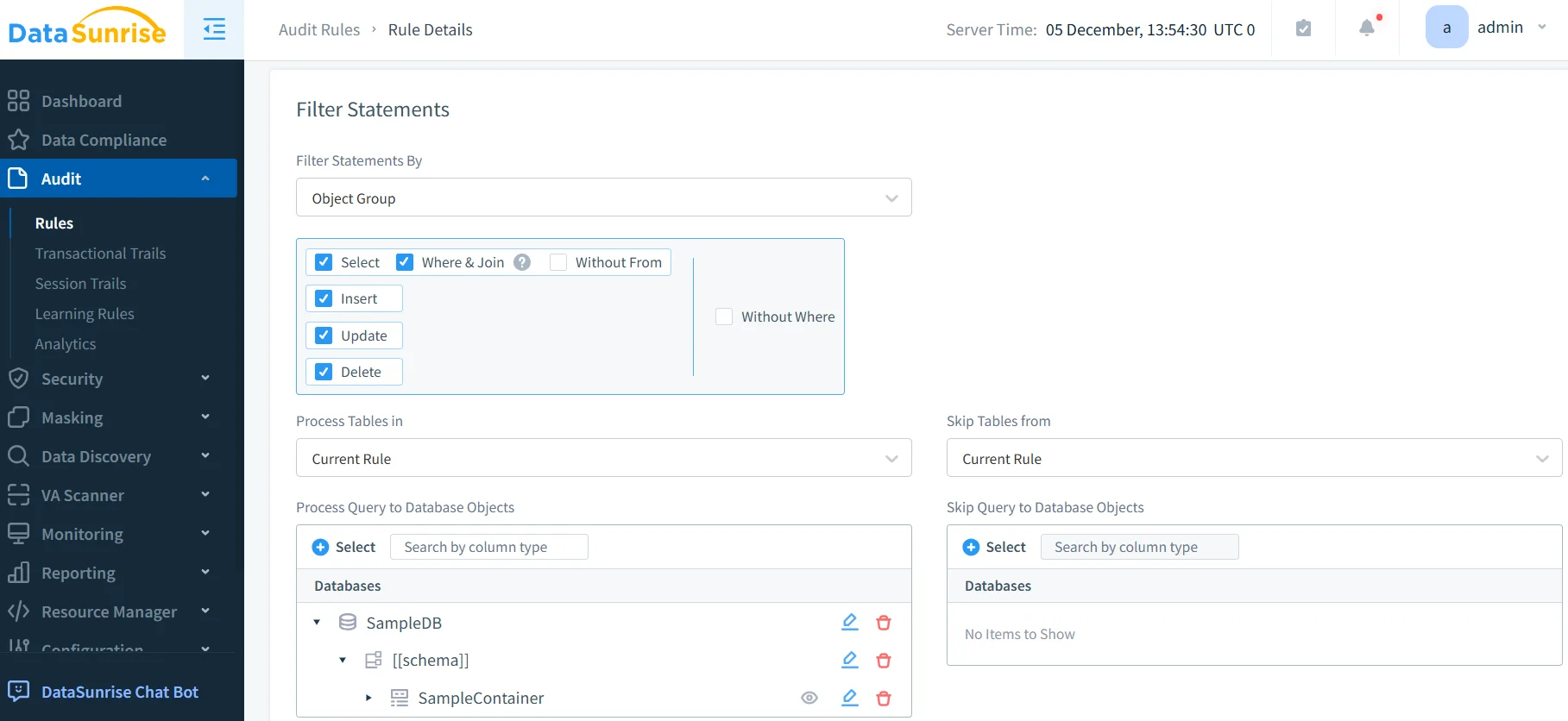
Step 2: Create Distributed PostgreSQL-Specific Audit Rules
Configure granular audit rules tailored to distributed PostgreSQL data structures and operations using DataSunrise's No-Code Policy Automation interface:
- Shard-Aware Monitoring: Define rules that track data across multiple shards and nodes
- Table-Level Granularity: Apply different audit levels based on table sensitivity and regulatory requirements
- User-Based Policies: Create user-specific audit rules based on roles and access patterns
- Query Pattern Analysis: Monitor complex distributed queries and cross-shard operations
Step 3: Review Comprehensive Data Audit Trail History
Access detailed data activity history through DataSunrise's unified dashboard, providing complete visibility into all Cosmos DB for PostgreSQL operations with advanced filtering, real-time monitoring, and intelligent correlation capabilities.
Step 4: Analyze Captured Distributed Activity
DataSunrise provides detailed visibility into Azure Cosmos DB for PostgreSQL actions across the entire cluster, including distributed transactions, cross-shard queries, and administrative operations. With the 'Create Rule' feature in the 'Event Details' panel, you can quickly establish audit, masking, or security rules based on specific distributed events for enhanced protection and control.
Key Advantages of DataSunrise for Azure Cosmos DB for PostgreSQL
DataSunrise provides significant enhancements over native audit capabilities:
- Auto-Discover & Classify: Automatically identify sensitive data across distributed PostgreSQL tables using machine learning algorithms
- No-Code Policy Automation: Create sophisticated audit policies through an intuitive interface, reducing implementation time from weeks to hours
- Real-Time Notifications: Receive immediate alerts for suspicious activities with contextual information across the distributed cluster
- User Behavior Analytics: Establish baselines for normal access patterns and automatically detect anomalies using ML algorithms
- Automated Compliance Reporting: Generate pre-configured reports for GDPR, HIPAA, PCI DSS, and SOX
- Cross-Platform Integration: Monitor multiple database platforms from a unified console with support for over 40 data storage systems
Best Practices for Azure Cosmos DB for PostgreSQL Data Audit Trail Implementation
To maximize the effectiveness of your distributed PostgreSQL data audit trail implementation, consider these strategic best practices:
1. Performance-Optimized Distributed Strategy
Shard-Aware Configuration: Align audit strategies with shard key design to minimize performance impact during high-throughput distributed operations. Apply detailed audit trails to critical tables while using sampling approaches for high-volume, low-risk operations across multiple nodes.
Node-Level Optimization: Balance comprehensive monitoring requirements with cluster resource consumption to maintain cost-effective distributed operations while ensuring complete audit coverage.
2. Data-Centric Audit Analysis
Sensitive Data Classification: Focus comprehensive audit trails on tables containing PII, financial data, or regulated information distributed across multiple shards.
Cross-Shard Query Monitoring: Monitor complex distributed queries and cross-shard JOIN operations that might indicate unauthorized data mining attempts or sophisticated attack patterns.
Table-Level Granularity: Implement field-specific audit rules for sensitive table columns while applying standard monitoring to operational metadata and system tables.
3. Compliance Framework Integration
Regulatory Mapping: Align audit trail collection with specific compliance requirements such as data residency, retention periods, and access controls for distributed environments.
Evidence Preservation: Implement tamper-evident audit storage with appropriate encryption and access controls for regulatory evidence across all cluster nodes.
Automated Validation: Schedule regular compliance checks to verify audit trail completeness and accuracy across the distributed architecture.
4. Enhanced Security Implementation
Deploy DataSunrise: Implement DataSunrise's comprehensive security suite to extend beyond native audit capabilities with intelligent policy orchestration and threat detection across distributed PostgreSQL environments.
Behavioral Baseline Establishment: Leverage machine learning to establish normal distributed PostgreSQL access patterns and identify anomalous activities across cluster nodes.
Cross-Database Correlation: Utilize DataSunrise's unified monitoring to correlate distributed PostgreSQL activities with other database platforms for comprehensive security analysis.
Business Benefits of Comprehensive Data Audit Trail Implementation
Implementing robust data audit trails for Azure Cosmos DB for PostgreSQL provides multiple strategic advantages:
| Benefit | Description |
|---|---|
| Enhanced Security Posture | Proactively identify unauthorized access attempts and suspicious query patterns across distributed nodes before they escalate into security incidents |
| Streamlined Compliance | Automate regulatory adherence with detailed audit trail documentation that satisfies requirements for multiple frameworks across distributed environments |
| Operational Intelligence | Gain insights into distributed PostgreSQL usage patterns, helping optimize performance and resource allocation across cluster nodes |
| Risk Mitigation | Address potential vulnerabilities through continuous monitoring and automated alerting mechanisms across the entire distributed infrastructure |
| Forensic Capabilities | Maintain detailed records of all distributed PostgreSQL operations to support security investigations and incident response |
| Stakeholder Trust | Demonstrate commitment to data protection and compliance, building confidence with customers and partners |
Conclusion
As organizations increasingly rely on Azure Cosmos DB for PostgreSQL for business-critical data, implementing robust data audit trails has become essential for security and compliance. While native capabilities provide foundational monitoring, organizations with complex requirements benefit significantly from enhanced solutions like DataSunrise.
DataSunrise delivers comprehensive security for distributed PostgreSQL environments with advanced audit trails, real-time monitoring, and automated compliance reporting. With flexible deployment modes, DataSunrise transforms basic logging into strategic security assets.
Protect Your Data with DataSunrise
Secure your data across every layer with DataSunrise. Detect threats in real time with Activity Monitoring, Data Masking, and Database Firewall. Enforce Data Compliance, discover sensitive data, and protect workloads across 50+ supported cloud, on-prem, and AI system data source integrations.
Start protecting your critical data today
Request a Demo Download Now