NLP, LLM, ML Compliance for Elasticsearch
Modern Elasticsearch deployments ingest everything: logs, product analytics, clickstreams, behavioral signals, chat transcripts, documents, traces, and customer interactions. These environments, often powered by platforms like Elasticsearch, accumulate massive amounts of unstructured and semi-structured data. Much of that content contains PII, PHI, credentials, and financial attributes. Without automated compliance controls — especially those powered by NLP, LLMs, and ML — Elasticsearch becomes an uncontrolled repository of sensitive information.
DataSunrise tackles this challenge with NLP-driven discovery, LLM-assisted policy generation, behavior analytics, and ML-based drift detection, securing structured, semi-structured, and free-text JSON documents across any cluster topology. These controls complement native defense mechanisms like RBAC and the Database Firewall while integrating with advanced governance tooling such as the Compliance Manager.
Importance of NLP, LLM & ML Data Compliance Tools
Native Elasticsearch protections focus on permissions and API logging, but never analyze what the data actually contains. As clusters grow, they accumulate inconsistent JSON mappings, dynamic fields, unpredictable log formats, and user-generated text containing hidden identifiers. This creates blind spots that traditional controls — even when combined with Data Security or strict Role-Based Access Control — cannot fully remediate.
NLP, LLM, and ML compliance layers fill the gap. They interpret natural language, locate sensitive information in free-text inputs, detect compliance gaps automatically, and reveal risk that indexing rules cannot surface. When combined with continuous auditing via Database Activity Monitoring, these AI-driven capabilities prevent regulatory drift and strengthen governance for large-scale Elastic installations.
Native Capabilities for Data Compliance in Elasticsearch
Elasticsearch includes several foundational security and governance mechanisms. However, they remain operational in nature and cannot deliver semantic compliance.
1. Index-Level Security & Role-Based Access
Elasticsearch RBAC enables index-level permissions, field-level restrictions, and realm-based role mappings:
PUT /_security/role/pii_reader
{
  "indices": [
    {
      "names": [ "customer-data-*" ],
      "privileges": [ "read" ],
      "field_security": {
        "grant": [ "name", "email", "account_id" ]
      }
    }
  ]
}
This helps enforce read controls similar to traditional Access Controls, but it cannot classify PII or adjust automatically as schema drift occurs.
2. X-Pack Audit Logging
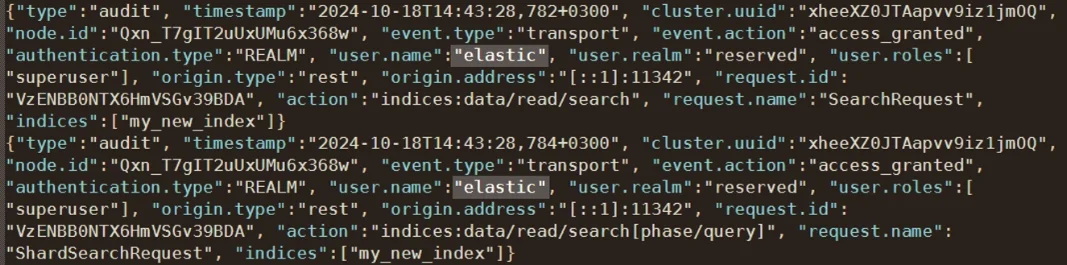
Audit logs capture authentication events, role application, API usage, and read/write activity:
xpack.security.audit.enabled: true
xpack.security.audit.logfile.events:
  include: ["authentication_success", "authentication_failed", "access_granted", "access_denied"]
Even though Elasticsearch logs user behavior, they lack semantic insight and advanced threat detection features found in User Behavior Analysis.
3. Ingest Pipelines & Scripting
Ingest pipelines allow deterministic transformations like hashing or redaction:
PUT _ingest/pipeline/redact_email
{
  "processors": [
    {
      "gsub": {
        "field": "message",
        "pattern": "(?i)[A-Z0-9._%+-]+@[A-Z0-9.-]+",
        "replacement": "[REDACTED_EMAIL]"
      }
    }
  ]
}
Useful but shallow — unlike Dynamic Data Masking, pipelines do not identify sensitive text automatically and break easily as formats evolve.
NLP, LLM & ML Data Compliance Tools for Elasticsearch (DataSunrise)
DataSunrise extends Elasticsearch with autonomous, multi-layered compliance capabilities. These integrate seamlessly with its existing infrastructure and offer much deeper protection than basic RBAC, pipeline redaction, or native audit logs.
NLP-Based Sensitive Data Discovery
DataSunrise uses NLP analysis to identify sensitive information across Elasticsearch indices. It reads documents, nested fields, and free-text records to locate personal identifiers, financial details, credentials, PHI-related references, geographic data, and PII embedded in logs and transcripts. Unlike traditional mapping inspection, NLP detects meaning rather than field names.
The results feed directly into policy generation, masking, and automated rule creation — and tie into enterprise-wide discovery practices also used in Data Discovery and PII Classification. Regular rescanning ensures Elasticsearch remains compliant as data grows and changes.
LLM-Assisted Compliance Autopilot
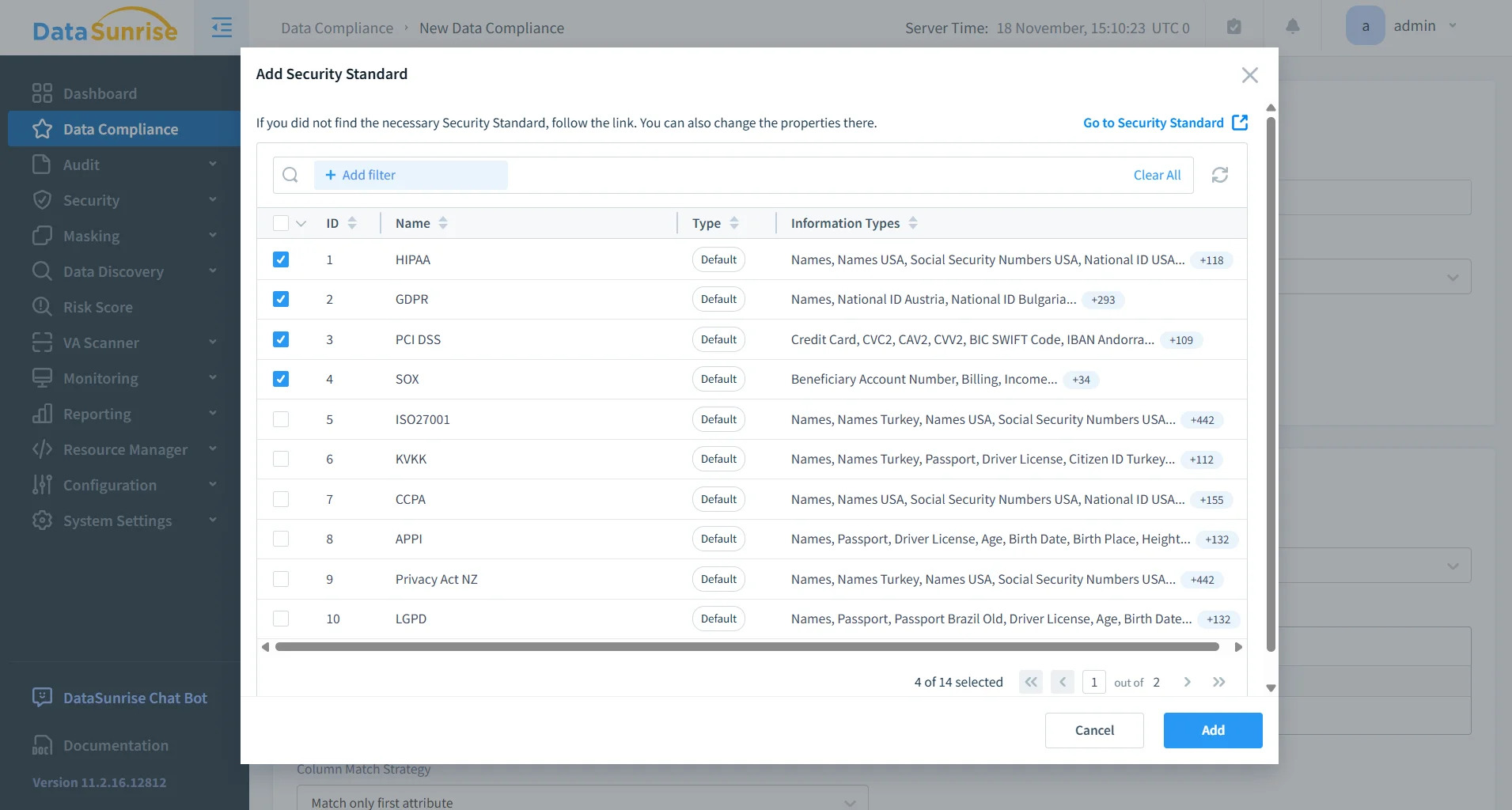
Large language models automate compliance rule creation, reducing manual policy engineering. The system generates masking rules, builds audit templates aligned with GDPR, HIPAA, PCI DSS, SOX, and CCPA, and proposes access restrictions based on discovered sensitive data.
It also offers remediation suggestions, helping teams understand violations. LLM automation aligns seamlessly with centralized oversight managed through the Data Compliance Regulations knowledge base and the broader Comply with SOX, PCI DSS, HIPAA framework.
ML-Based Audit Intelligence
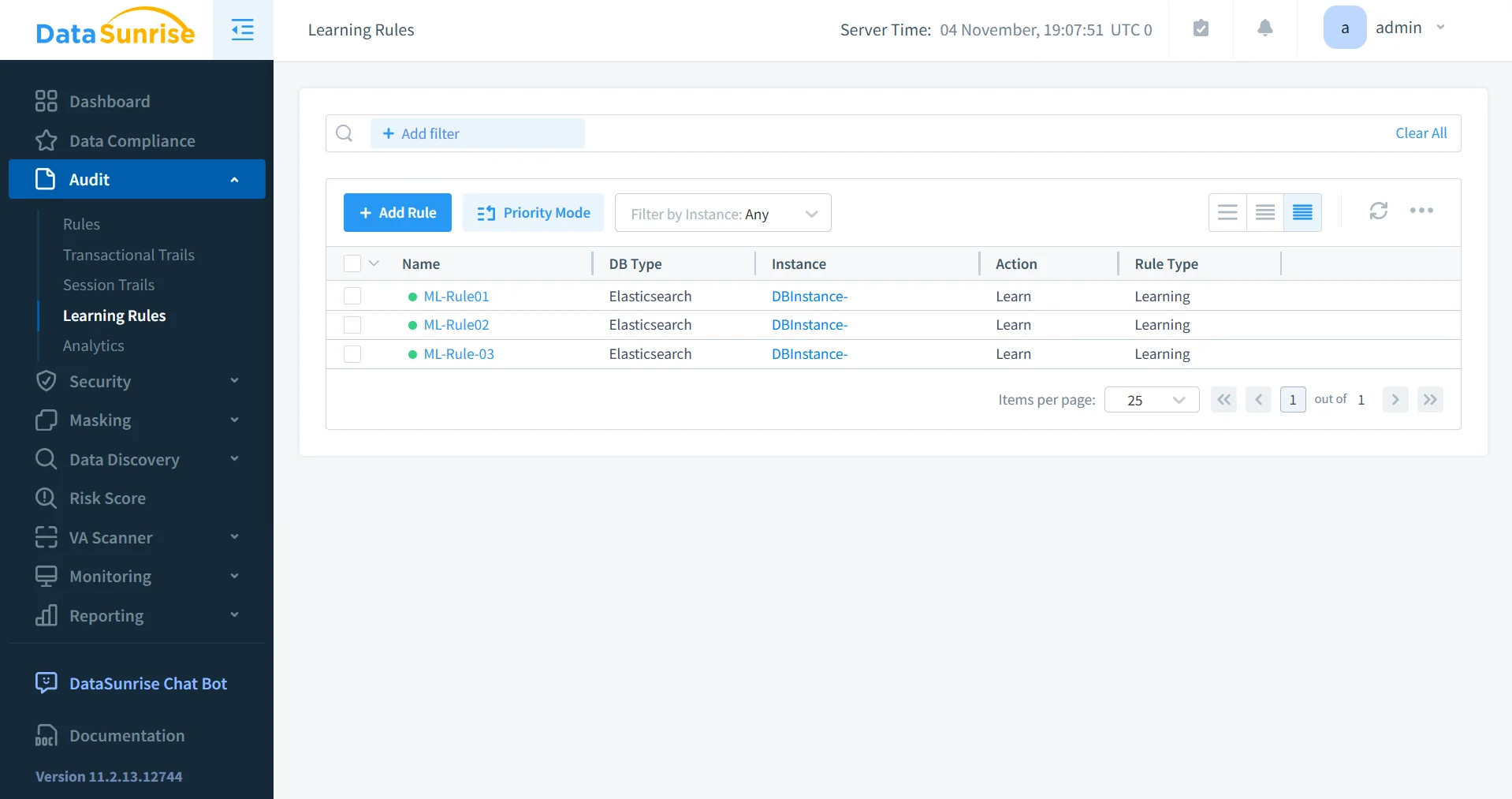
ML evaluates Elasticsearch activity and highlights anomalies. It detects spikes in data retrieval, unusual query patterns, bursts of updates, misuse of elevated roles, and deviations from normal user baselines. These insights add intelligence absent in native audit logs and significantly strengthen proactive detection alongside existing protections such as Threat Detection.
ML insights integrate with your overall audit ecosystem, complementing structured logging reviewed through Audit Logs and supporting long-term analysis through Data Activity History.
Dynamic Data Masking for Elasticsearch
Dynamic masking ensures sensitive data is never exposed directly during query execution. DataSunrise masks data in real time across Kibana dashboards, REST API calls, OpenSearch queries, ingestion flows, and analytics pipelines.
Masking modes include consistent hashing, tokenization, role-based suppression, and redaction. Unlike static redaction or ingest-based masking, dynamic masking operates similarly to the Static Data Masking and In-Place Masking tools across other platforms — without reindexing or pipeline rewrites.
Continuous Regulatory Calibration
As Elasticsearch structures evolve, DataSunrise automatically adapts compliance rules. It detects new indices, new fields, mapping changes, new sensitive categories, and shifts in regulatory requirements.
This adaptive functionality mirrors the broader DataSunrise posture used across multi-database estates and cloud environments, also supported by Deployment Modes and multi-regulation enforcement strategies linked to GDPR Compliance.
Unified Compliance Dashboard
DataSunrise aggregates insights from discovery, masking, ML audit intelligence, and anomaly detection into a centralized governance dashboard. Teams can assess sensitive data distribution, match events with security rules from the Security Guide, analyze masking efficiency, inspect policy violations, and generate regulator-ready reports using the built-in Report Generation module.
Integrated views make it possible to govern hybrid and multi-cloud Elasticsearch deployments with the same rigor applied to SQL, NoSQL, cloud storage, and object repositories.
Business Impact
| Benefit | Description |
|---|---|
| Major Reduction in Manual Compliance Labor | Automatic discovery and policy construction eliminate the usual grind of rule writing and schema mapping. |
| Complete Visibility into Free-Text Data | NLP detects sensitive content hidden inside logs, messages, documents, and chat data — something Elasticsearch alone cannot achieve. |
| Real-Time Protection Without Reindexing | Dynamic masking protects documents instantly without altering source data or ingest pipelines. |
| Faster Audit & Certification Readiness | AI-driven reporting accelerates GDPR, HIPAA, SOX, and PCI DSS preparation. |
| Proactive Defense Against Data Abuse | ML-powered anomaly detection stops abuse patterns before they escalate into breaches. |
Conclusion
Elasticsearch’s built-in functionality provides basic security but lacks semantic interpretation and automated governance. Dynamic schemas, messy JSON, and free-text ingestion require compliance tools capable of understanding language, behavior, and risk.
DataSunrise provides NLP sensitivity detection, LLM-based rule generation, ML-driven audit intelligence, dynamic masking, unified compliance dashboards, and continuous calibration — combining all the capabilities found across its platform, from Data Audit to Continuous Data Protection and Data-Inspired Security. Together, these elevate Elasticsearch into a secure and compliant enterprise-grade environment.
Protect Your Data with DataSunrise
Secure your data across every layer with DataSunrise. Detect threats in real time with Activity Monitoring, Data Masking, and Database Firewall. Enforce Data Compliance, discover sensitive data, and protect workloads across 50+ supported cloud, on-prem, and AI system data source integrations.
Start protecting your critical data today
Request a Demo Download Now