Amazon Redshift Audit Trail
Amazon Redshift powers analytical workloads that span BI dashboards, ELT pipelines, ad-hoc exploratory queries, and scheduled reporting engines. When multiple teams and automated jobs operate in the same warehouse cluster, maintaining visibility into every query, login, role switch, and data modification becomes essential for governance.
An Amazon Redshift audit trail provides this visibility. It records who accessed which objects, what SQL was executed, and how workloads behave over time—forming the foundation of accountability, forensic investigation, and compliance enforcement across regulated industries. These principles directly align with broader concepts of database audit trails and modern security practices outlined in the DataSunrise Knowledge Center.
This article explains how Redshift’s native audit logging works, how organizations use it for operational oversight, and how DataSunrise enhances these capabilities with enriched, centralized, compliance-ready audit trails — fully consistent with the DataSunrise approach to database activity monitoring.
What Is an Audit Trail in Amazon Redshift?
An audit trail in Redshift is a chronological record of database activity generated by Redshift’s logging subsystem. Redshift produces audit telemetry through user activity logs that capture executed SQL statements, authentication logs that record session events and failures, and user-level logs that trace activity across individual sessions. Optional telemetry sources like X-Ray and Query Insights provide execution plans and runtime diagnostics. AWS documents this behavior in its official audit logging overview:
https://docs.aws.amazon.com/redshift/latest/mgmt/db-auditing.html
Together, these logs help determine who connected to the warehouse, what commands were executed—especially on sensitive data—when suspicious workloads appeared, and how permissions were exercised. These capabilities parallel the foundational goals of data audit and align with DataSunrise’s methodology for data-inspired security. Redshift can export these logs to Amazon S3 automatically, enabling long-term retention, SIEM integration, and compliance reporting.
Native Redshift Audit Logging: How It Works
1. Enabling Logging to Amazon S3
----------------------------------------------------------
-- Enable audit logging to S3
----------------------------------------------------------
ALTER CLUSTER SET enable_user_activity_logging = true;
ALTER CLUSTER SET enable_user_log = true;
After enabling logging, administrators configure the S3 bucket Redshift will use for audit file delivery. Redshift produces compressed .log files at regular intervals, each containing structured entries documenting SQL activity, DDL statements, authentication attempts, and runtime metadata.
This delivery model provides durable, append-only audit trails suitable for long-term archival, lifecycle policies, Athena analysis, and integration with governance pipelines. This aligns well with standardized practices described in DataSunrise's guidance on audit rules and audit storage considerations.
2. Querying STL_ System Tables
Redshift also surfaces real-time and historical activity through internal STL system tables used for troubleshooting, validation, and audit verification.
| System Table | Purpose |
|---|---|
| STL_QUERY | Captures SQL statements, user IDs, timestamps |
| STL_CONNECTION_LOG | Records authentication attempts, IP data, failures |
| STL_DDLTEXT | Stores CREATE / ALTER / DROP statements |
| STL_TABLE | Provides table-level metadata for query operations |
| STL_LOAD_ERRORS | Reports COPY/UNLOAD failures and malformed input records |
Example:
----------------------------------------------------------
-- Query recently executed operations
----------------------------------------------------------
SELECT
    userid,
    query,
    starttime,
    substring
FROM stl_query
ORDER BY starttime DESC
LIMIT 20;
These telemetry sources closely mirror the structure of historical tracking models described in data activity history and database activity history.
3. S3 Log File Structure
Audit logs exported to Amazon S3 follow a consistent pipe-delimited schema:
timestamp | username | database | pid | connection | command_type | sql_text | duration | error_code
Each row represents a single event, enabling downstream ingestion via Athena, EMR, SIEM systems, custom ETL workflows, and compliance analytics. The predictability of log formats allows them to be mapped effectively into DataSunrise’s pipelines described in audit logs and report generation workflows.
Because the schema is uniform across clusters and regions, organizations can centralize audit processing and correlate multi-environment behavior with minimal overhead.
How DataSunrise Enhances Amazon Redshift Audit Trails
1. Centralized Audit Consolidation
DataSunrise consolidates SQL activity, authentication logs, table modifications, metadata updates, and COPY/UNLOAD events into a unified chronological view—eliminating the need to manually merge STL tables and S3 log files.
This consolidation provides a continuous operational narrative, helping teams trace actions across multiple services, applications, and Redshift workloads. It also simplifies long-term retention strategies by centralizing evidence into a single storage layer. These capabilities are part of DataSunrise’s centralized model for audit trails.
2. Granular, Policy-Driven Controls
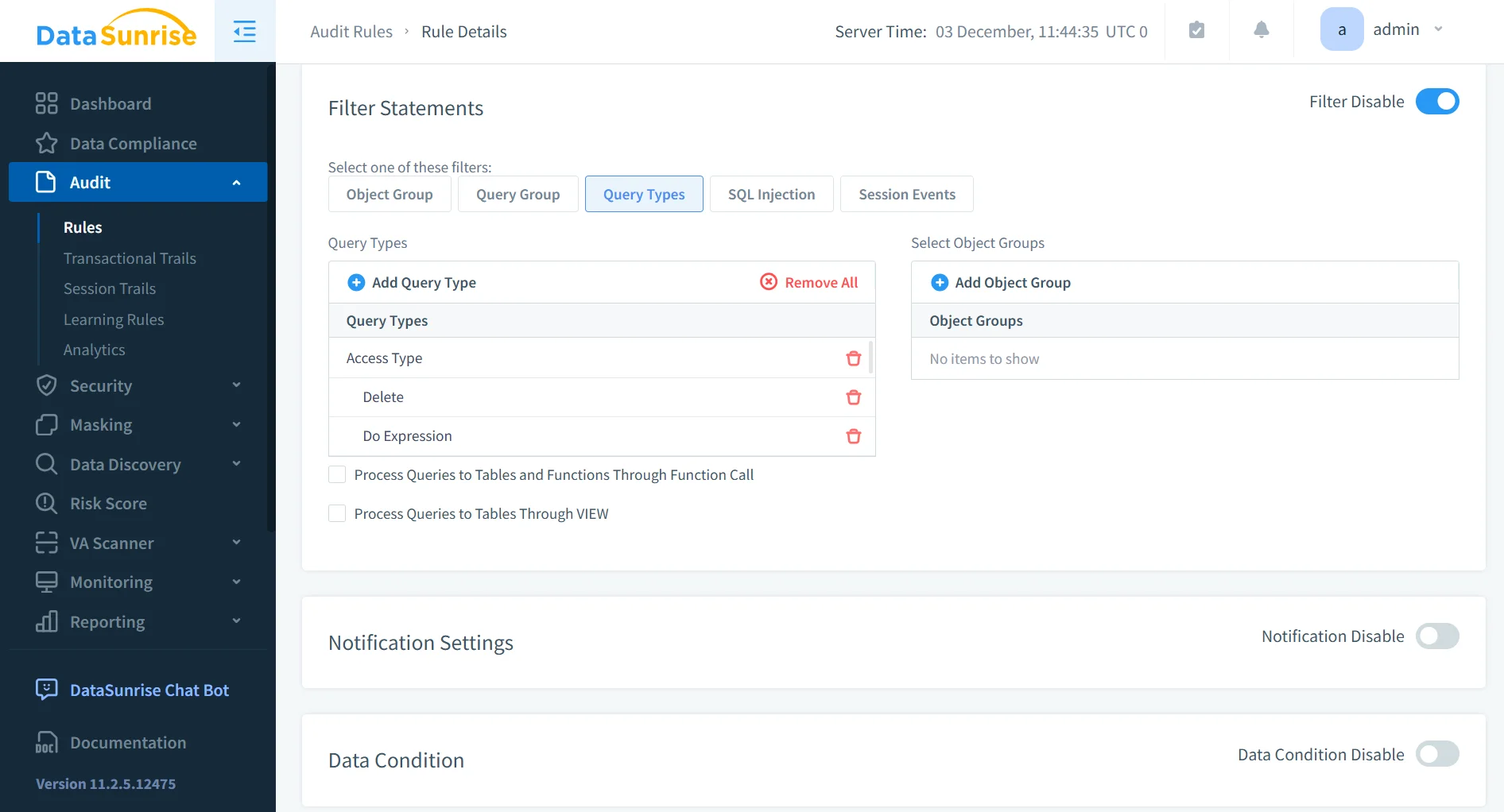
Administrators can target specific schemas, objects, SQL verbs, sensitive-data groups, or privileged accounts—enabling far more precision than native Redshift logging alone.
DataSunrise policies can be adapted to specific compliance frameworks or internal security baselines, ensuring that sensitive operations—such as reading PII tables or modifying financial datasets—are always monitored with heightened scrutiny.
This approach aligns with DataSunrise’s strategy for security policies and role-based access control.
3. Real-Time Alerts & Behavior Analytics
DataSunrise introduces proactive detection of anomalies such as abnormal data pulls, suspicious user behavior, login bursts, or privilege-misuse attempts.
Unlike native Redshift logs, which are retrospective, DataSunrise evaluates activity patterns as they occur, reducing incident detection time and improving the overall security posture of the environment.
This complements DataSunrise technologies like behavior analytics and real-time notifications.
4. Compliance-Ready Audit Evidence
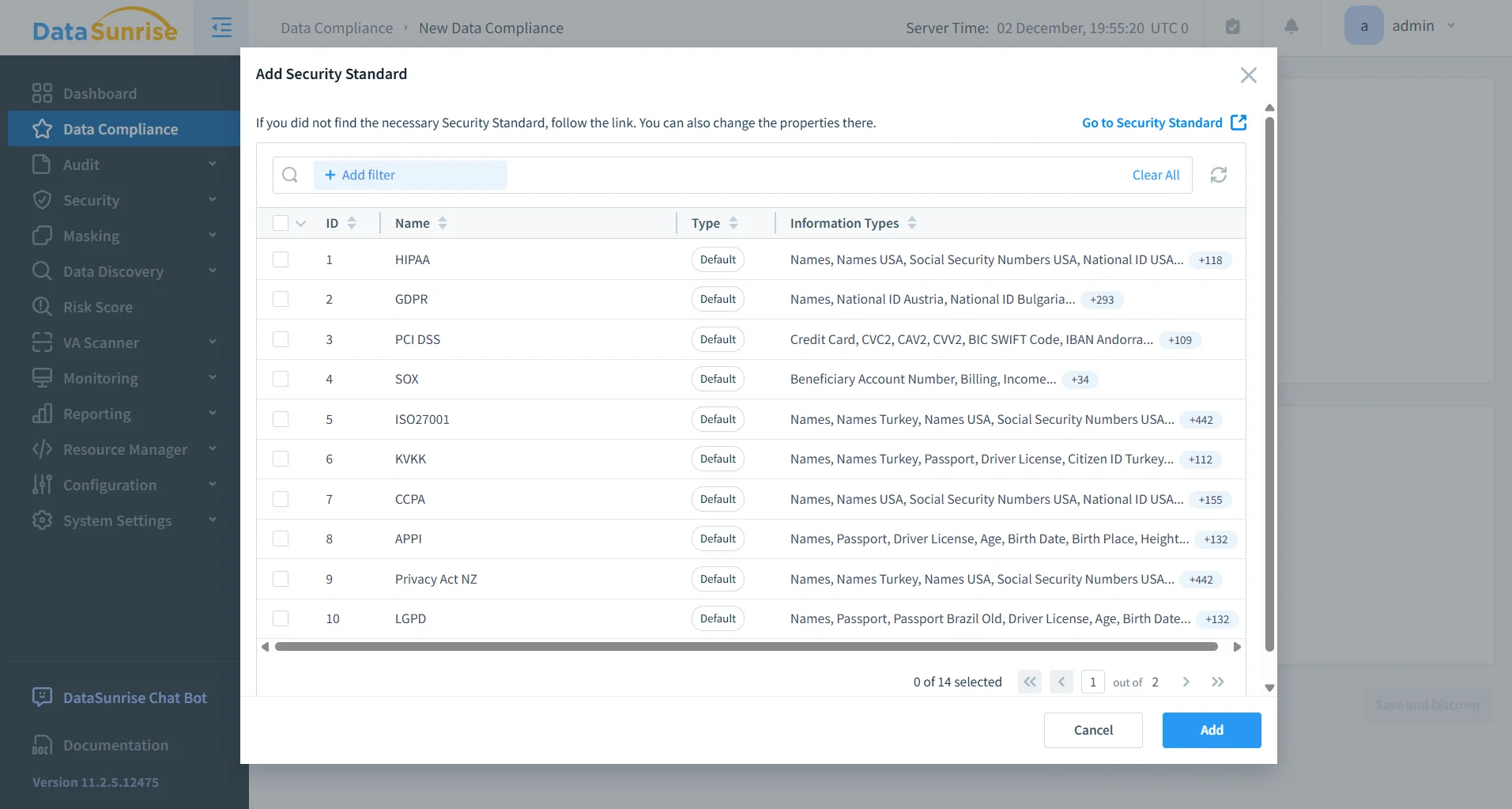
Audit artifacts are automatically aligned with SOX, HIPAA, GDPR, PCI DSS, and internal governance frameworks. Evidence remains immutable and exportable.
This structured approach simplifies external reviews, internal audits, and regulator requests. Such audit readiness directly supports requirements described in data compliance and in regulatory-focused guidance like complying with SOX, PCI DSS, and HIPAA.
5. Unified Governance Across Platforms
DataSunrise normalizes audit data across Redshift, PostgreSQL, Snowflake, BigQuery, Oracle, and over 40 supported platforms.
This ensures consistent oversight, standardizes audit processes across multi-cloud and hybrid environments, and eliminates blind spots that appear when different teams maintain separate logging systems.
This strategy mirrors the architecture described in DataSunrise Overview.
Business Benefits
| Benefit Category | Description |
|---|---|
| Faster Investigations | Centralized audit trails accelerate forensic and operational analysis. |
| Reduced Compliance Exposure | Immutable, structured audit data supports regulatory and internal reviews. |
| Lower Administrative Overhead | Eliminates the need to manually parse raw S3 logs or STL tables. |
| Improved Security Posture | Real-time anomaly detection reduces the window of undetected threats. |
| Consistent Governance | Standardized auditing across 40+ platforms ensures enterprise-wide control. |
Conclusion
Amazon Redshift provides strong native logging features, but enterprise-grade governance requires centralized correlation, enriched context, real-time analytics, and compliance automation. DataSunrise elevates Redshift into a fully governed, audit-ready environment by delivering unified telemetry, behavior analytics, sensitive-data awareness, and automated compliance workflows.
The result is a scalable, consistent audit infrastructure suitable for modern security and regulatory requirements.
To explore these capabilities further, organizations can review DataSunrise’s detailed documentation on deployment modes or request a hands-on demo.
Protect Your Data with DataSunrise
Secure your data across every layer with DataSunrise. Detect threats in real time with Activity Monitoring, Data Masking, and Database Firewall. Enforce Data Compliance, discover sensitive data, and protect workloads across 50+ supported cloud, on-prem, and AI system data source integrations.
Start protecting your critical data today
Request a Demo Download Now